By Marisa Dawson
Roy Helu had spent much of his life moving toward the next level.
As a young football player, he dreamed of playing the game he loved. That dream took him to the University of Nebraska- Lincoln, then to the NFL, where he spent six seasons playing professionally. But after his playing career ended, Helu found himself looking for something beyond the next game, the next season or the next achievement.
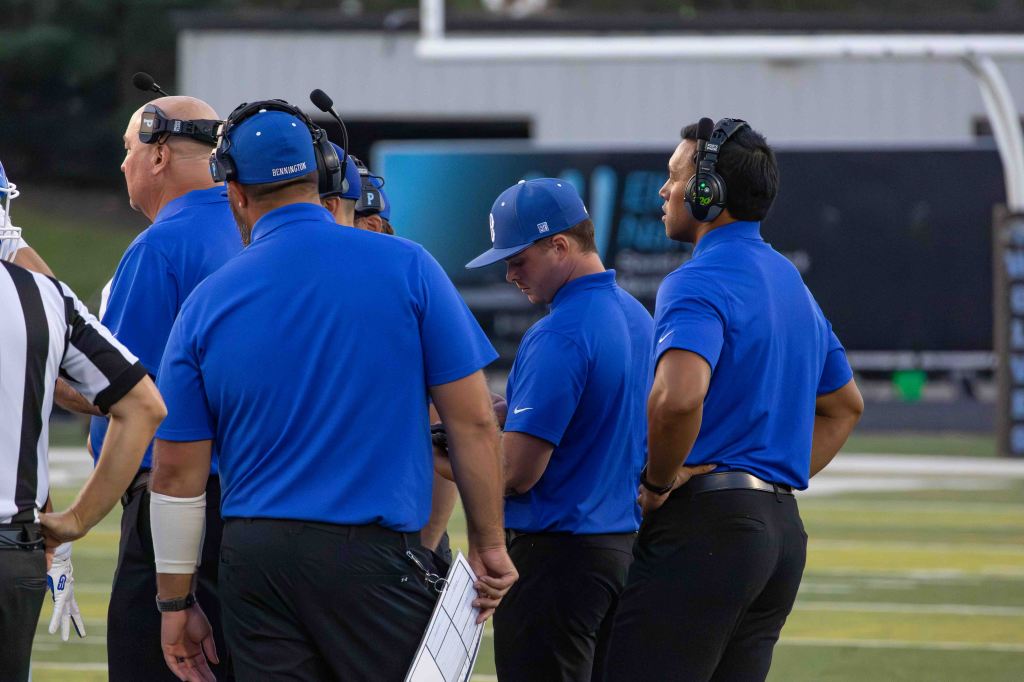
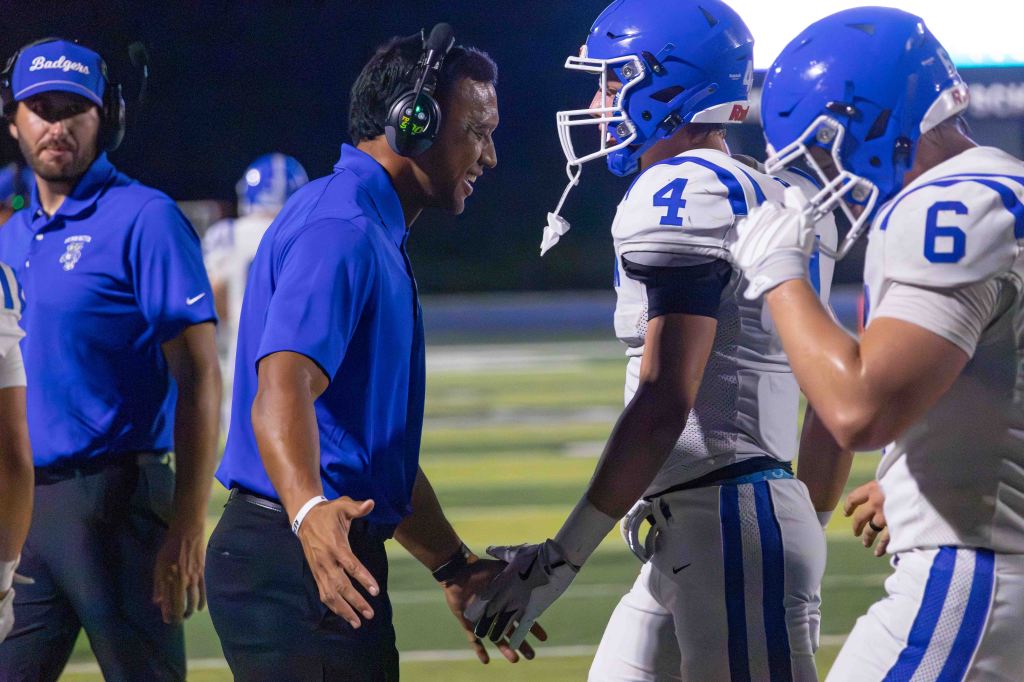
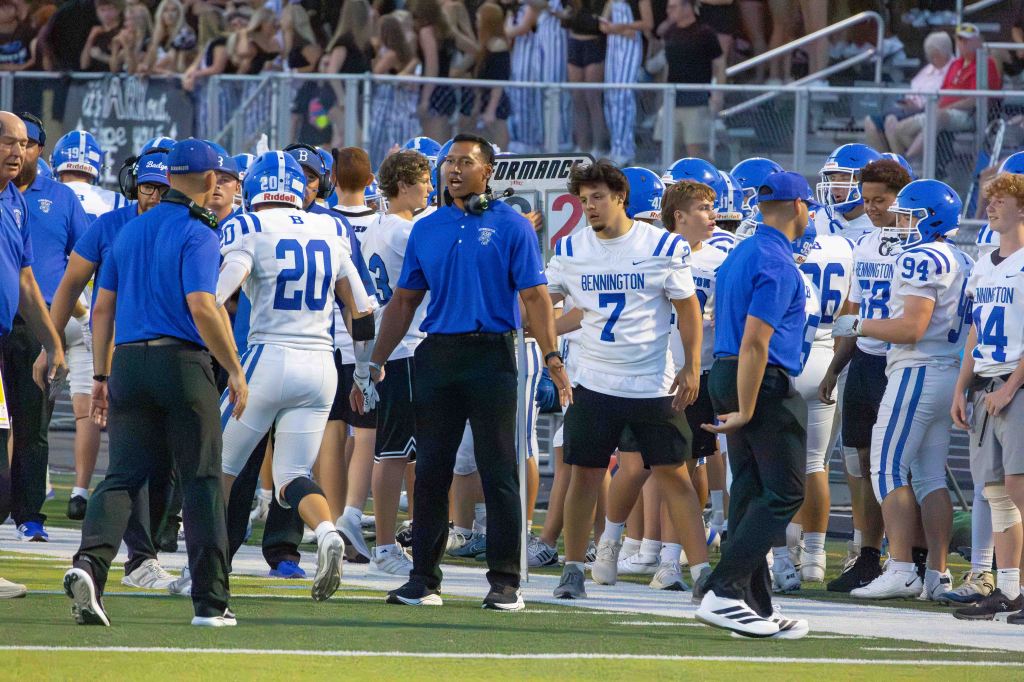
Today, the former Husker and NFL running back is entering a new chapter in Bennington, where he has joined the Bennington High School football coaching staff. For Helu, coaching is about far more than football.
“I love football, and my passion for football has always been there,” he said. “But I’m just wired to be driven by purpose.”
That sense of purpose has followed Helu through several chapters of his life. He said he has always wanted to make a difference in the lives of men, “whether it be from boys all the way through seniors.”
Football, he said, provides a vehicle for doing that.
“The love of football and experience of living the dream of playing it as a young kid all the way through to the NFL,” Helu said. “It really was a natural desire. Hey, you have something that’s of benefit towards the purpose that I feel in my life and using football as the vehicle to fulfill that.”
Helu’s connection to Bennington began years before he ever considered coaching at the high school. After retiring from the NFL, Helu and his family were living in California. His wife Danielle, who is also a former Husker and professional athlete, wanted to return to the Omaha area, where she had grown up, and in early 2017 she made a one-day trip back to Nebraska to search for a home.
At the time, Helu knew little about the western Omaha metro and had never heard of Bennington. His wife found a property they both liked, but there was a problem: The sellers had just accepted another offer. Helu remembers making an offer anyway, then came the phone call. The original buyers hadn’t signed, and the sellers accepted the Helu family’s offer instead.
“And I just, I threw up my phone in absolute disbelief,” he said. “And right then and there, no joke, I knew that Bennington, which I had never heard of before, genuinely never heard of, I knew that we were going there to not just lay down roots, but to serve whoever was going to be there.”
The significance of that moment was amplified by Helu’s experience as a professional football player. During his six years in the NFL, he and his family had moved frequently, often renting and never knowing for certain whether they would remain in one place from one season to the next. They had become accustomed to being nomads, but Bennington was different.
“When this happened, we were looking down to put down roots,” Helu said. “So when it happened, it happened in such a dramatic way that I threw the phone up and instantly I just knew I’m supposed to be here with my family to serve whoever we’re around.”
That mindset became central to the way Helu and his family approached their new community.
“Serve our neighbors, figure out what’s happening and just help,” he said. “And that was the mindset that we had as a family.”
They began getting to know their neighbors, attending community gatherings and becoming involved in the lives of the people around them. Helu said the community quickly began to feel like an extended family.
That desire to invest in people eventually led Helu into another significant role in the Bennington community. A Bible study he helped start grew into Citylight Church in Bennington, where he eventually served as pastor.
Helu stepped down from pastoring Citylight Bennington about 10 months ago. That transition, he said, also helped create the capacity for him to pursue another way of serving young people: coaching football. His time as a pastor changed the way he sees the teenagers he now works with.
“I truly believe that whatever season has been in the past really is preparatory work for what you’re currently in or in the future, etc.,” Helu said.
His years of pastoring gave him an opportunity to see people across virtually every stage of life, not simply from a pulpit, but by “actually living life with people.”
That experience has given him a different perspective on teenagers.
“These kids right now are … it’s not true about everyone, but they’re just in a season of what?” he said.
Rather than simply focusing on what teenagers are doing wrong, Helu said he sees them as young people who are still becoming who they will eventually be.
“I’m not treating them necessarily like adults because they’re not, but I’m also calling them up into forming habits and becoming young men,” he said.
That perspective carries directly onto the football field. Helu knows firsthand how powerful a coach can be in the life of a young athlete. When he looks back on his own high school football experience, he remembers that his coaches’ words carried unusual weight.
“Whatever they said had a heavier weight than any of my teachers,” Helu said.
Football creates a unique environment for those relationships to develop. Players work through conditioning, injuries, losses and other adversity alongside their teammates and coaches. For Helu, those experiences made the words of his coaches stick.
He remembers one particular moment after he had received a college scholarship and began to act differently. During conditioning, his head coach stopped the workout and confronted him about his work ethic. The coach told Helu that if a USC coach asked what he thought of Helu’s work ethic, he would tell him the truth.
The message was simple: Helu had aspirations of becoming a certain kind of player, but he wasn’t yet working like one.
“And so for me, it was a thing I remember that’s carried weight in regards to work ethic, not just like football, but in everything,” he said.
Those lessons stayed with him. As he progressed through Nebraska and into the NFL, Helu continued collecting lessons from the coaches around him. Some taught him the game while others taught him how to treat players. Still others showed him approaches he would ultimately choose not to replicate.
“I had good coaches that I took really good nuggets from,” he said.
One NFL coach in particular stood out to Helu because of the way he challenged players not to settle for mediocrity. But Helu also noticed that the coach sometimes motivated players through fear, something Helu said he would choose not to do himself.
“For me, it’s really experiencing their coaching that helped me say, okay, I think this is the type of coach that I want to be,” he said.
One of the most important lessons Helu wants to pass to his players comes directly from his own experience at the highest level of the sport.
“Don’t make your life all about football, or don’t make your life all about what you do,” he said.
Professional football taught Helu that success on the field can be accompanied by enormous highs and lows, many of which a player cannot control. If an athlete’s entire identity is tied to those results, Helu said, the game can ultimately let them down.
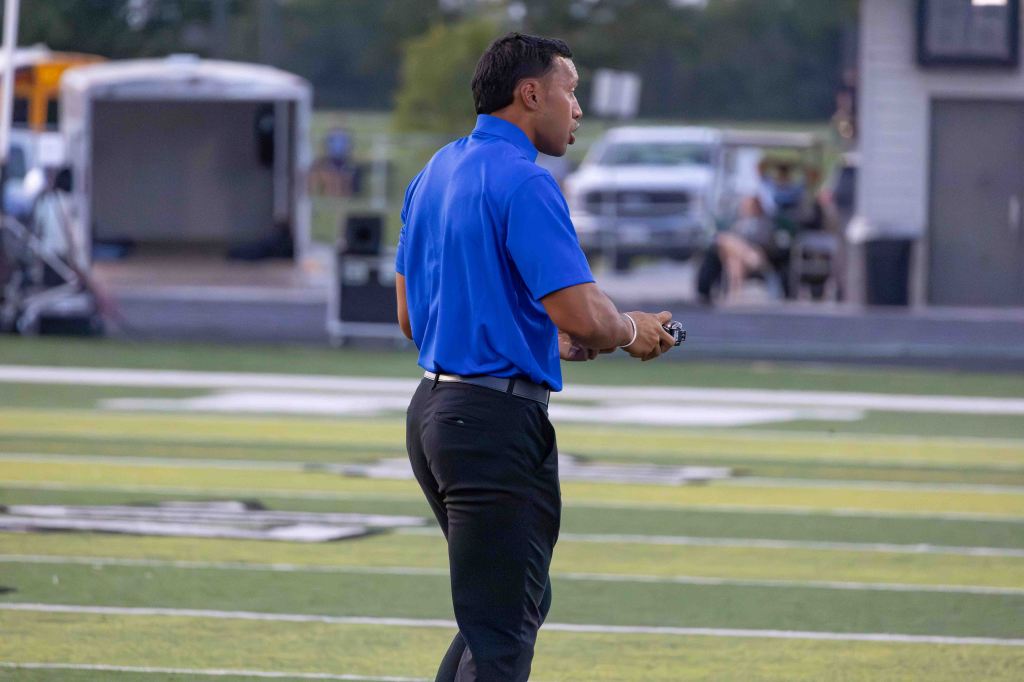
“You play it because you love it, you’ve been wired for it, gifted for it, and you enjoy the max of it, give your heart to it,” he said. “But there’s also that line that you don’t want to cross being like, you know what? No, I’m not gonna make it who I am.”
Helu said he experienced firsthand what happened when football became too much of his identity. He believes separating identity from performance can actually allow athletes to play more freely. Even for younger children, Helu has a simple philosophy he shares with the players he helps coach, including his own sons: “Bring your best.”
That means bringing the best attitude and the best effort, even when circumstances don’t go a player’s way. Football is full of things players cannot control, he said. What they can control is how they respond. For Helu, that is where some of the most important lessons of the sport are found.
Helu said one of the reasons his transition into the Bennington coaching staff has been so seamless is that he sees a shared philosophy among the coaches.
“This staff is a dream to join,” he said. “And for all the reasons that I’ve explained about what I’m about, it just has been so seamless.”
He believes that alignment is important because it allows him to share lessons from his own experiences without feeling like he is working against the message the rest of the staff is teaching. He doesn’t need to tell players his entire story. Instead, he can share pieces of it when the opportunity arises.
For the teenagers he coaches, Helu’s playing career gives those lessons a certain credibility. They aren’t hearing from someone who simply studied the sport. They’re hearing from someone who actually reached the level many young athletes dream about reaching. But Helu also wants them to understand the reality behind the dream.
“It’s awesome,” he said of playing football at a high level. “It’s also a lot of work.”
He wants his players to love the game without allowing it to become the entirety of who they are.
When Helu thinks about what his players might remember years after they leave Bennington High School, he isn’t primarily thinking about wins, losses or individual accomplishments. He knows the players will probably remember their teammates most. They’ll remember the locker room, the bus rides and the shared experiences that make playing football special. But Helu hopes his own contribution will be remembered in a simpler way.
“I want, from the time that they’re freshmen through a senior, I genuinely want them to have an experience where they say, oh man, Coach Roy really, really cared and he really had my best interest at heart,” he said.
For Helu, learning the technical side of coaching remains a personal goal. He wants to continue developing his football knowledge and his ability to teach the game. But underneath all of that is something more fundamental- he wants his players to know they matter.
“I think that’s what students are looking for outside of the competencies of a football coach,” he said.
Helu’s own journey has taken him from a kid with football dreams to Nebraska, the NFL, California and eventually back to Nebraska.
Now, after years of being coached, playing professionally, building a church and investing in the Bennington community, he finds himself on the other side of the relationship, and he hopes the lessons he passes along will matter long after the final whistle.