By Marisa Dawson
A matter of minutes can make the difference between life and death following a serious accident. For someone experiencing severe blood loss, getting to a hospital in time is only part of the equation. What happens before they arrive can be just as important.
Bennington Fire & Rescue is preparing to take a significant step toward changing that equation, thanks to a regional grant through the Metropolitan Area Planning Agency (MAPA) that will bring prehospital blood transfusion capabilities and additional vehicle extrication equipment to the department.
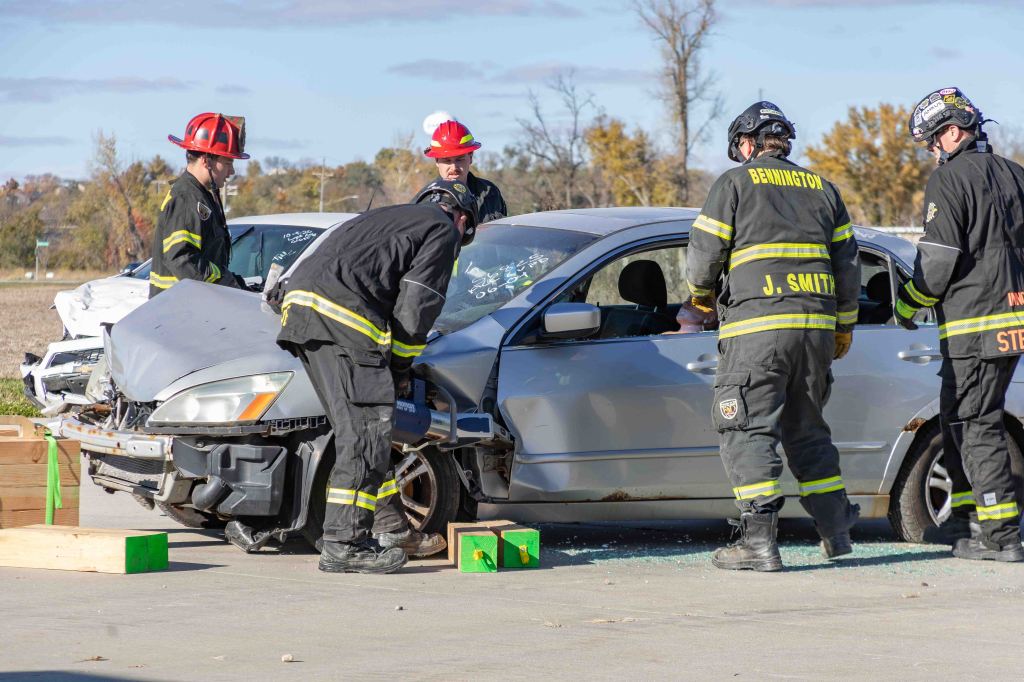
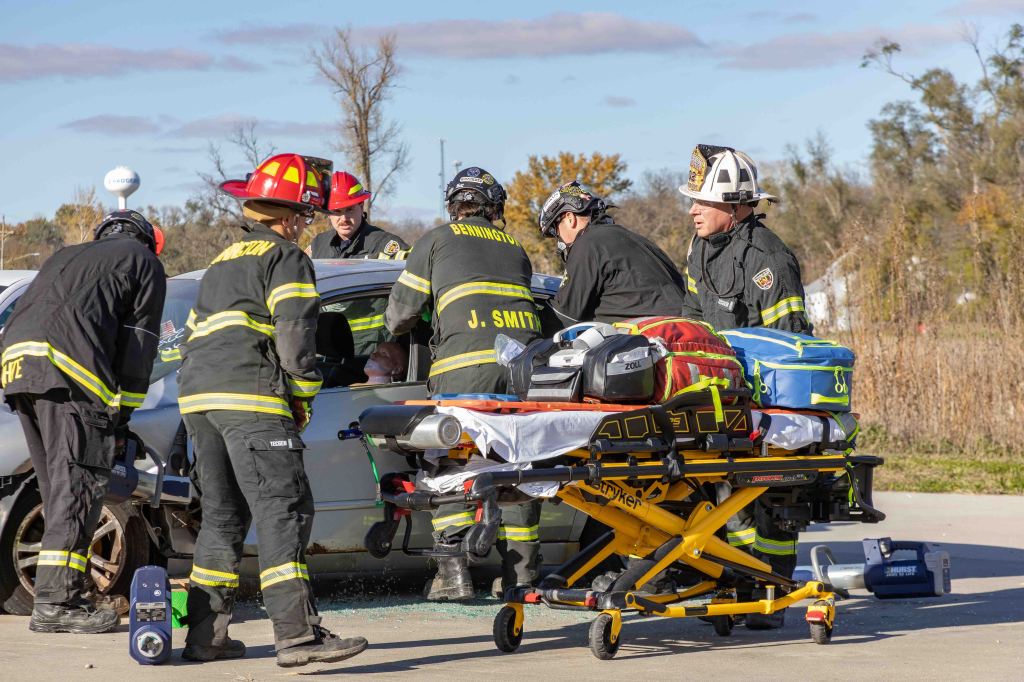
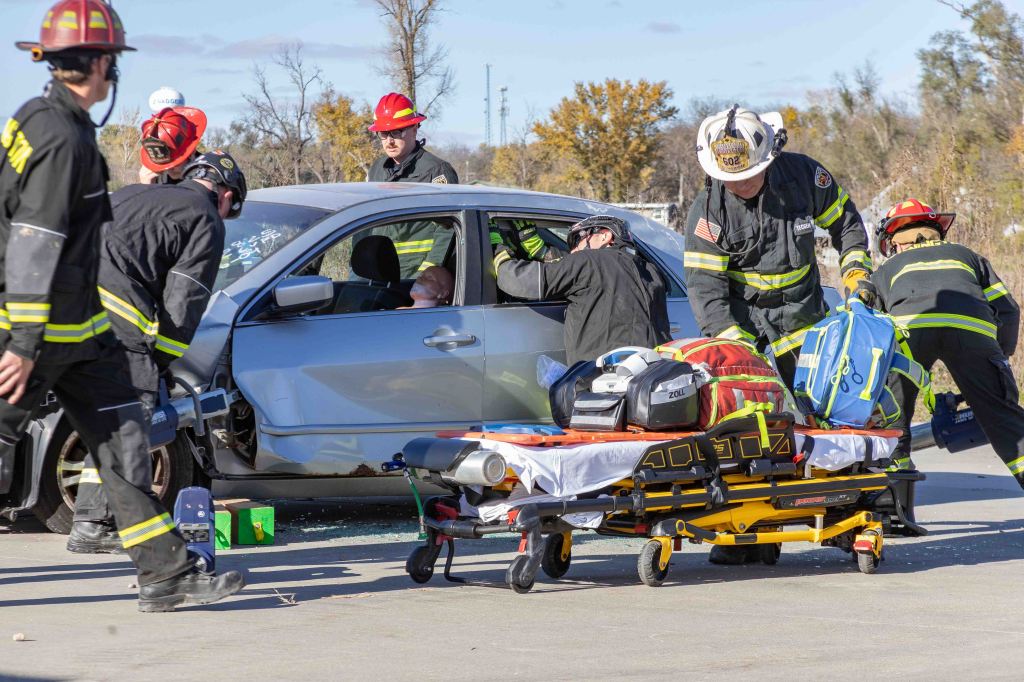
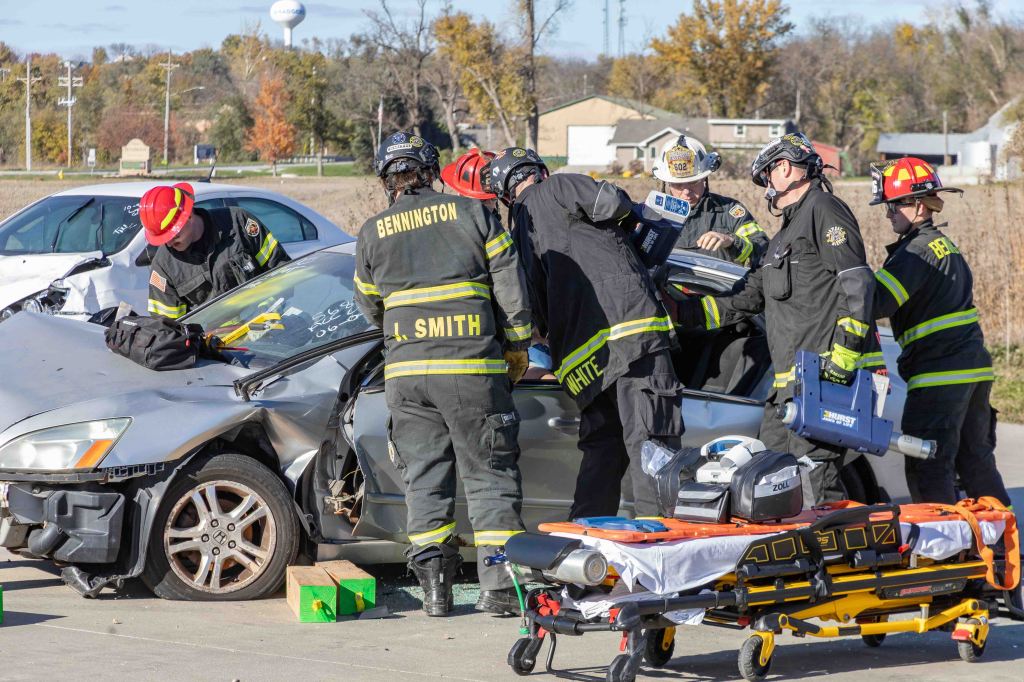
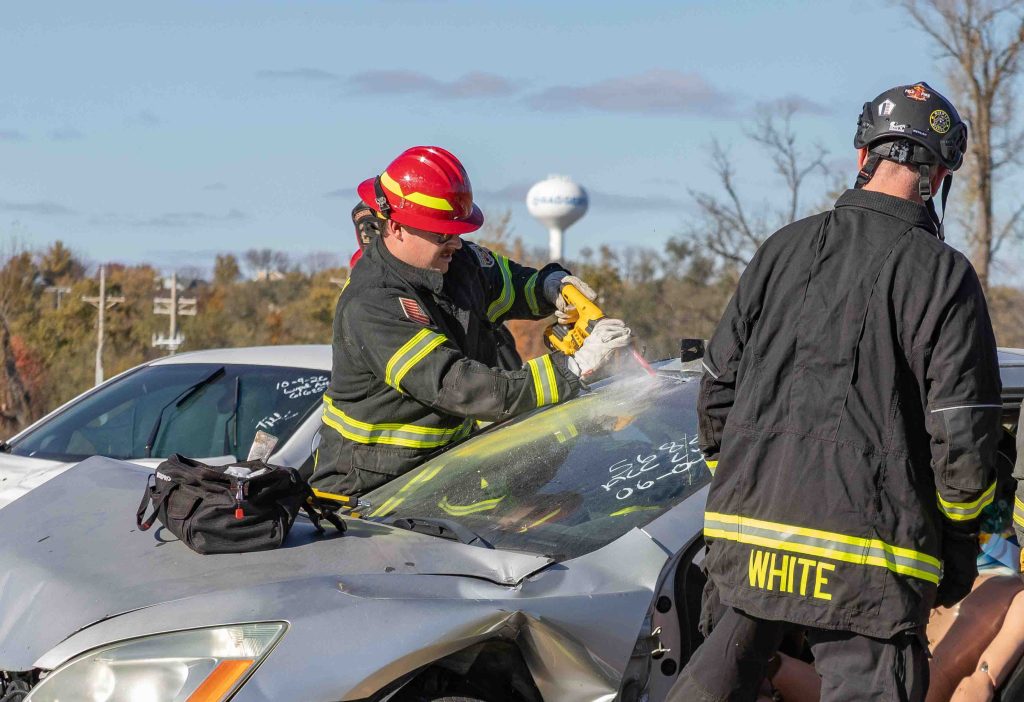
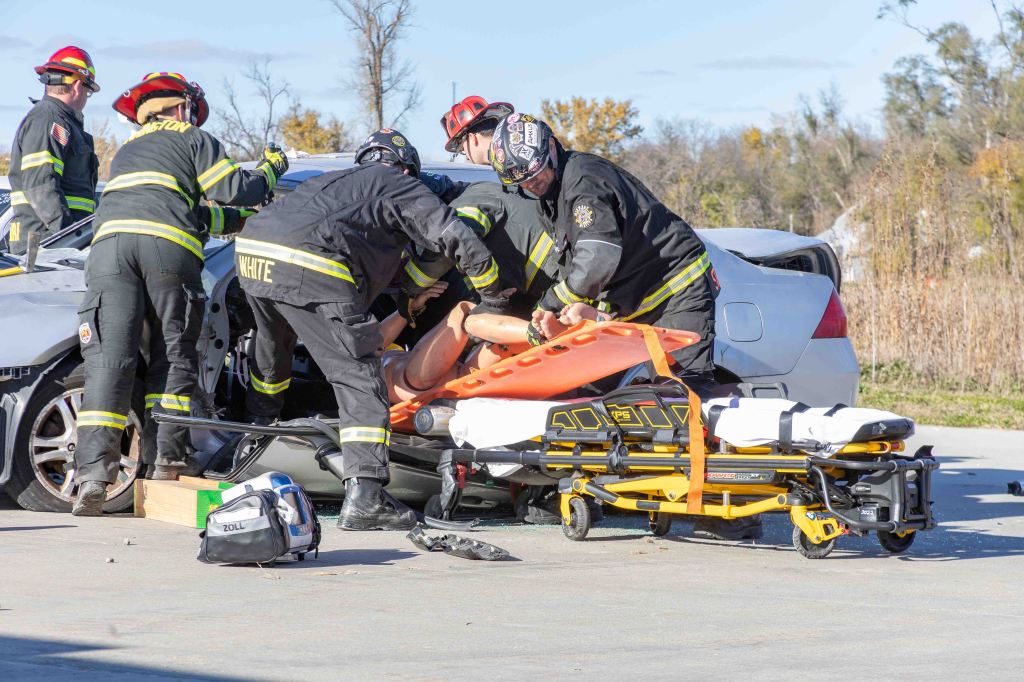
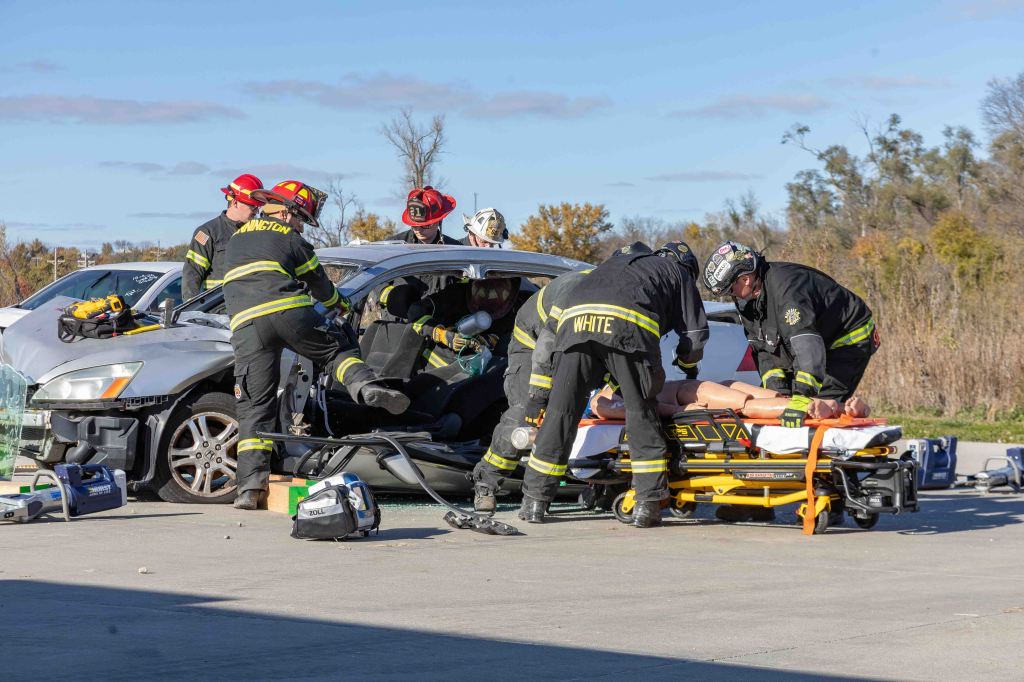
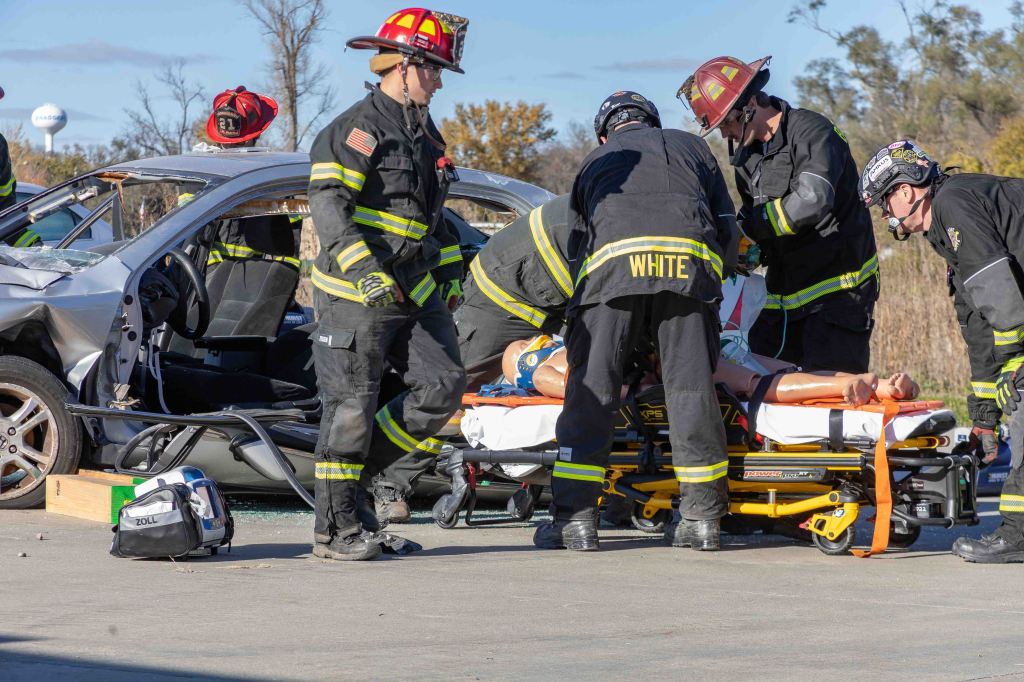
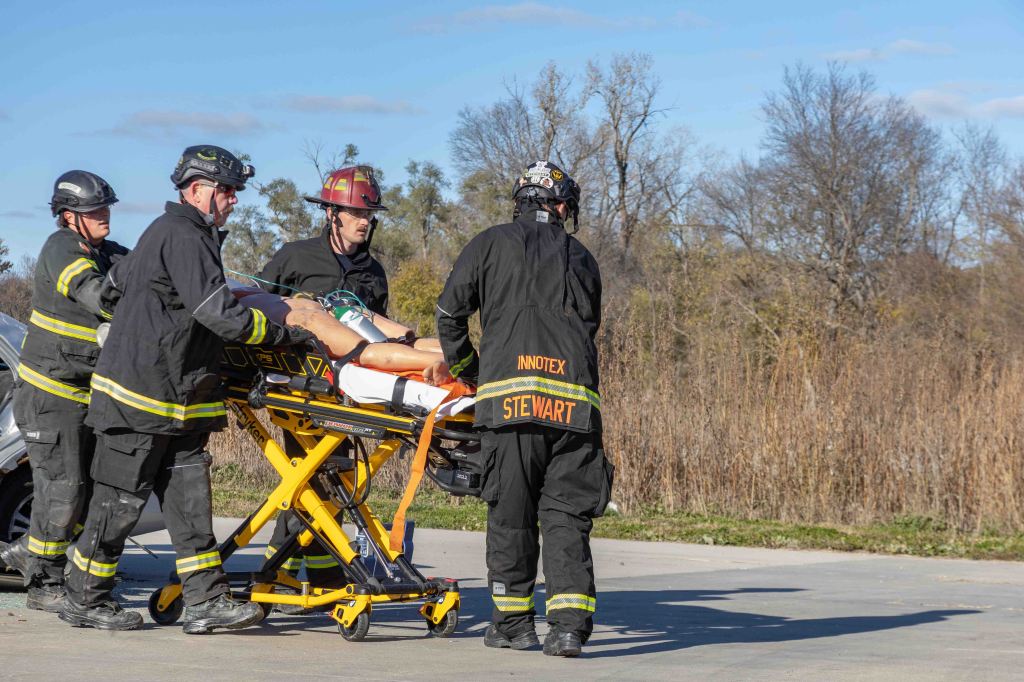
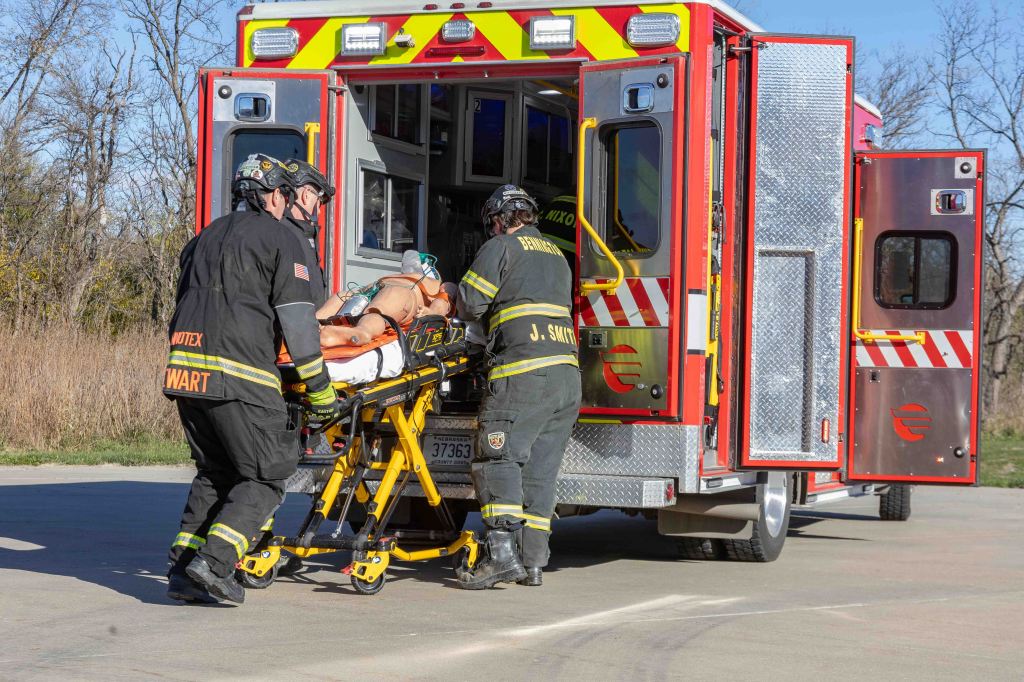
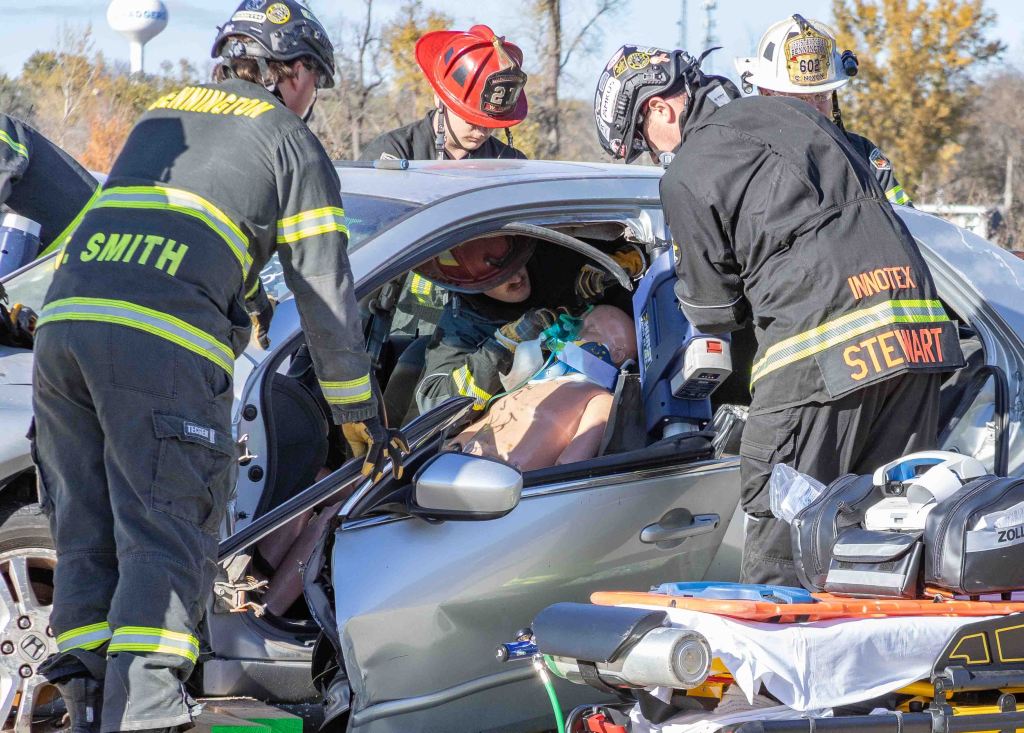
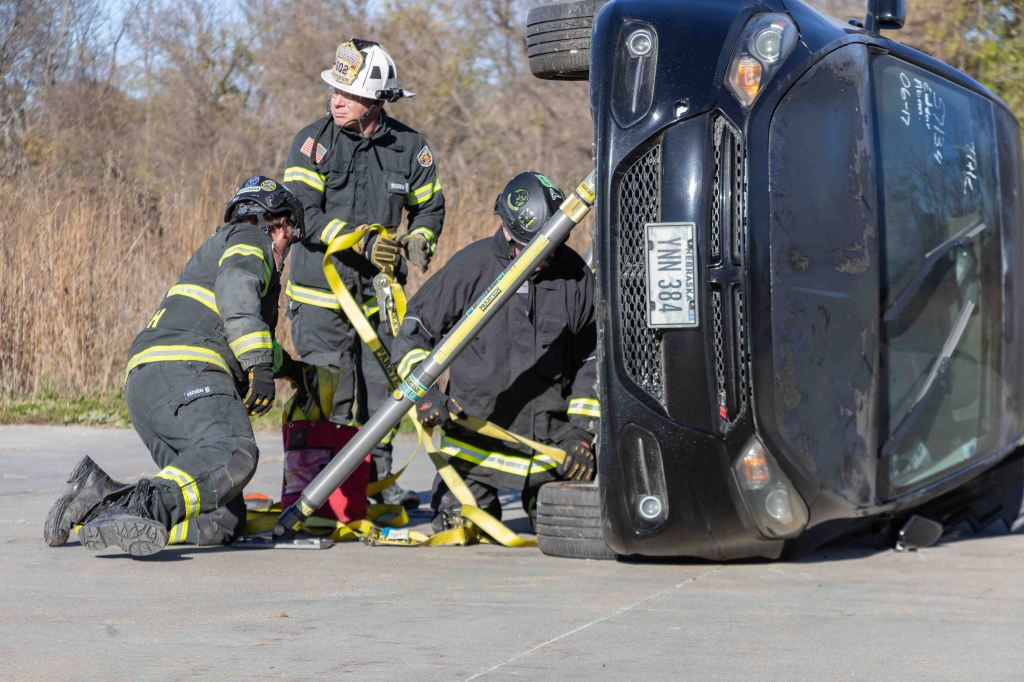
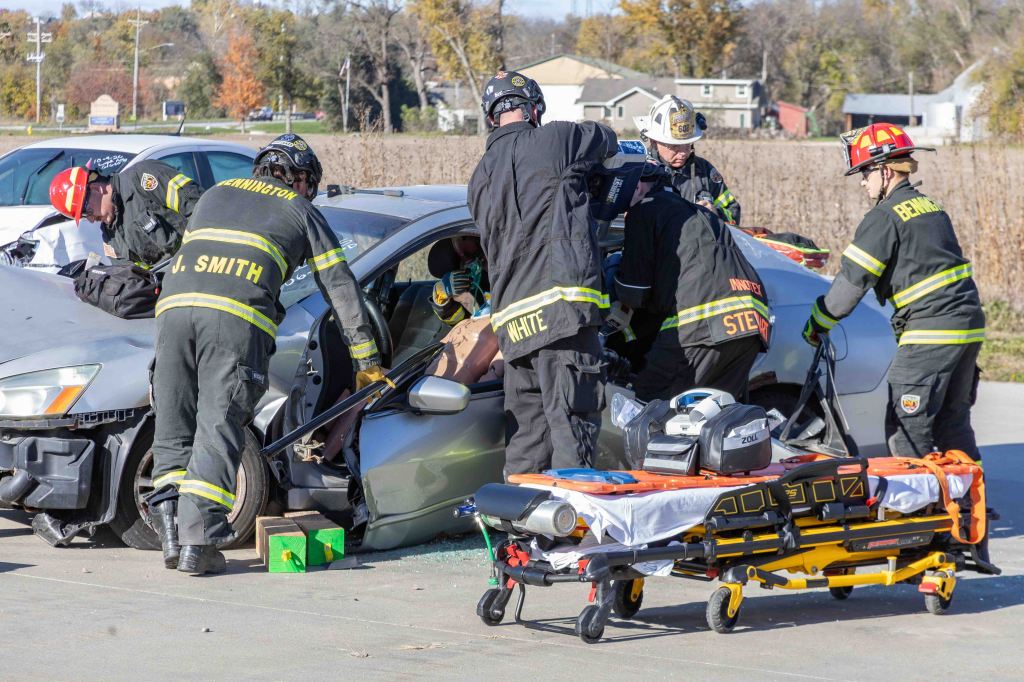
The announcement came Thursday afternoon, November 12, during a press conference and live demonstration hosted by Bennington Fire & Rescue and MAPA. The demonstration walked attendees through a simulated vehicle accident, showcasing how firefighters and paramedics could stabilize a vehicle, extricate a trapped patient, provide medical care and administer blood before reaching the hospital.
For Fire Chief Dan Mallory, the announcement represents the culmination of an effort that has been years in the making.
“Years ago, we talked about blood and we kind of looked at it as ‘I don’t know if I’ll ever see it in our lifetime,’ but here it is. It’s actually happening,” Mallory said.
The funding is part of the federal Safe Streets and Roads for All (SS4A) grant program through the U.S. Department of Transportation. MAPA, the metropolitan planning organization serving the Omaha-Council Bluffs region, brought together Douglas, Sarpy and Pottawattamie counties to address gaps in emergency response capabilities across the region.
While Omaha and Bellevue already have the ability to administer blood in the field, other communities have not had the same access. Bennington’s participation will help extend that coverage, with the department also positioned to assist neighboring volunteer fire departments and communities as far north as Washington County through mutual aid.
“There is a shortage of blood, so not every ambulance service can have blood,” Mallory explained. “So to be chosen as one of the regional departments is an honor and we’re looking forward to having that.”
The importance of having blood available before a patient reaches the hospital comes down to one critical factor: time.
Severe bleeding is the leading cause of preventable death among trauma patients, including those involved in motor vehicle accidents. According to the National Highway Traffic Safety Administration’s Office of Emergency Medical Services, an estimated 37% of trauma patients with severe bleeding could be saved with prompt delivery of blood or blood products before reaching the hospital. The agency also reports that every minute of delay in administering blood increases a trauma patient’s risk of death by 11%.
For patients in the Bennington area, that time can be especially significant.
Mallory said the department is typically looking at approximately 20 minutes of transport time to reach one of the area’s two Level 1 trauma centers. Until now, patients experiencing severe blood loss have had to wait for hospital treatment or assistance from another service equipped to provide blood.
“Last year, there were at least 12 times that we could have used it,” Mallory said, referring to the department’s review of its own emergency calls.
He anticipates that number could grow as the department’s call volume increases and it provides additional mutual aid to surrounding communities.
“To be able to do that with our own people, our own equipment, that’s fantastic,” he said.
During the demonstration, representatives explained the difference between traditional fluid replacement and administering whole blood. While normal saline can help replace lost fluid and maintain circulation, it does not carry oxygen. Blood, on the other hand, contains red blood cells that transport oxygen throughout the body, making it especially important for patients experiencing significant blood loss.
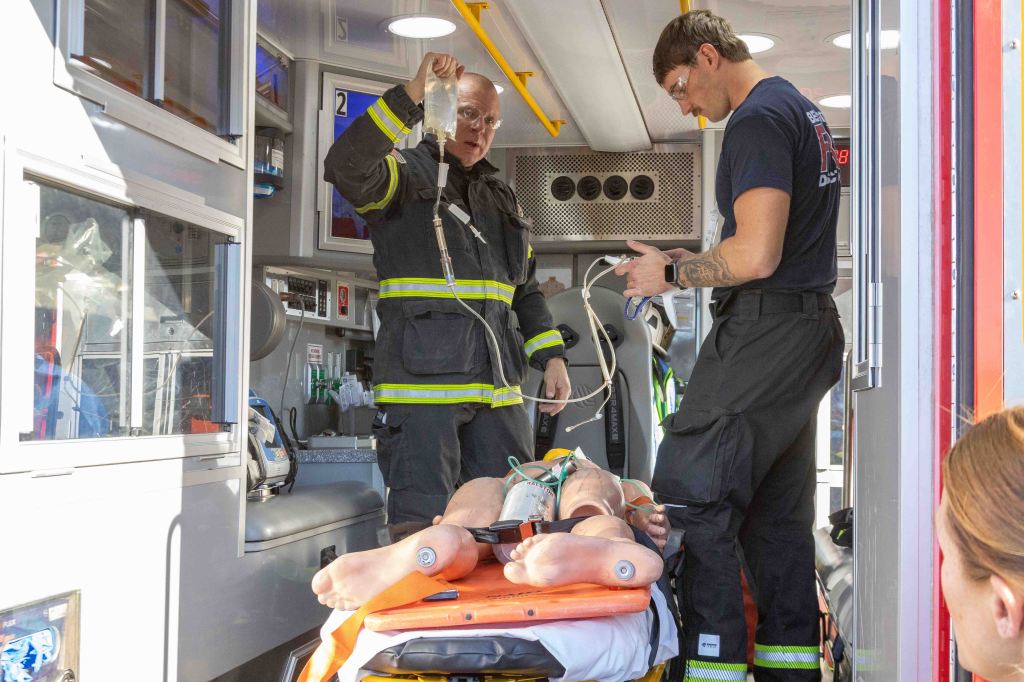
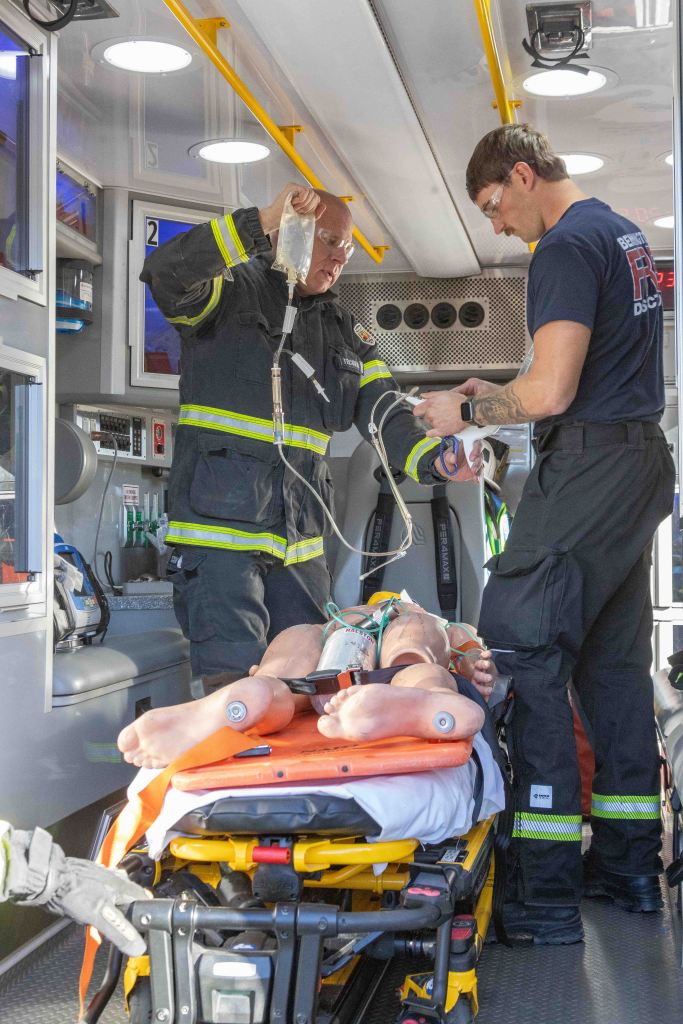
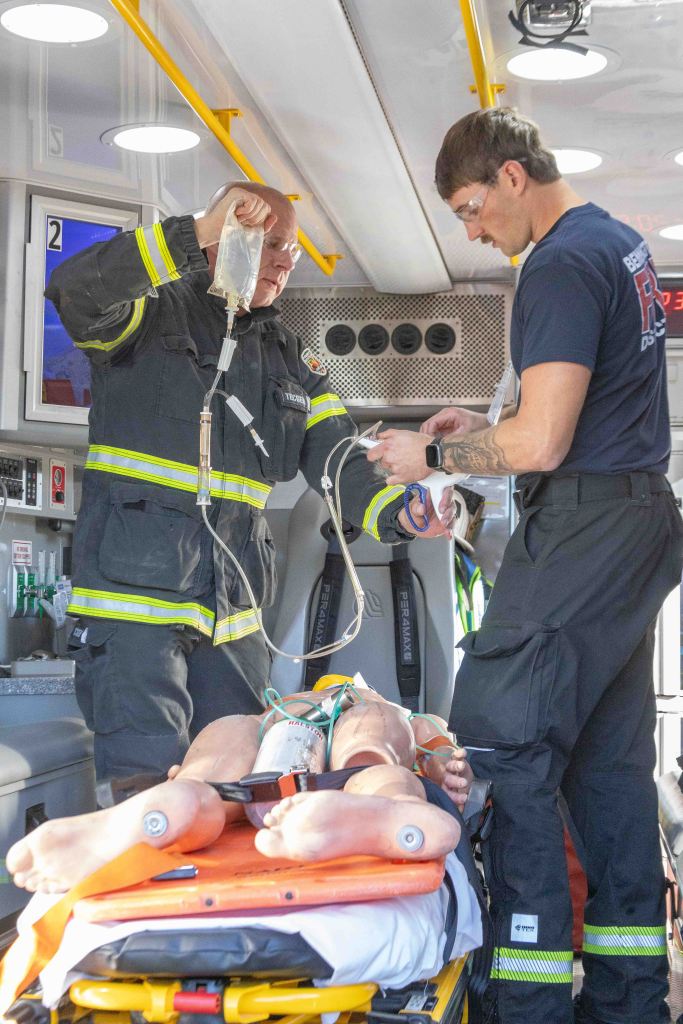
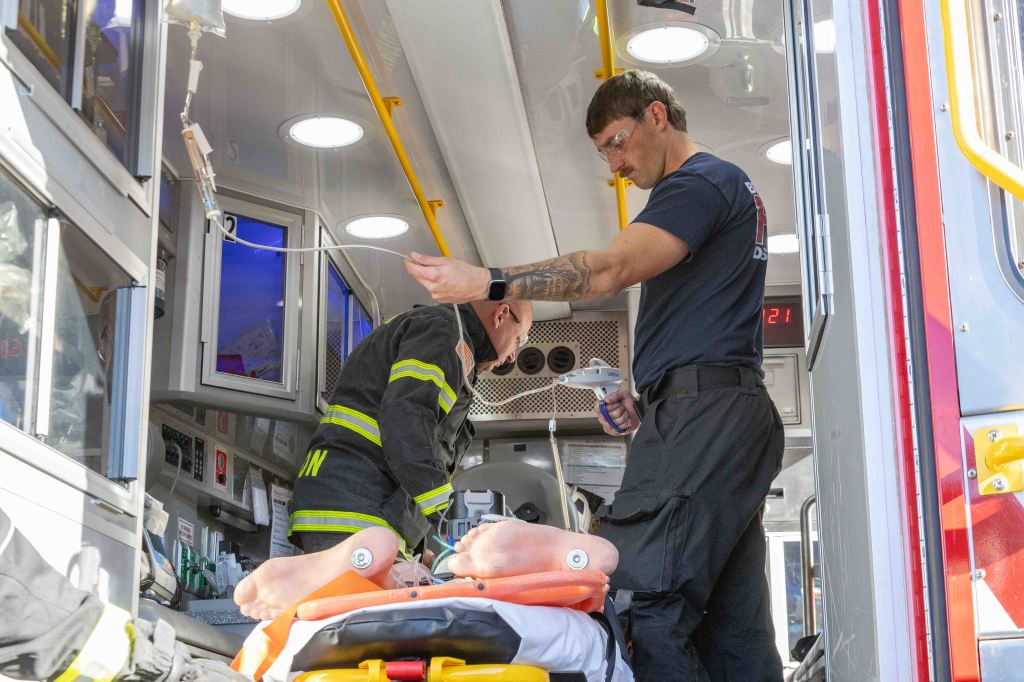
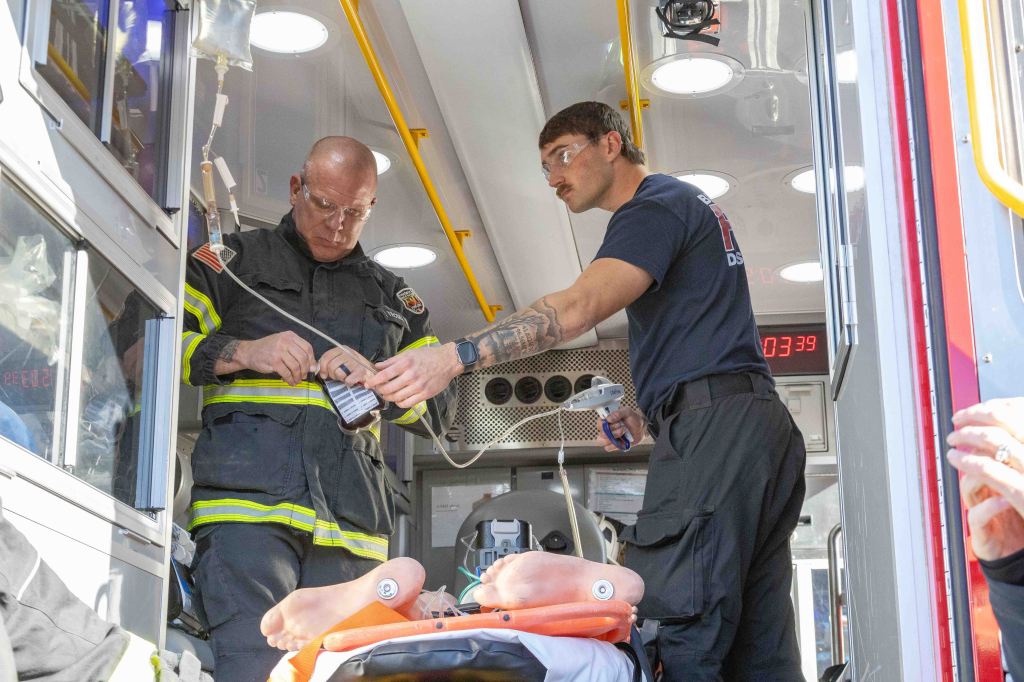
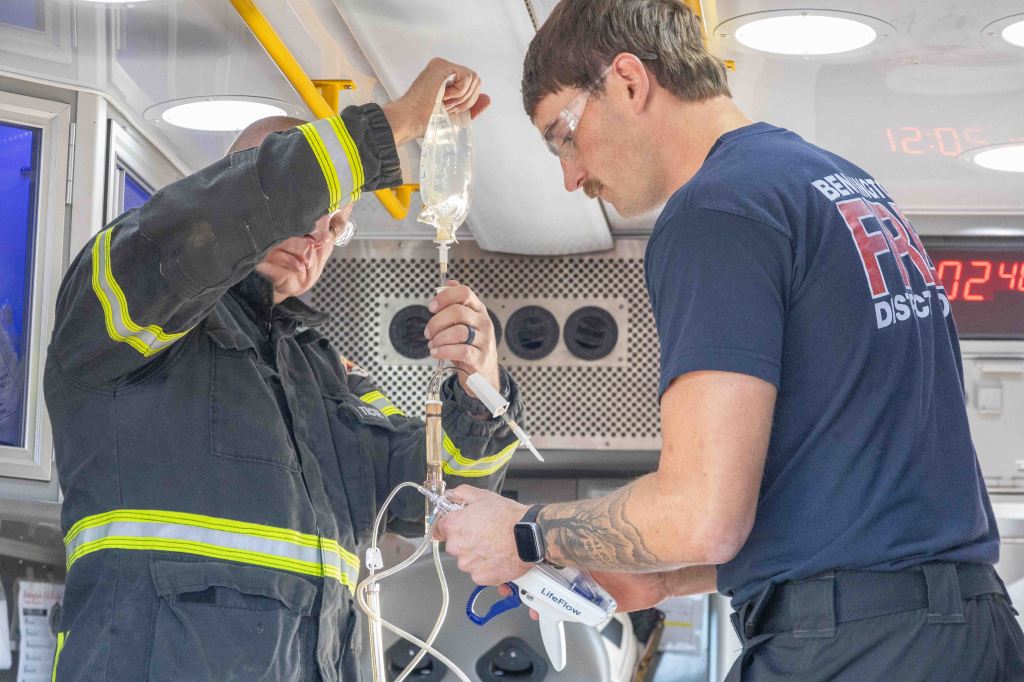
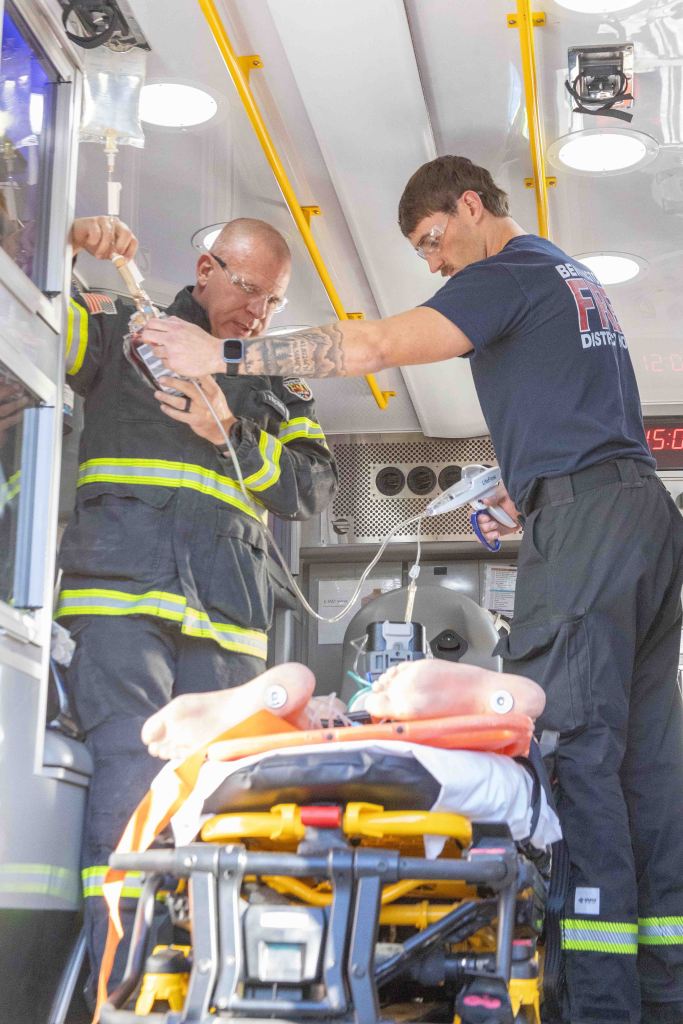
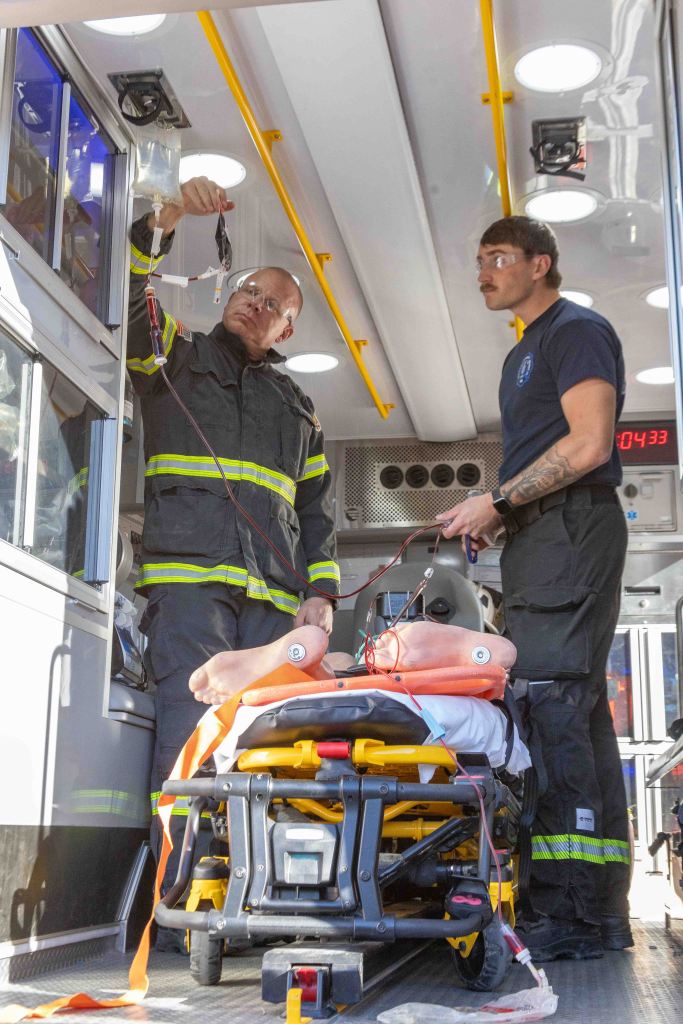
The department’s new capability will allow paramedics to administer a unit of blood in the field while continuing to transport the patient. A specialized rapid infuser and warming equipment will help prepare and administer the blood, with a demonstration showing a unit being pumped through the system in approximately two minutes. This is demonstrated in the image below by Assistant Chief Chad Nixon (left) and FF/Paramedic Brant Schuler (right).
Treatment will be reserved for patients who meet specific medical criteria, particularly those experiencing life-threatening blood loss and at risk of cardiac arrest during transport. Paramedics will also have additional medications available, including tranexamic acid (TXA), which helps prevent the breakdown of blood clots, and calcium.
MAPA representatives also emphasized the importance of continuity between emergency responders and hospitals. By using compatible equipment and procedures, patients can arrive at the trauma center with transfusion already underway, allowing hospital staff to continue treatment without unnecessary interruption.
Although blood transfusion is the centerpiece of the announcement, the grant will also provide additional equipment to improve vehicle stabilization and extrication.
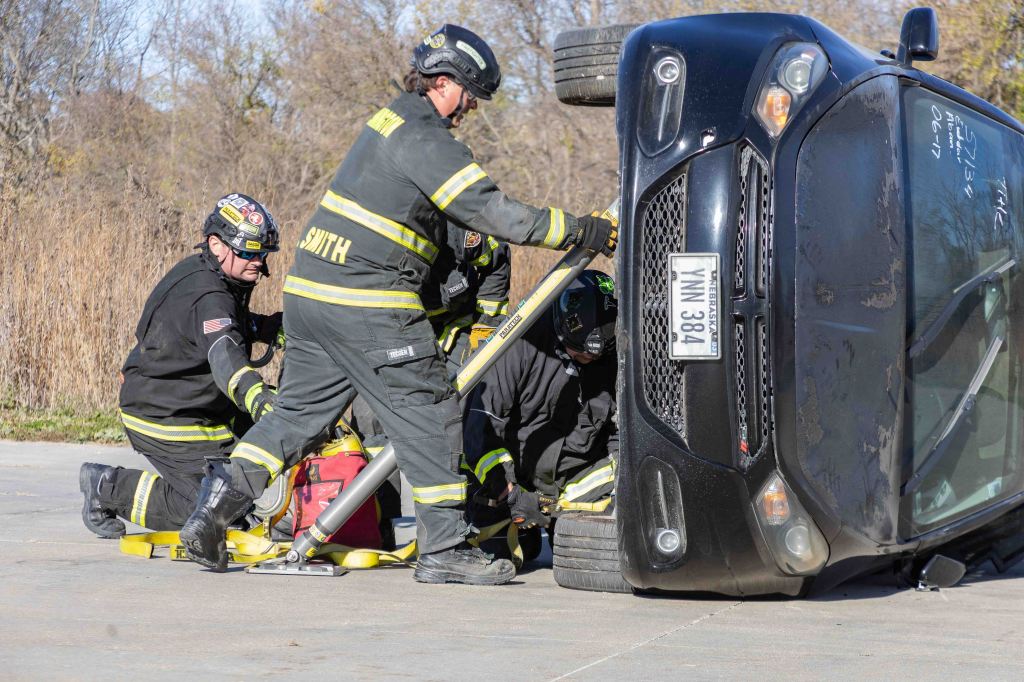
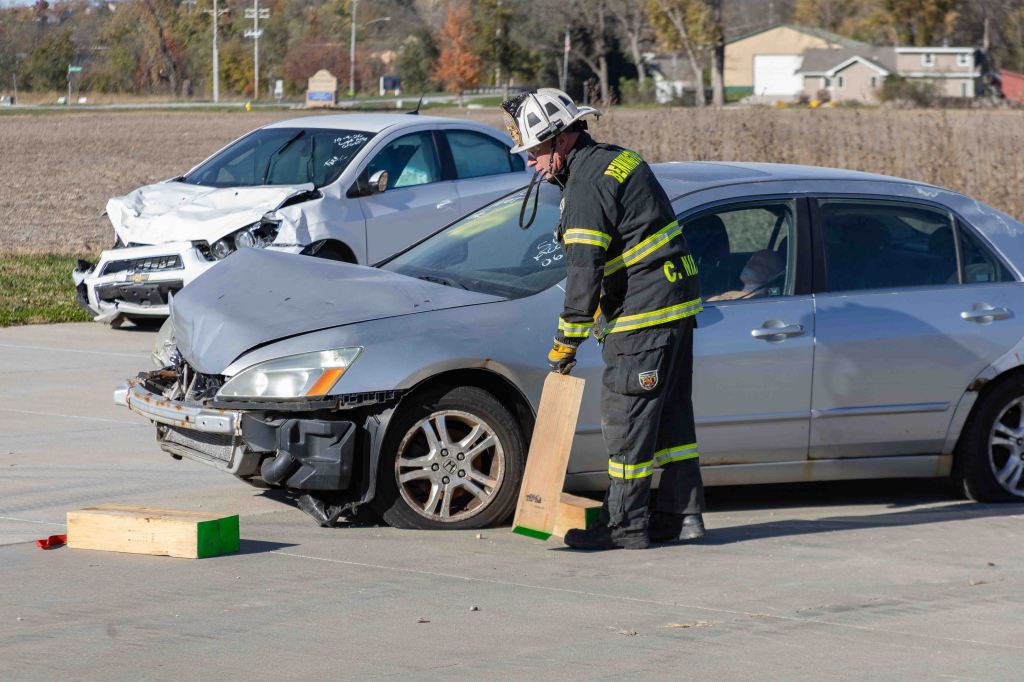
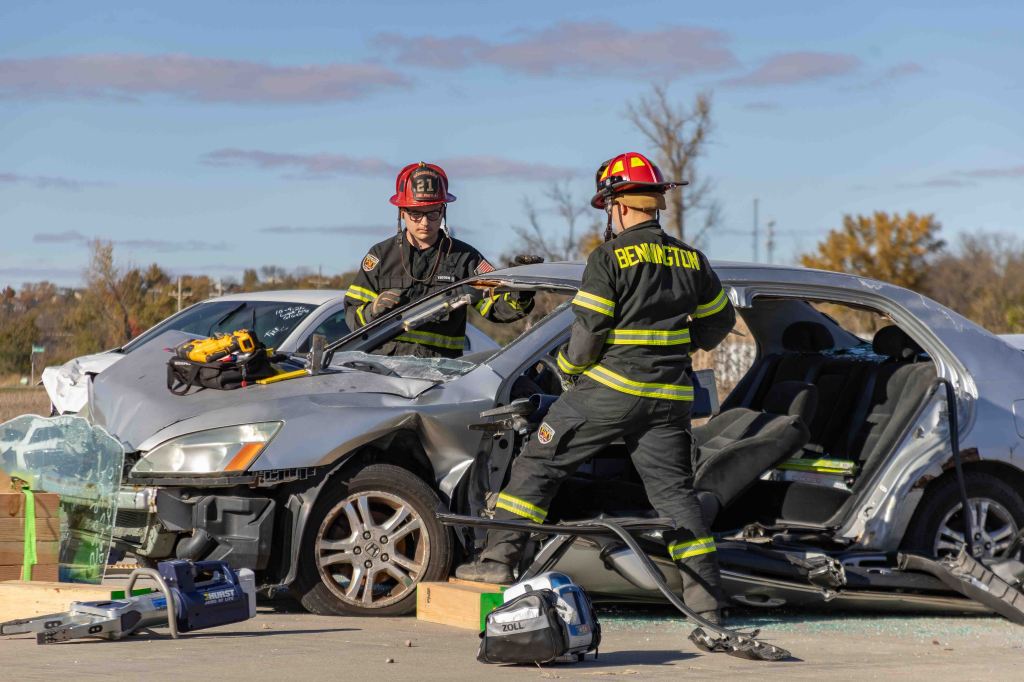
During Thursday’s demonstration, firefighters walked attendees through a simulated vehicle rescue, beginning with stabilizing a vehicle using specialized equipment to prevent it from shifting or rolling during the operation.
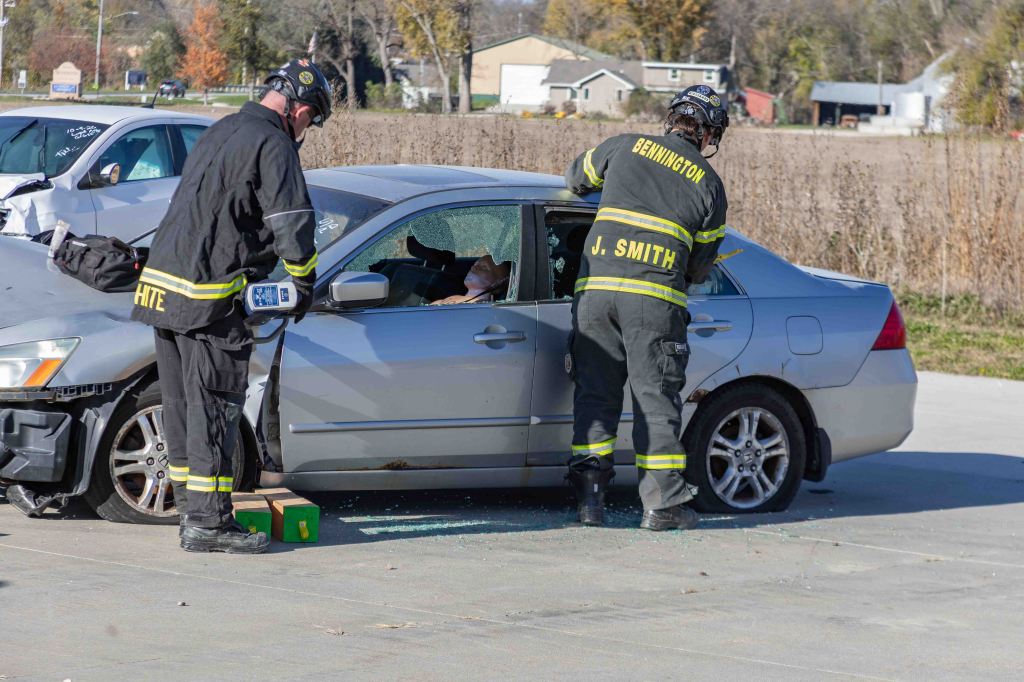
From there, crews used various extrication tools to remove vehicle doors and gain access to a simulated patient trapped inside. Firefighters demonstrated how they can work around the patient while cutting through the vehicle, ultimately creating enough space to safely remove the individual.
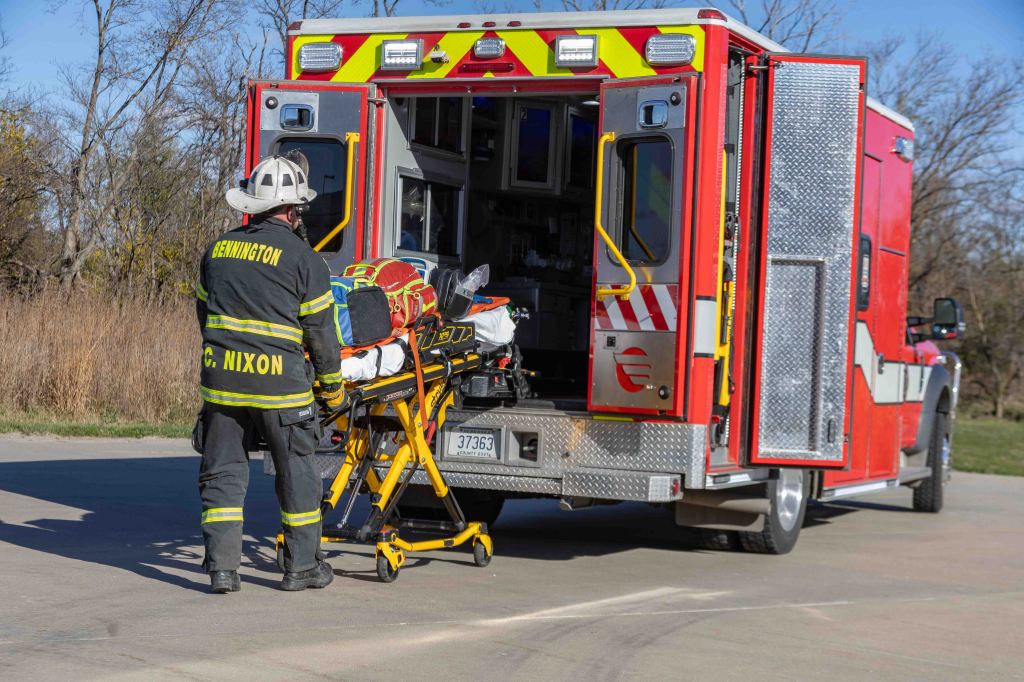
Once extricated, the patient was transferred to the ambulance, where paramedics demonstrated the process of preparing and administering blood.
The additional equipment is intended to improve both the speed and safety of these operations, particularly in serious crashes where patients are trapped and every minute matters.
MAPA representatives described the effort as part of a broader regional strategy to improve post-crash care, recognizing that preventing accidents is only one component of reducing roadway fatalities. Ensuring patients receive appropriate treatment as quickly as possible after a crash is another.
Data shared during the presentation highlighted the opportunity for improvement. According to MAPA’s analysis of federal crash data, 43% of people who ultimately died in traffic crashes nationwide in 2023 were still alive when emergency responders arrived. Within MAPA’s region, that figure was 63% in 2023 and increased to 66.7% in 2024.
In other words, approximately two out of every three people who ultimately died in regional fatal crashes were still alive when first responders reached them.
Those numbers underscore the importance of improving what happens after emergency crews arrive, particularly when patients have injuries that could potentially be treated before they reach a hospital.
The national 37% survival estimate is an important indicator of the potential impact, although it is not a guarantee of an individual patient’s outcome. Research into the most effective prehospital transfusion approaches continues to evolve, and the regional demonstration will also help gather additional data about how these capabilities work in practice.
Getting blood into an ambulance requires considerably more than simply having a supply available.
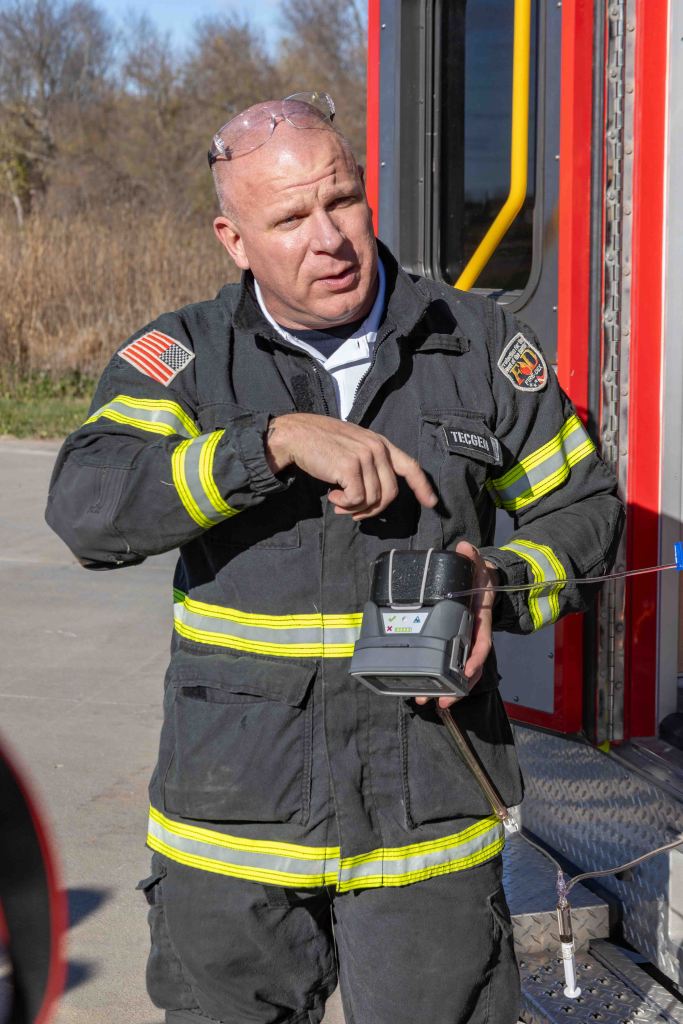
The department will receive a specialized temperature-controlled cooler, costing approximately $17,000, to safely transport and maintain blood onboard the ambulance. Each cooler will carry one unit of blood.
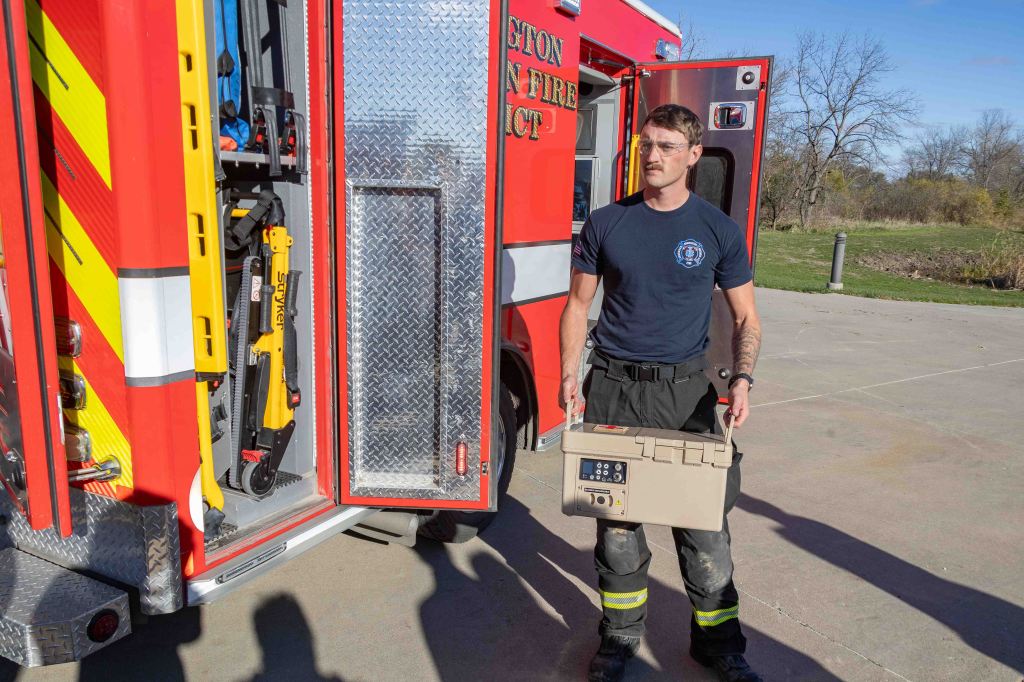
According to Assistant Chief Chad Nixon, a unit of blood costs approximately $650, but the greater concern is ensuring the limited supply is used responsibly and not wasted.
Blood has a 21-day window from the time it is donated. Under the department’s planned process, Bennington will have approximately 14 days to use a unit before returning it to a trauma center, which will then have another seven days to use it for hospital transfusions.
“We’re good stewards of that unit of blood,” Nixon explained, emphasizing the importance of coordinating with regional hospitals and blood suppliers.
The department also hopes the initiative will encourage greater community involvement in maintaining the blood supply. Mallory said there is interest in working with neighboring departments and organizations to promote blood drives and help strengthen the regional supply.
“It’s more about the value of the commodity,” Nixon said, noting that blood shortages make responsible distribution especially important.
Training is another significant part of the process. Mallory said paramedics will complete an approximately week-long course focused specifically on the blood program, followed by additional training and clearance through the department’s medical director.
Some department members have already completed portions of the training, allowing Bennington to get ahead of the process.
MAPA’s presentation outlined a target of purchasing the equipment by Jan. 1, completing training and beginning a demonstration period. The participating departments will then collect data on equipment use, patient care and outcomes over approximately a year. That information will help MAPA evaluate the program’s effectiveness and build the case for expanding these capabilities throughout the region.
The initial grant is designed as a demonstration project, meaning the participating departments will have limited equipment as they establish procedures and document results. Each participating fire department will have one cooler capable of carrying one unit of blood.
The longer-term goal, however, is much bigger. MAPA representatives discussed the potential to expand prehospital blood transfusion capabilities to additional fire departments and EMS providers throughout the region, including rural and volunteer departments that may otherwise face significant gaps in access to these resources.
For Bennington, that means the impact of Thursday’s announcement could reach well beyond the community’s own emergency calls.
Mallory said the department has already seen situations in which it needed assistance from Omaha Fire to provide blood. Having the capability within its own department will allow Bennington to respond more independently while also becoming a resource for neighboring communities.
“That’s tremendous,” Mallory said of the opportunity to eliminate the wait for hospital-based transfusions.
What began as an idea that once seemed unlikely is now moving toward reality. With specialized equipment, additional training and regional collaboration, Bennington Fire & Rescue is preparing to bring a critical piece of emergency medical care closer to the people who need it most.
And in an emergency where every minute counts, that added capability could make all the difference.