By Marisa Dawson
As e-bikes, e-scooters, e-motos and other micromobility devices become increasingly common in Bennington and communities across the metro area, local officials and safety advocates are working to make sure riders, parents and drivers understand how to use them safely, and explain what the law allows.
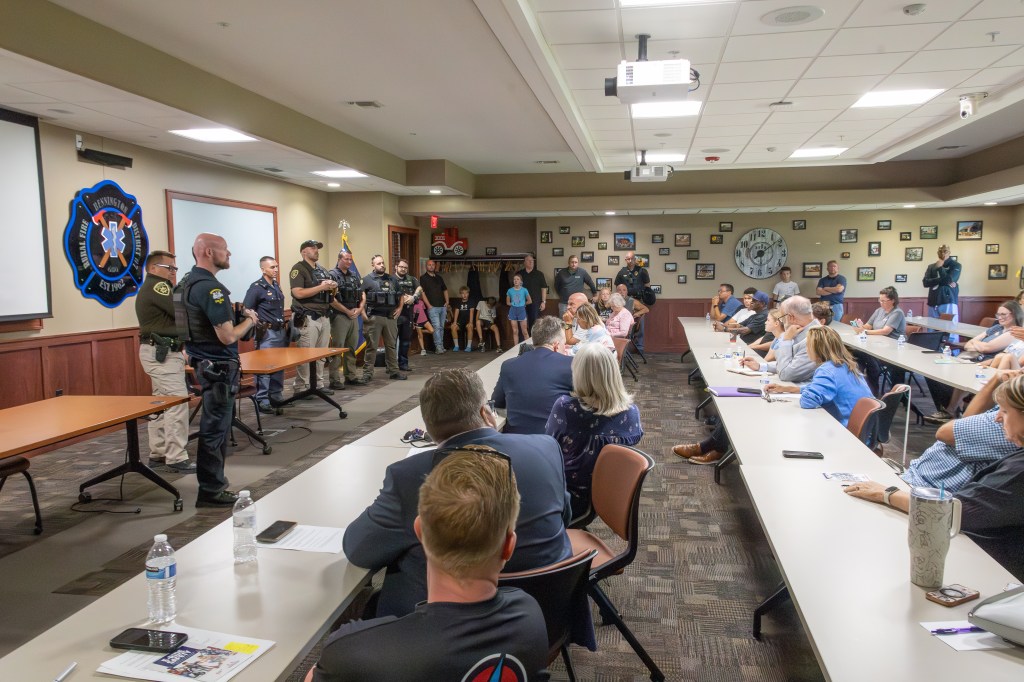
That was the focus Monday evening as the City of Bennington hosted its Ride Smart, Ride Safe event at the Bennington Fire Department.
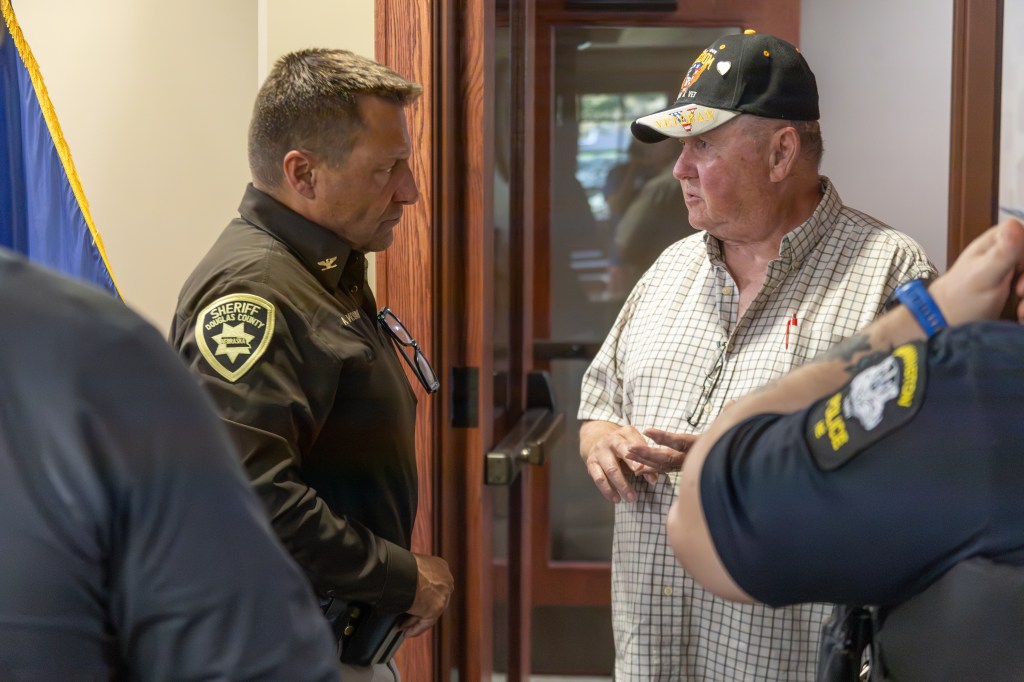
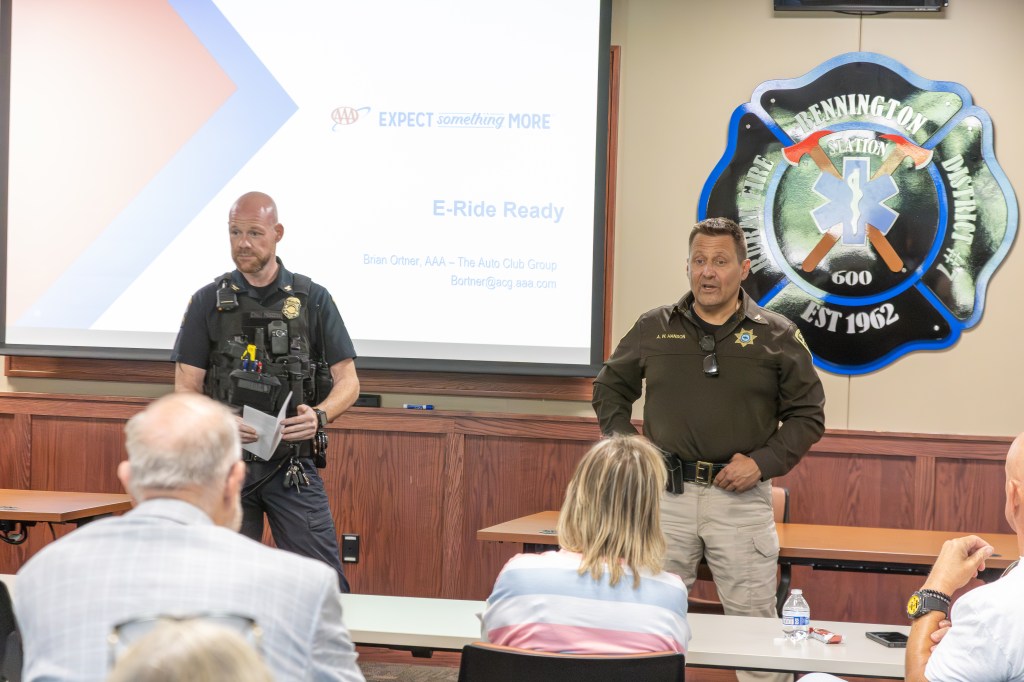
Bennington Police Chief Andrew Hilscher and Douglas County Sheriff Aaron Hanson (both pictured below) opened the event, which brought together representatives from AAA, Nebraska Electric Powersports, Bike Walk Nebraska, the Omaha prosecutor’s office, Nebraska State Patrol, Douglas County Sheriff’s Office, Bennington Police and Bennington Fire & Rescue.
Hilscher emphasized that, when it comes to children riding e-bikes, e-scooters and similar devices including bicycles, Bennington Police would prefer they stay on sidewalks rather than in the roadway whenever possible. He stressed that riders still need to be safe and respectful of pedestrians while using sidewalks and must safely cross streets. However, if children are riding in the street, Hilscher said they need to understand and follow the rules of the road.
The event was designed to educate residents of all ages about the rapidly changing world of micromobility, including the differences between e-bikes and e-motos, current laws, safe riding practices and the challenges communities face as technology develops faster than existing policies.
Understanding what you’re riding
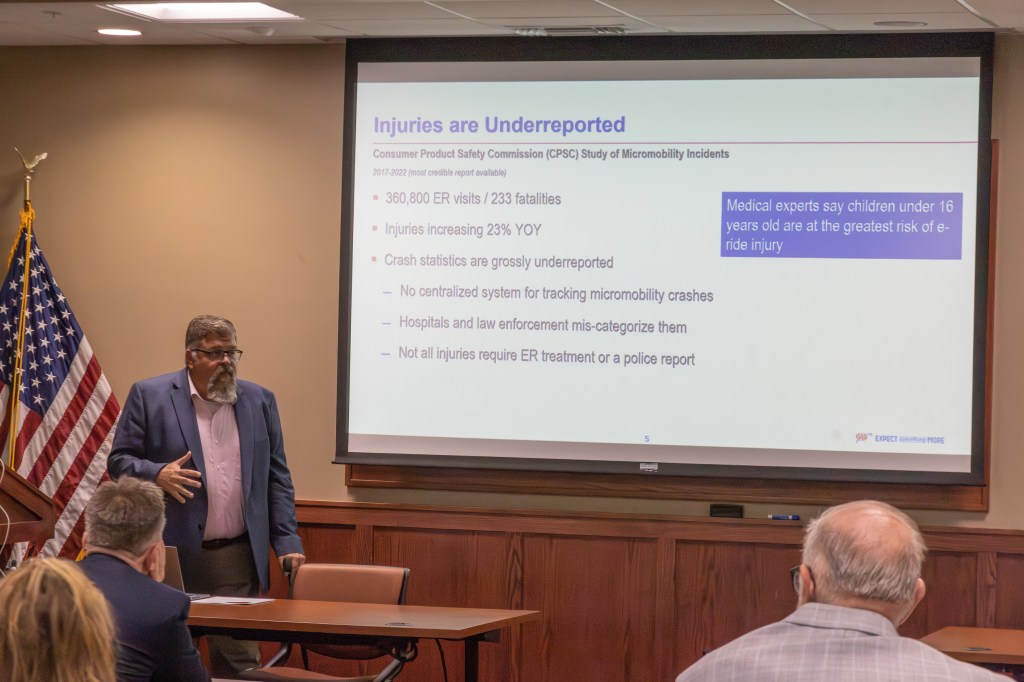
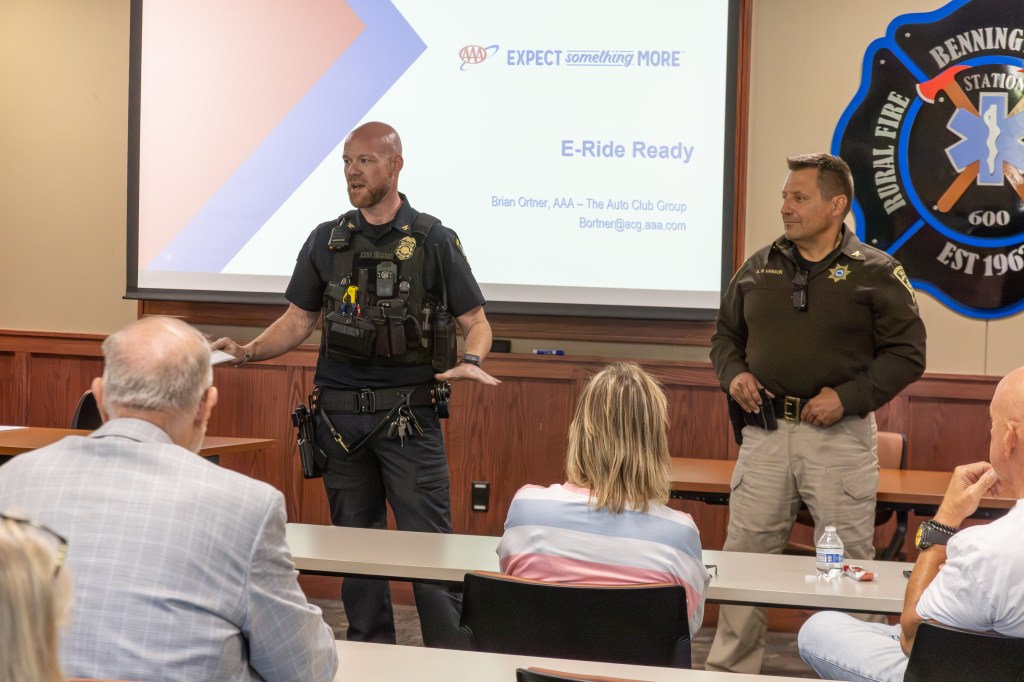
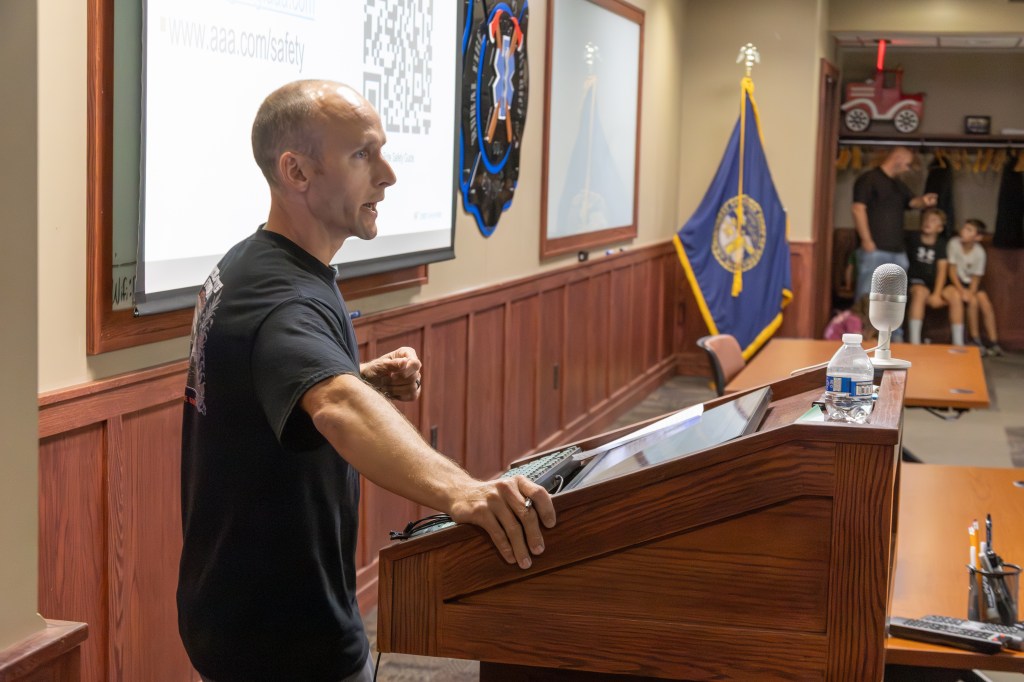
Brian Ortner of AAA (pictured above) began the evening by emphasizing that everyone has a role in roadway safety.
“We all have a part to do in what happens on the roadways,” Ortner said.
Ortner introduced AAA’s “E-Ride Ready Overview,” a guide designed to help consumers understand different types of devices, their classifications and whether a particular product is appropriate for their household. This guide can be accessed here.
One of the major themes of his presentation was the importance of understanding exactly what is being purchased. Nebraska law recognizes three classes of e-bikes, but Ortner noted that e-motos are a separate category and can easily be mistaken for e-bikes, particularly when consumers shop online.
“If you remember anything from what I’ve said today, e-motos are not e-bikes,” he said.
Ortner explained that traditional e-bikes are pedal-driven and use electric assistance, while e-motos are capable of speeds and performance that place them outside the legal definition of an e-bike.
“There’s a difference when it comes to legal definitions of those,” he said.
That distinction can have significant consequences. E-motos that meet the requirements for street-legal electric motorcycles require licensing, registration and insurance, while other electric dirt bikes are not street legal at all and can only be ridden on private property.
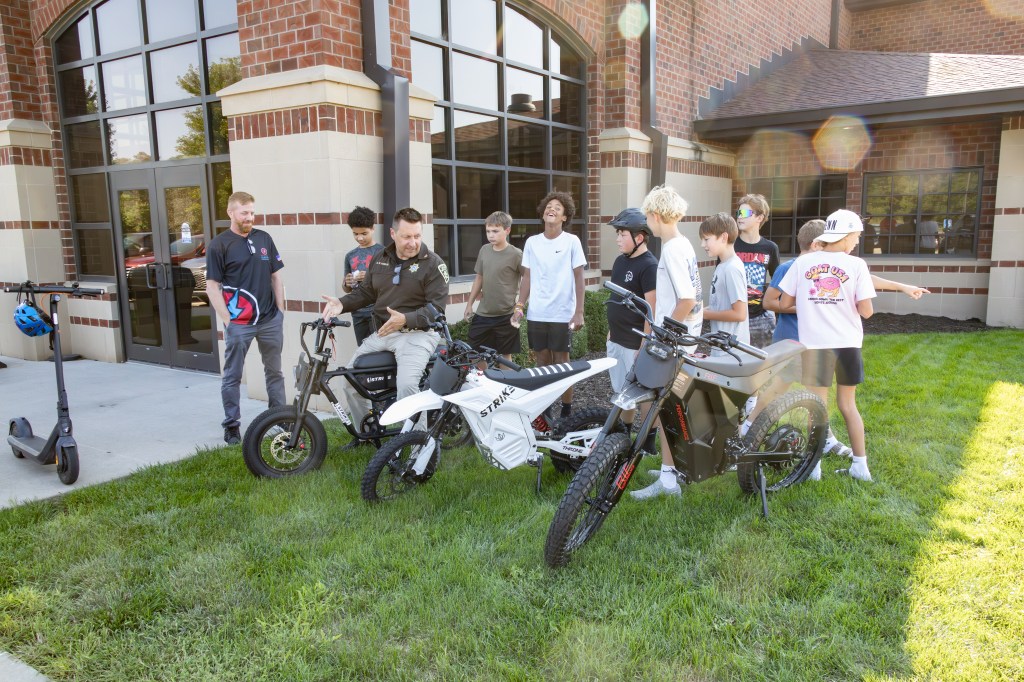
Ortner said one of the biggest challenges is a knowledge gap among consumers, particularly parents, noting that many families may be unaware of the speeds these devices can reach. He encouraged families to research devices before purchasing them, talk with children about expectations and purchase equipment from reputable dealers.
Ortner also highlighted safety concerns involving younger riders. Children may be especially vulnerable because they are still learning the rules of the road, may have limited awareness of traffic hazards and may have difficulty making quick judgments. It is also believed that actual injuries are underreported, though evidence shows injuries related to these devices are increasing significantly each year.
He pointed to hazards including potholes, vehicles, pedestrians and uneven sidewalks, all of which can become more dangerous when riders are traveling at higher speeds.
Helmet use was another major focus as he noted, “Unfortunately a lot of the riders are going without a helmet.”
He encouraged riders to wear appropriate protective equipment, noting that “wearing a helmet at all is better than no helmet.”
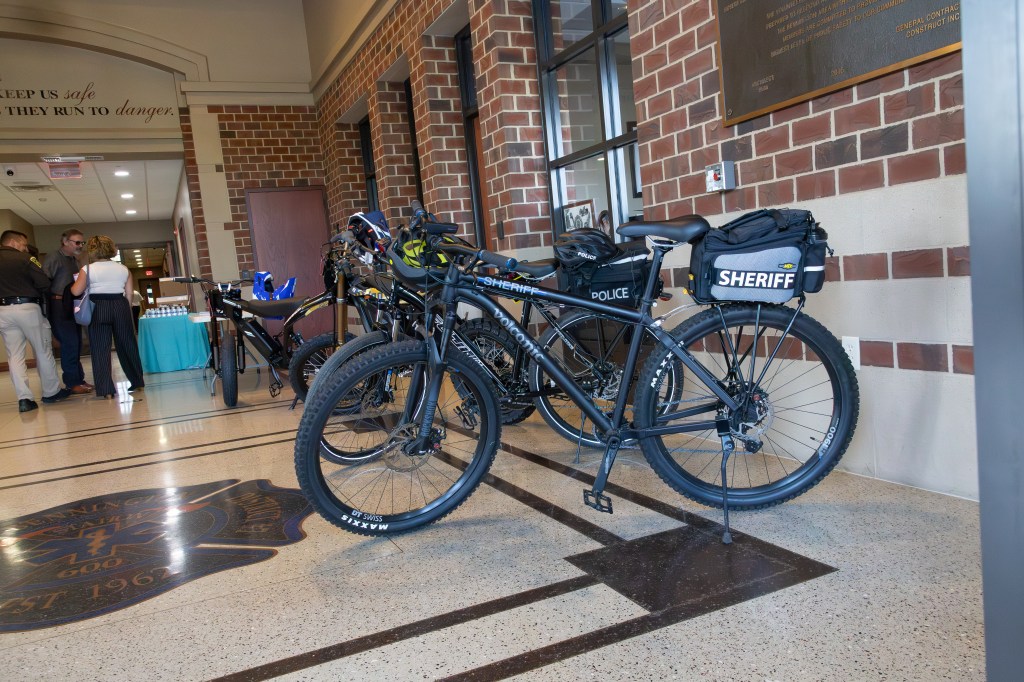
AAA’s safety recommendations for riders on any device (including bicycles) also included following traffic laws, avoiding headphones while riding, remaining aware of surroundings, using crosswalks, slowing down and respecting other people using roads, sidewalks and trails.
Drivers have responsibilities as well, Ortner said, including avoiding distractions, watching for riders and giving them additional space when passing.
“Saving lives is a priority of our organization right now,” Ortner said.
His overall message was that riding these devices comes with responsibility: “Bottom line- there’s responsibility that comes with these.”
Technology moving faster than awareness
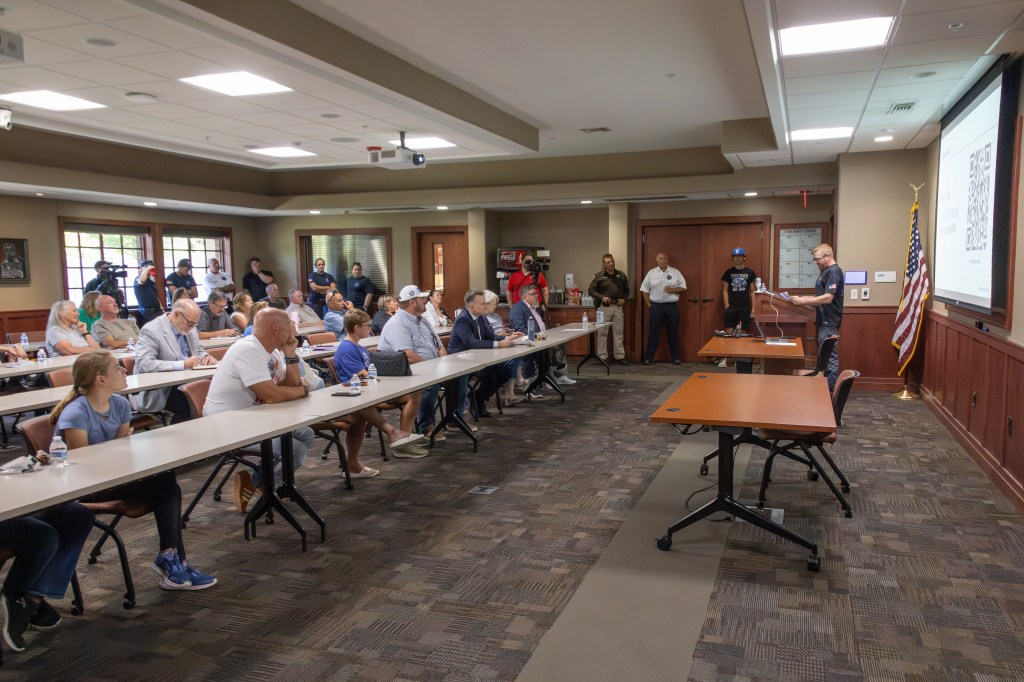
Ryan Humlicek (pictured above, addressing the crowd) of Nebraska Electric Powersports discussed the growing popularity of electric bikes and motorcycles from another perspective.
He said the devices can provide recreation, transportation, independence and opportunities for people to build friendships and confidence. But as technology continues to advance, consumers and communities are sometimes struggling to keep pace.
“Technology has moved faster than consumer awareness,” Humlicek said.
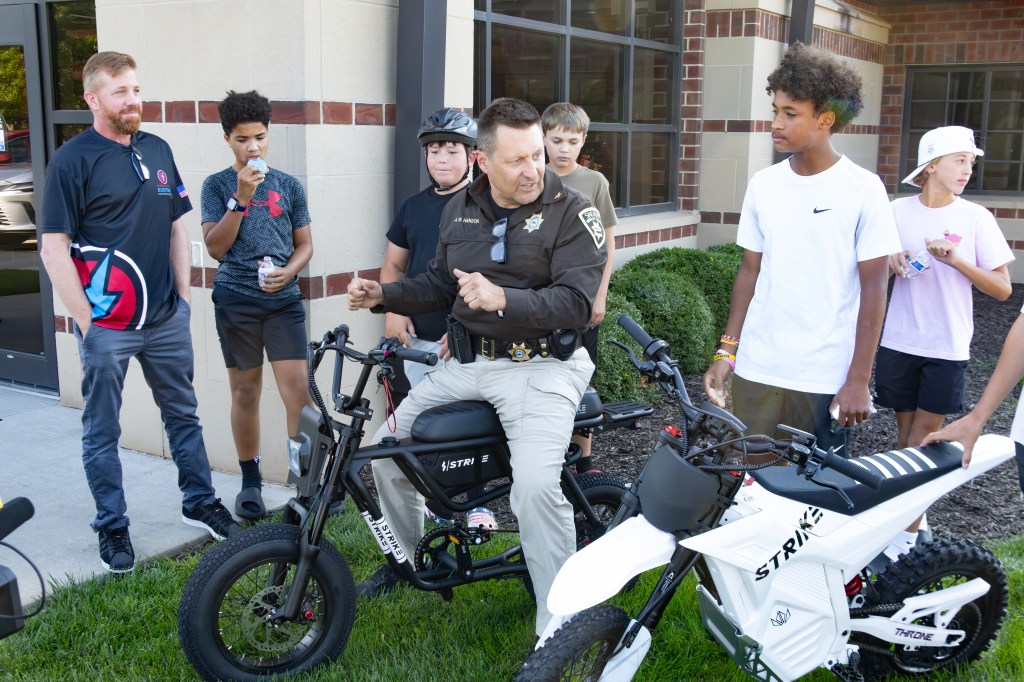
Nebraska Electric Powersports brought several examples of electric bikes and other devices to the event, including models that meet legal e-bike classifications and others that do not. These were on display both inside and outside of the fire station.
Humlicek said education and training could be an important part of the solution. He discussed the possibility of an approved safety course covering traffic laws, appropriate use and safe operation, with completion potentially becoming a requirement in the future.
“Training should be part of the solution,” he said.
Humlicek said the goal should not be to eliminate the activity, but to create a framework in which people can participate safely. He also stressed the importance of helmets, traffic education, accountability and responsible riding.
“None of those benefits matter if you ignore safety… We don’t have to choose between safety and freedom,” he said.
Finding a safe place to ride
Ronnie Ling (seen below), who is involved with the Lincoln Sports Foundation motocross park just north of Lincoln, addressed another question frequently raised by parents: Where can kids safely ride?
The facility offers a closed-course environment with multiple tracks, including a smaller track, a larger track for more experienced riders and a trail-riding course through the woods.
“It’s a safer environment, they are not on the roads,” Ling said. “We also offer training there.”
The facility also focuses on skill progression, helping riders learn how to control their devices and understand proper equipment. Full-face helmets are required, and chest protection is recommended.
Ling said having an off-road location gives young riders a place to develop their skills before they are faced with traffic.
“If you don’t know what you’re doing, you can get yourself in a whole world of hurt pretty quick,” he emphasized.
He also encouraged parents to consider whether their children are ready to ride around traffic.
“If I wouldn’t trust my kid to drive a car, I probably wouldn’t trust them riding a bike on the street,” Ling said.
At the same time, Ling acknowledged the positive side of the activity, including the friendships and community that can develop among riders and the opportunity for kids to spend time outdoors rather than on screens.
Policy hasn’t caught up with the technology
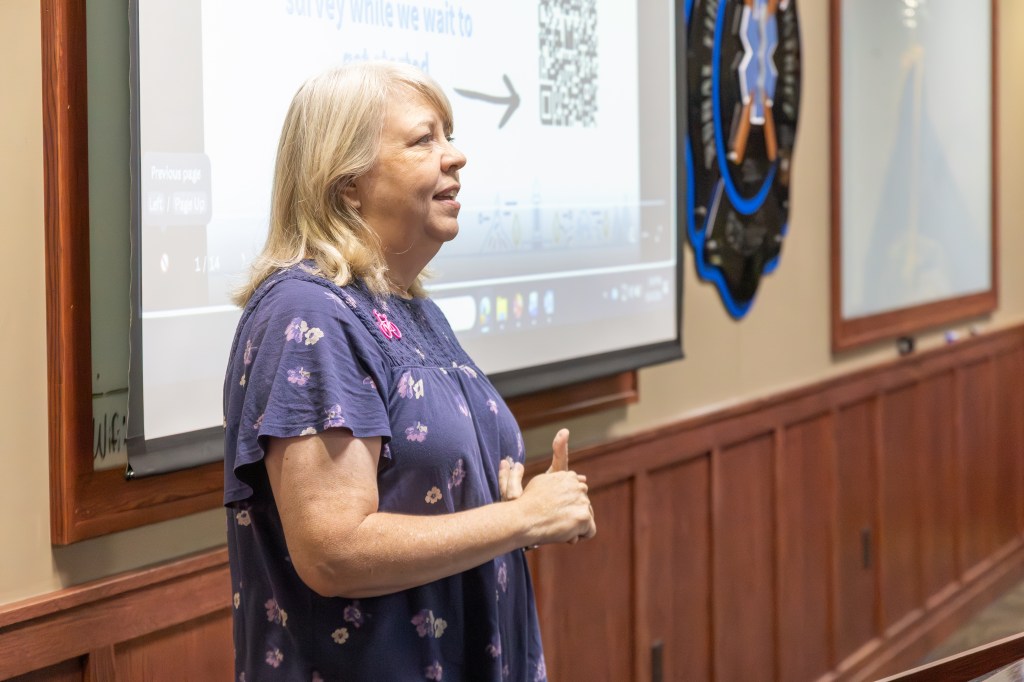
Julie Harris (above), executive director of Bike Walk Nebraska, offered a statewide perspective on the issue.
Her organization advocates for safe walking and biking and is currently conducting research into e-bike and micromobility policy.
“The market has outpaced the policy significantly,” Harris said.
Bike Walk Nebraska is talking with law enforcement, city administrators, attorneys and legislators as it works on potential policy recommendations.
Harris emphasized that there will not be a single, simple solution. She said the organization wants to maintain access to transportation and recreation options while maximizing safety. At the same time, she said communities need to examine infrastructure, including trails and bike routes, and determine what is appropriate for different types of devices.
Harris noted that laws also need to be realistically enforceable and that truth in advertising is an important part of the discussion, particularly when devices are marketed as e-bikes despite not meeting the applicable classification.
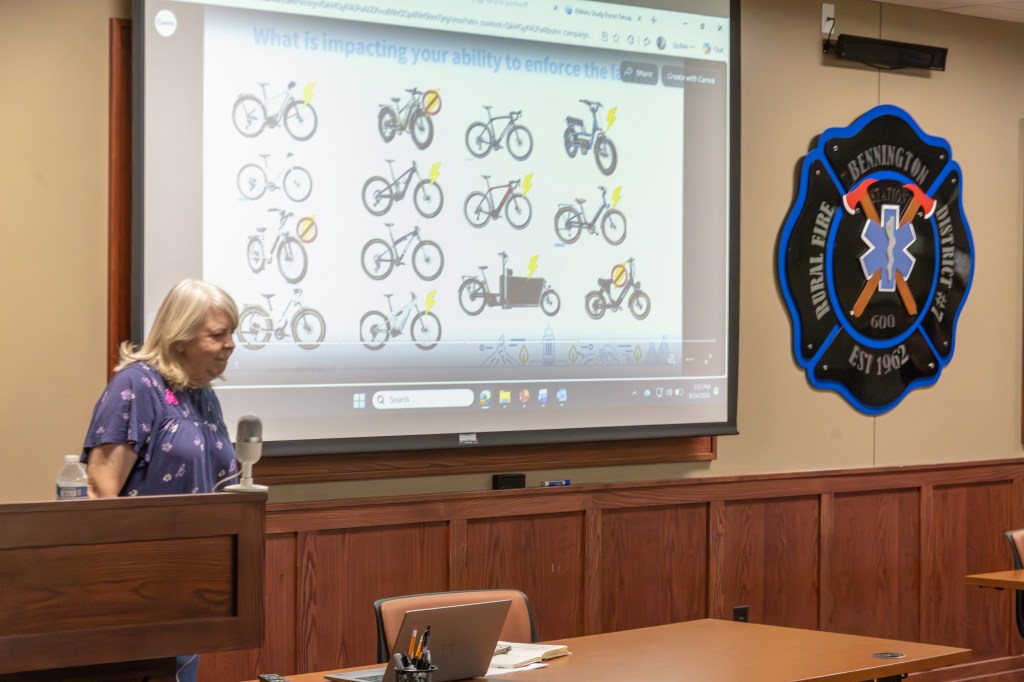
She said Bike Walk Nebraska hopes to have statewide recommendations ready this fall for consideration by the Nebraska Legislature, with local recommendations expected by next spring.
Ideally, Harris said, communities across the metro area will eventually have consistent policies.
The legal perspective
Kevin Slimp (seen below), representing the Omaha City Prosecutor’s Office, said many of the speakers at the event were approaching the issue from the same basic perspective: Communities want young people to have recreation and transportation options, but they also want everyone using the roads to be safe.

“The law does not always keep up with technology. We’re not always proactive and are often reactive with these kinds of things,” he said.
He cautioned that the laws and policies surrounding these devices could continue to change as lawmakers and communities grapple with new technology. For now, he encouraged parents to take responsibility for making sure their children understand how to operate their devices and follow the rules.
“Make sure you know what your kids are doing and that they have the education and experience to operate these in a safe manner,” he said.
He also emphasized that being legally allowed to ride on a roadway does not mean riders can ignore traffic laws.
“If they can ride it in the street… They have to follow the rules of the road. If they can’t do that, they shouldn’t be on the road,” he said.
Slimp encouraged residents to communicate with city administrators and elected representatives as local and state discussions continue, particularly with the Nebraska Legislature set to reconvene in January.
Law enforcement addresses questions from residents
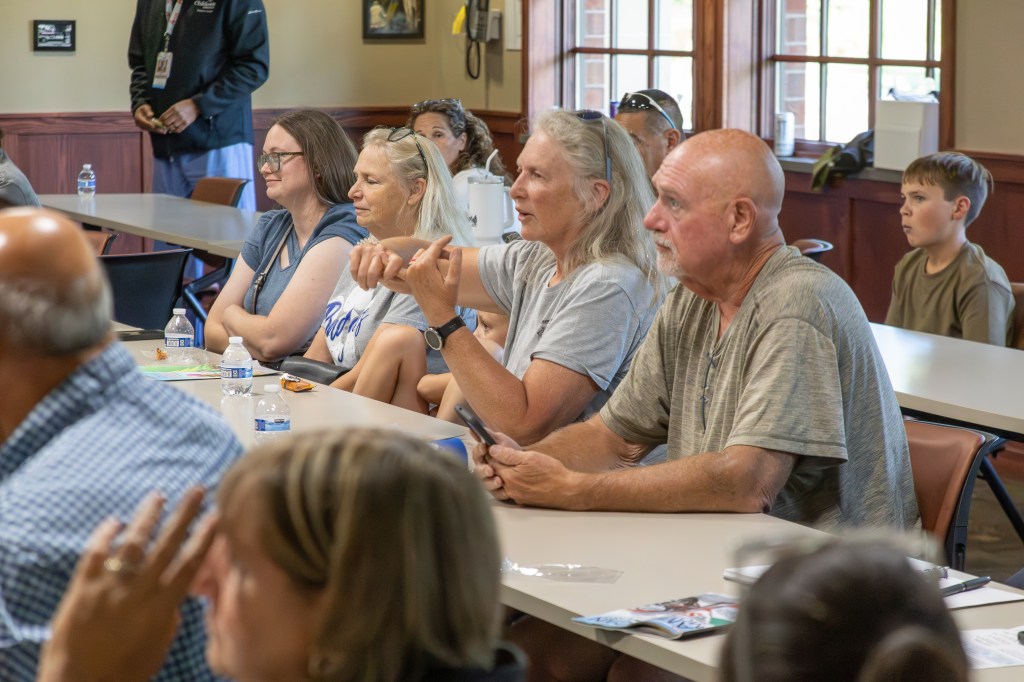
The evening concluded with a question-and-answer session involving Bennington Police, the Douglas County Sheriff’s Office, Nebraska State Patrol and the DCSO bike patrol.
One question centered on stunts such as wheelies. Law enforcement officials explained that whether a particular maneuver constitutes reckless riding can depend on the circumstances.
The age of riders was another significant concern, particularly when very young children are operating devices capable of reaching 20 mph or more without understanding the rules of the road.
Sheriff Hanson said he has discussed the issue with the county attorney, including addressing repeated reckless riding through juvenile diversion and holding parents accountable for repeated offenses.
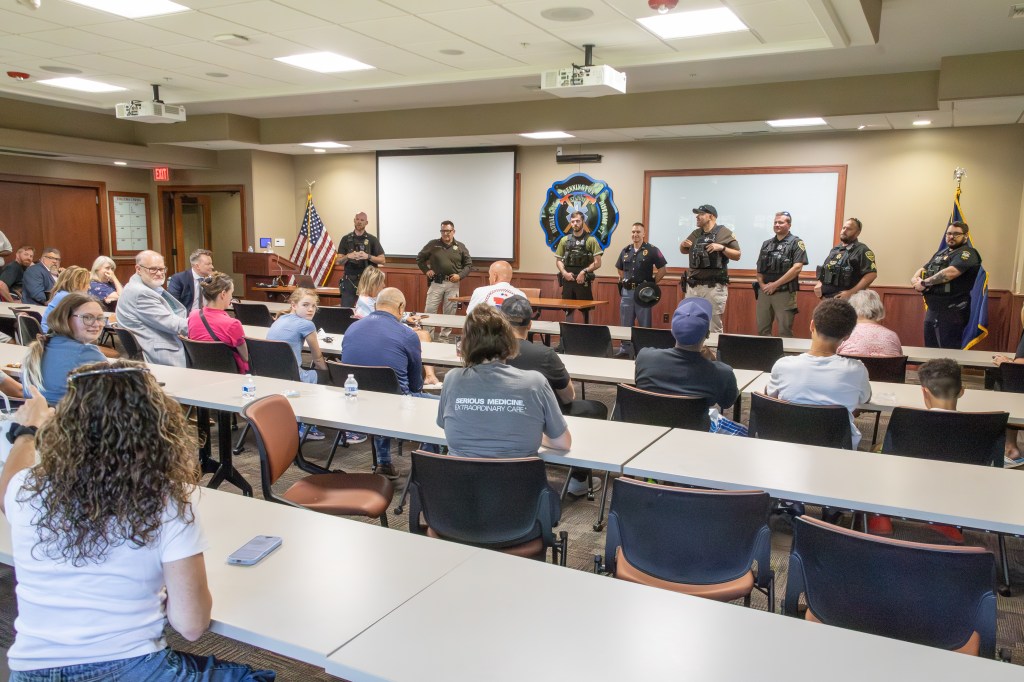
Officials also addressed the differences between e-bikes, e-motos and electric dirt bikes. E-bikes falling within the applicable Class 1, 2 or 3 classifications are legal to operate under Nebraska law, while street-legal electric motorcycles have additional requirements, including rider licensing, registration and insurance. Electric motos and dirt bikes that are not street legal cannot simply be treated as e-bikes because they have an electric motor.
Currently, there are also no specific age restrictions discussed at the event for operating these devices. Harris said Bike Walk Nebraska is researching what other communities are doing as they consider how to address the issue.
Bennington’s current rules allow bicycles to be ridden on sidewalks or streets. Hilscher said Bennington Police would prefer to see children riding on sidewalks when possible because of concerns about their safety around vehicle traffic.
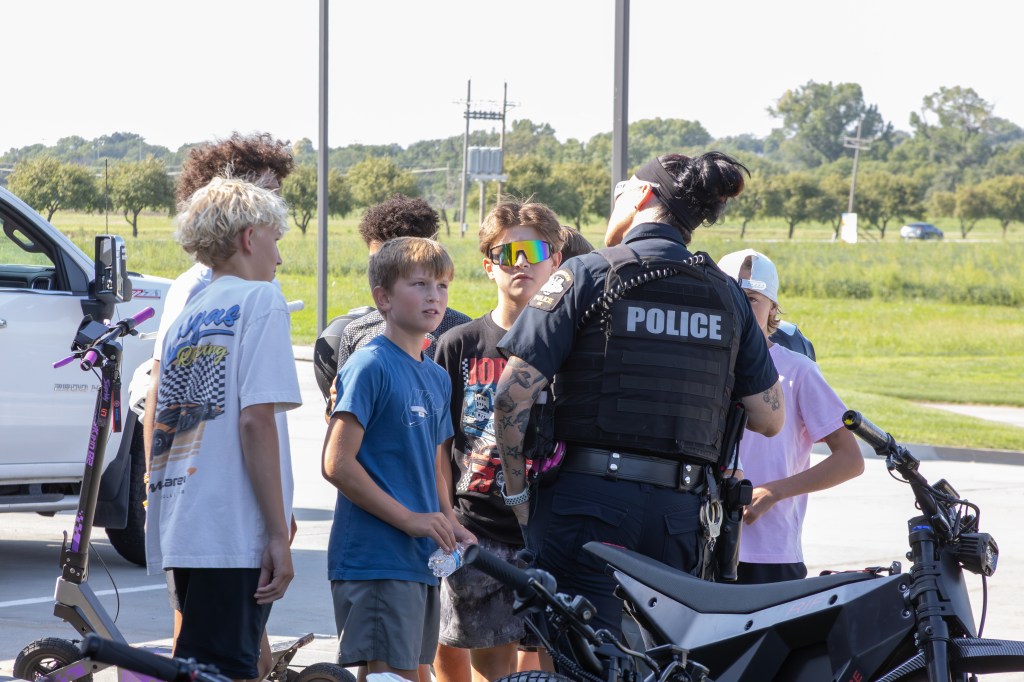
However, he stressed that sidewalk riding still requires riders to slow down, respect pedestrians and safely cross roadways. If riders are on the street, they need to understand and follow the rules of the road.
The city is also studying ways to better connect its trail systems, another piece of the larger conversation about where different types of devices can safely be used.
Law enforcement officials encouraged residents to report dangerous situations.
“Anytime you see something dangerous, you can call 911,” Hanson emphasized.
While there were differing perspectives on how communities should ultimately regulate e-bikes, e-motos and e-scooters, the speakers repeatedly returned to the same themes: education, responsibility, access and safety.
Humlicek summarized the balance many of the speakers were seeking, saying, “Our ultimate goal is a safer path forward.”
Bennington also took a practical step toward improving rider safety at the event. The city purchased helmets to distribute to residents who need them and handed out 10 helmets Monday evening.
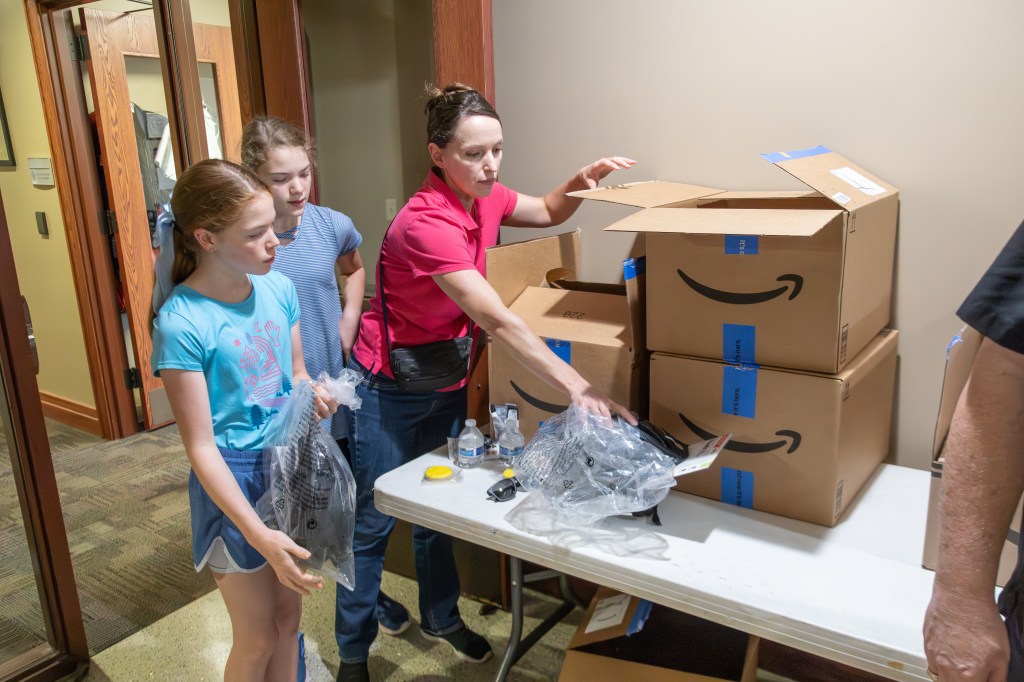
Snacks and drinks were donated by Body Bar Pilates.
As the popularity of electric micromobility devices continues to grow, Monday’s discussion made clear that the conversation is likely far from over.
For parents, riders and drivers, however, the message from the evening was immediate: Know what you’re riding, understand the rules, use appropriate protective equipment and make safety part of every ride.