By Marisa Dawson

As football teams across the metro prepare to kick off another season, Bennington Fire & Rescue, Children’s Nebraska and area high school coaches gathered Monday at Bennington High School for a hands-on training designed to ensure everyone responds as one team when a serious injury occurs on the field. Bennington has remained committed to providing the best care for their athletes through efforts including this training and even having EMS on site at home football games.
The annual sports medicine training brought together EMTs, paramedics, athletic trainers, physicians and football coaches to practice emergency response techniques for catastrophic injuries. This year’s training also welcomed Concordia Senior High School coaches for the first time, expanding the collaborative effort beyond previous years.
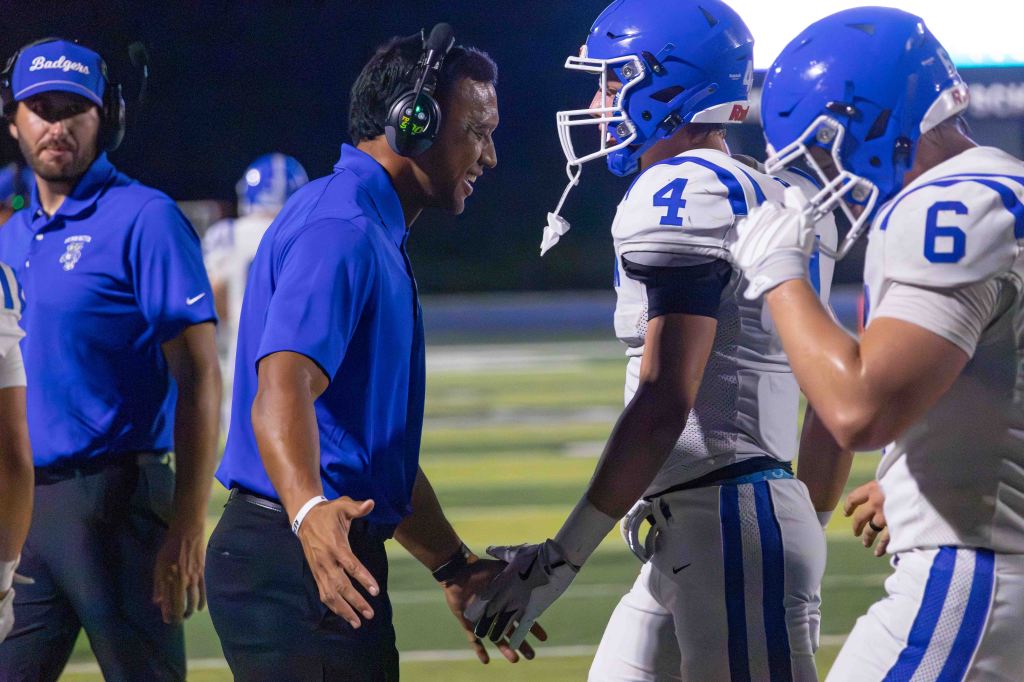
Student-athletes suited up in football equipment volunteered as mock patients, allowing participants to practice removing helmets and shoulder pads while protecting the athlete’s spine, skills that become critical when seconds matter.

Bennington Fire Assistant Chief Chad Nixon said the growing participation reflects the commitment coaches have to protecting their athletes.
“It shows the dedication of the coaches for their student athletes, showing up here, taking time out of their already busy schedules,” Nixon said. “When it comes to the fall practice schedules, they’re busy, so for them to take time out of their schedules to come here and work with us so that there’s continuity between us and the football staff and the athletes is a testament to the system as a whole.”
While athletic trainers are often the first medical professionals to reach an injured player, Children’s Nebraska Outreach Athletic Trainer Liz LaBombard said their initial priorities center on identifying life-threatening concerns.

“Specifically with this equipment removal type of stuff, we’re looking for neck pain and then their extremities, if they have movement and sensation in their extremities,” LaBombard said. “We also are checking airways to make sure their breathing is still fine.”
Although sprains, strains and other routine injuries occur throughout every season, Monday’s training focused on the rarer but more serious spinal injuries that require coordinated action from everyone on the field.
For suspected neck or back injuries, responders practiced safely removing protective equipment to gain access to the athlete’s airway and chest while minimizing unnecessary movement.

LaBombard said preparing together before the season eliminates uncertainty when a real emergency unfolds.
“This is super important for us as athletic trainers because oftentimes, we’re by ourselves,” she said. “Having the coaches know what to do to help us so that we can get the athlete best set up before EMS even arrives, and then having EMS know how we like it done and know how they want to do things instead of us trying to make those decisions in the moment.”
Beyond emergency response, Children’s Nebraska Sports Medicine Physician Dr. Natalie Ronshaugen said much of the focus before the season is preventing injuries before they happen. Proper hydration, gradual heat acclimation and following equipment progression guidelines all help reduce risk as practices intensify.

When injuries do occur, however, Ronshaugen said communication between everyone involved can significantly improve patient care.
“It just makes the process so much smoother and faster,” she said. “Once they get to us, if we already have a sense of what’s going on, we can just get going with the treatment… If we’re all on the same page from the start, then the whole thing goes smoother and we get to the right diagnosis quicker and the right treatment plan faster.”
Dr. Ronshaugen added that while most fall sports injuries involve sprains, strains and concussions, today’s understanding of concussion care has changed dramatically.
“Concussions are brain injuries that heal,” she said. “We just have to be really smart about how we get people back in safely and that they don’t go back too soon.”

For Bennington Fire Captain and firefighter-paramedic Eric Paulsen, practicing alongside coaches and athletic trainers helps bridge the gap between different areas of expertise.
“It’s super important to have that multifaceted and skilled approach to this because it’s not necessarily something fire/EMS sees a ton,” Paulsen said. “It’s something these coaches may see more frequently working with these players… We can bring different scopes of knowledge and work together to come up with good solutions that work for everyone all around.”
Paulsen noted that responding to emergencies during football games also presents unique logistical challenges. Beyond treating the injury itself, emergency crews must work around bulky protective equipment while navigating crowded stadiums and limited ambulance access to the field, all helpful things to discuss with the crews and many volunteers who will assist with EMS coverage of games.

Throughout the training, participants repeatedly emphasized one lesson above all others: communication.
“Communication in medicine overall, whether it be on the field, injury, or just anywhere else, is paramount,” Paulsen said. “It’s probably one of the big keystones of every bit of medical care that anybody does.”
LaBombard echoed that message, saying every person involved shares the same goal.
“I think just that we’re all a team and that we have the athletes’ best interest in mind, all of us together,” she said. “We may treat it as though it’s more severe… but we’re going to take every precaution we can to make sure that we take care of it as if it were really bad.”
With football practices already underway and the regular season just weeks away, organizers said the annual training helps ensure that if the unthinkable happens on the field, everyone, from coaches and athletic trainers to first responders and hospital staff, already knows their role before the first whistle blows.