By Marisa Dawson
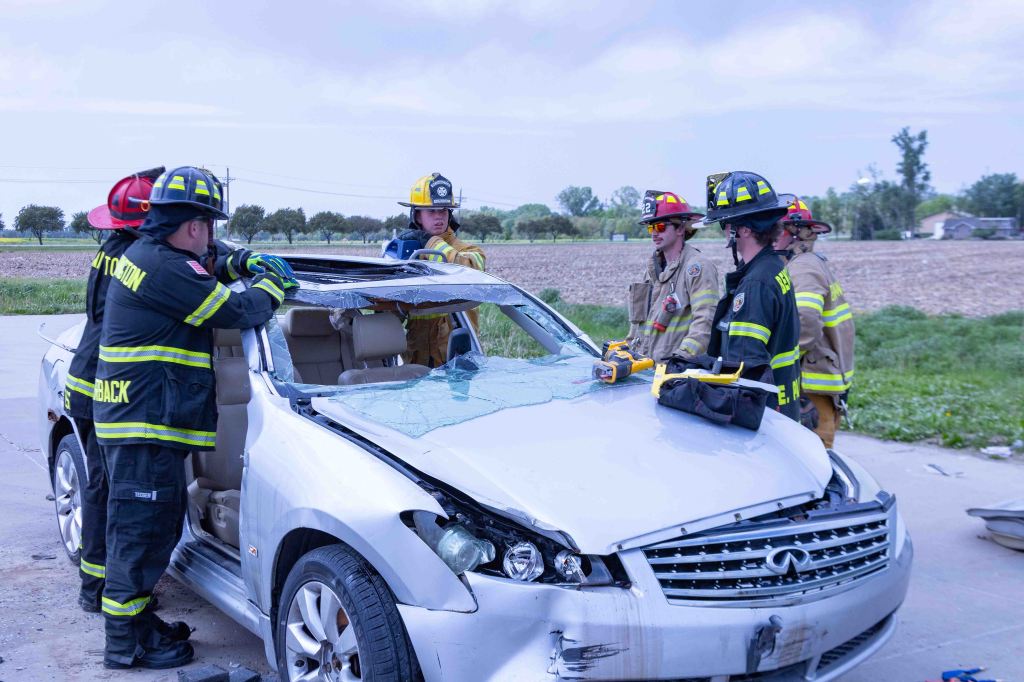
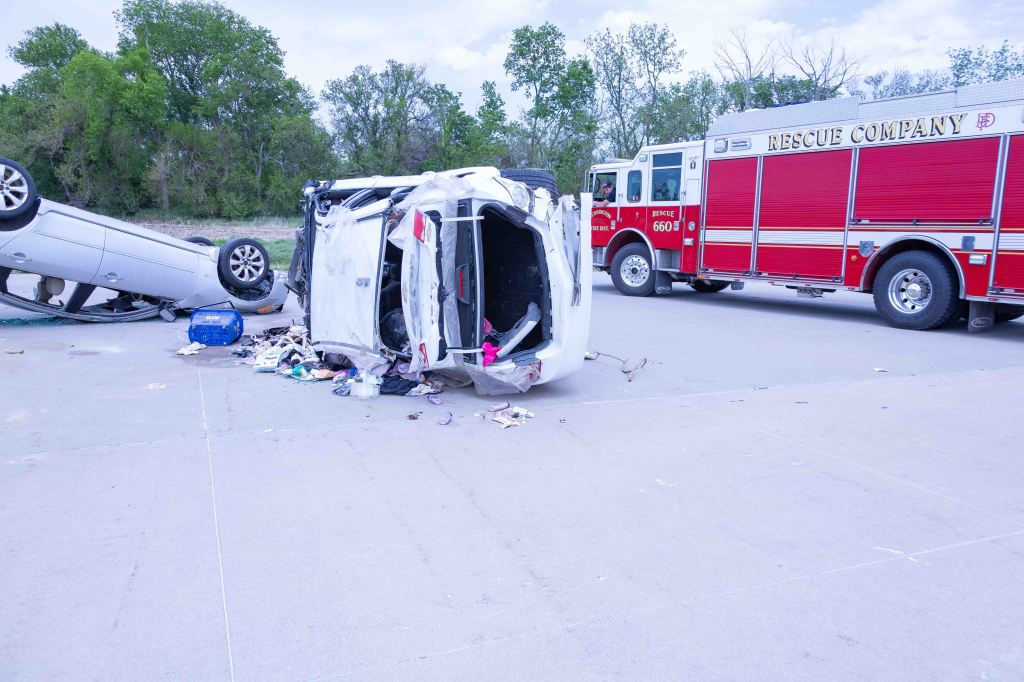
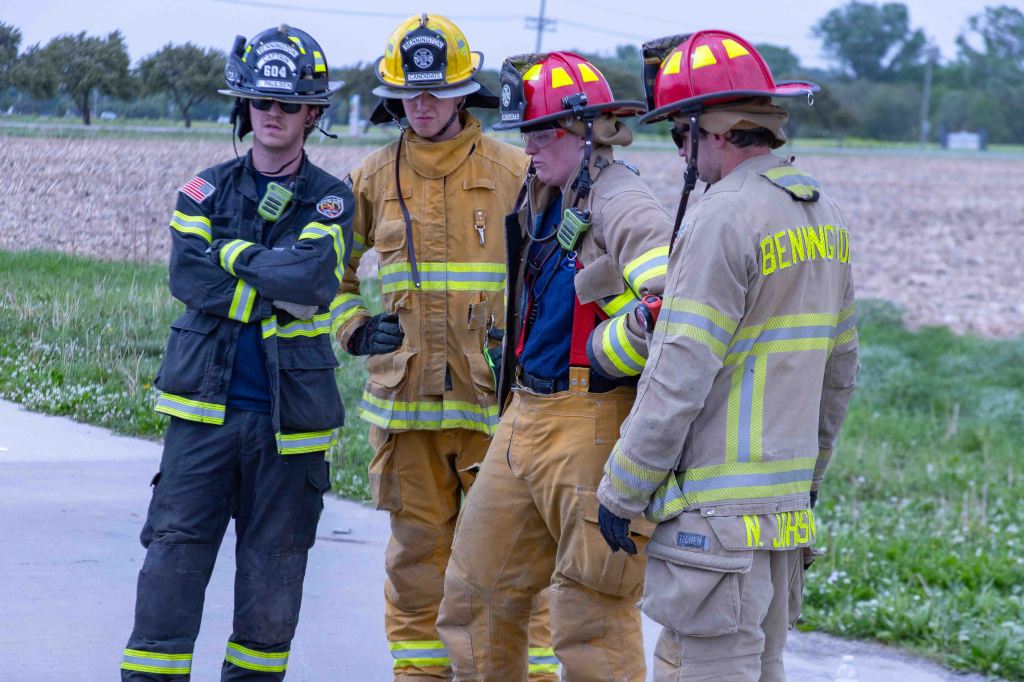
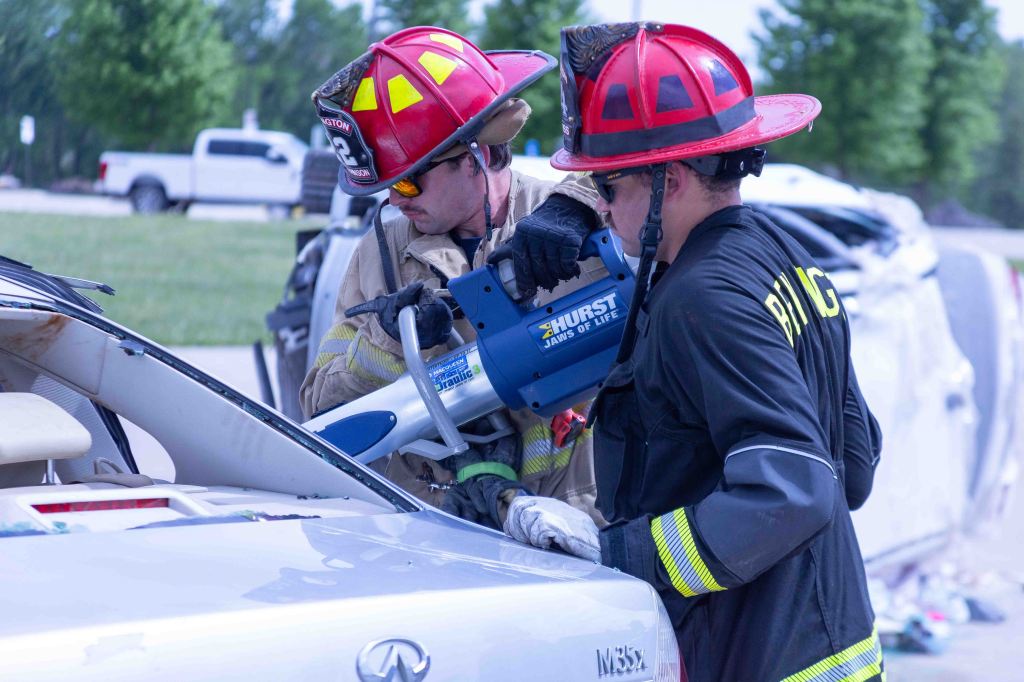
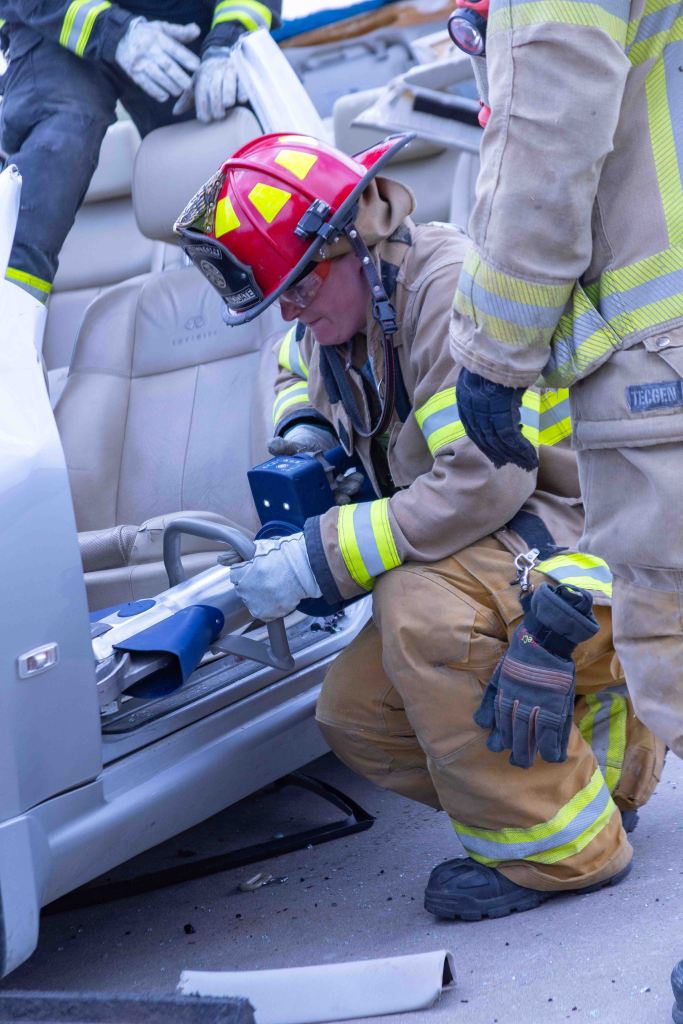
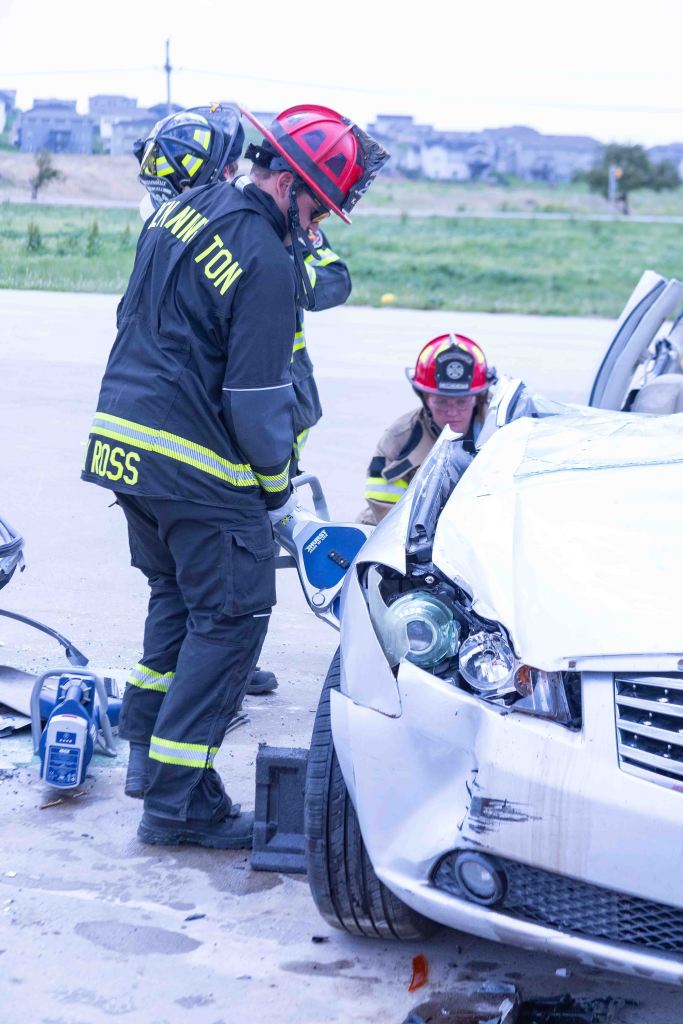
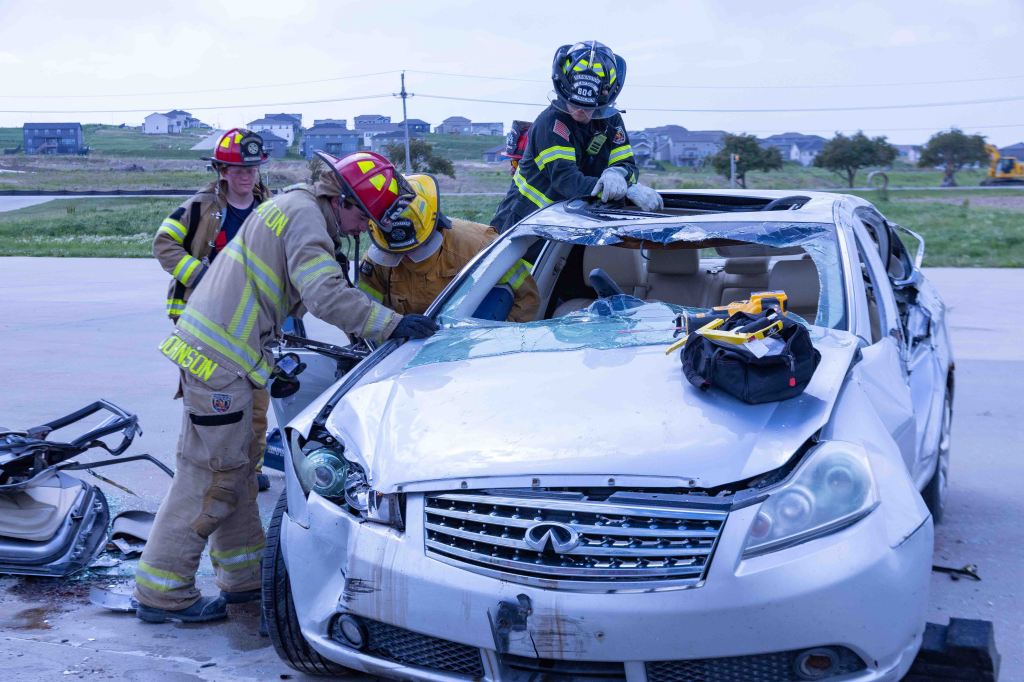
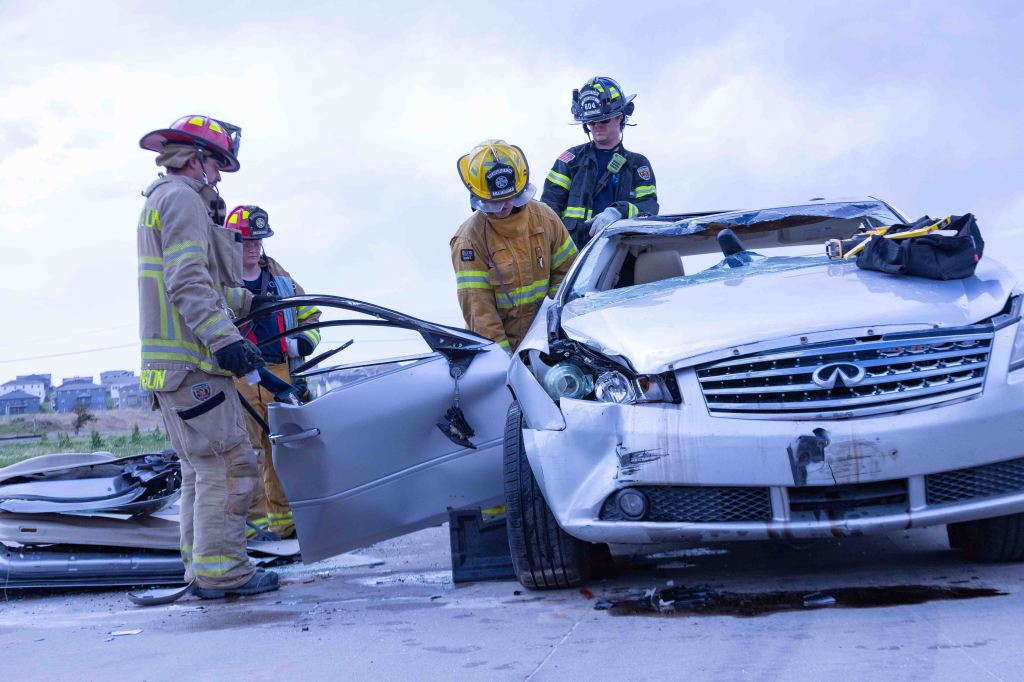
Members of the Bennington Fire Department spent last week sharpening critical rescue skills during an extrication training designed to prepare firefighters for some of the most dangerous and complex emergency scenes they encounter.
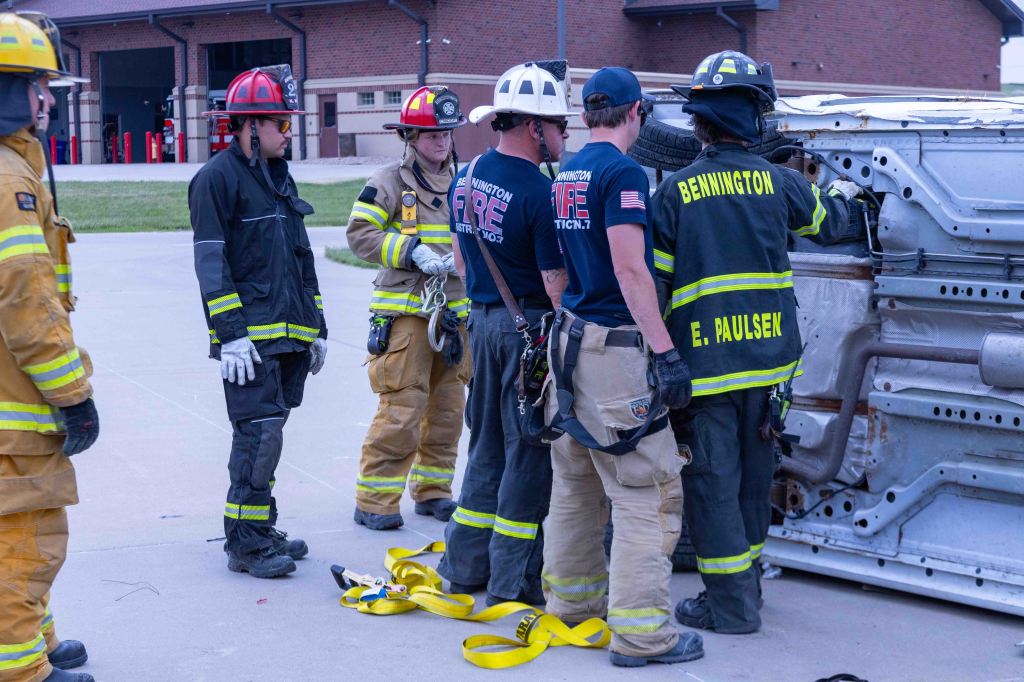
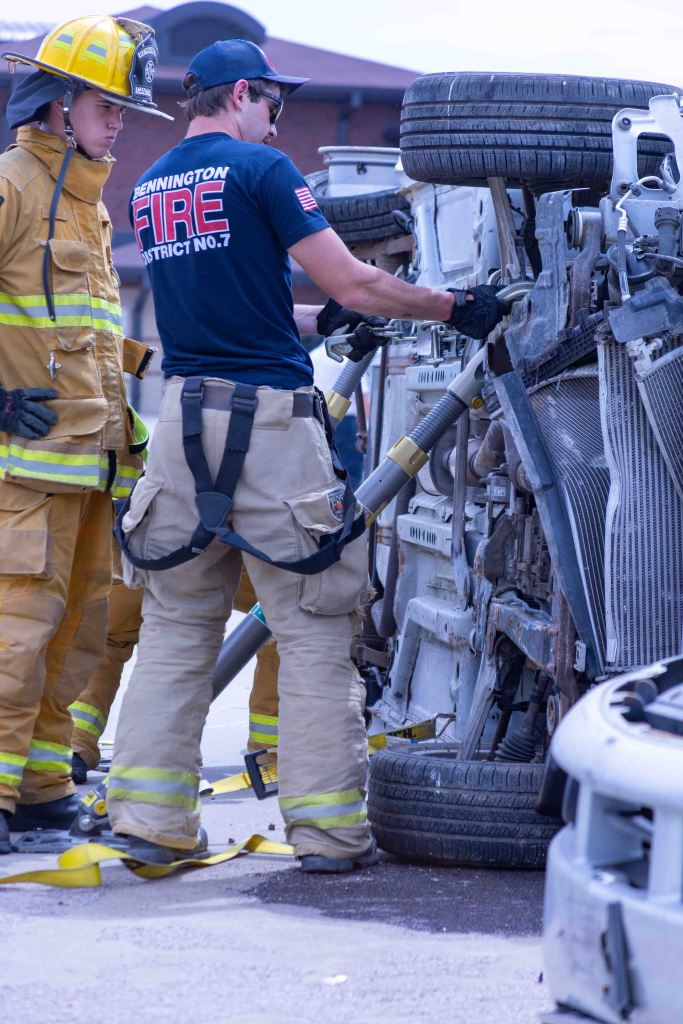
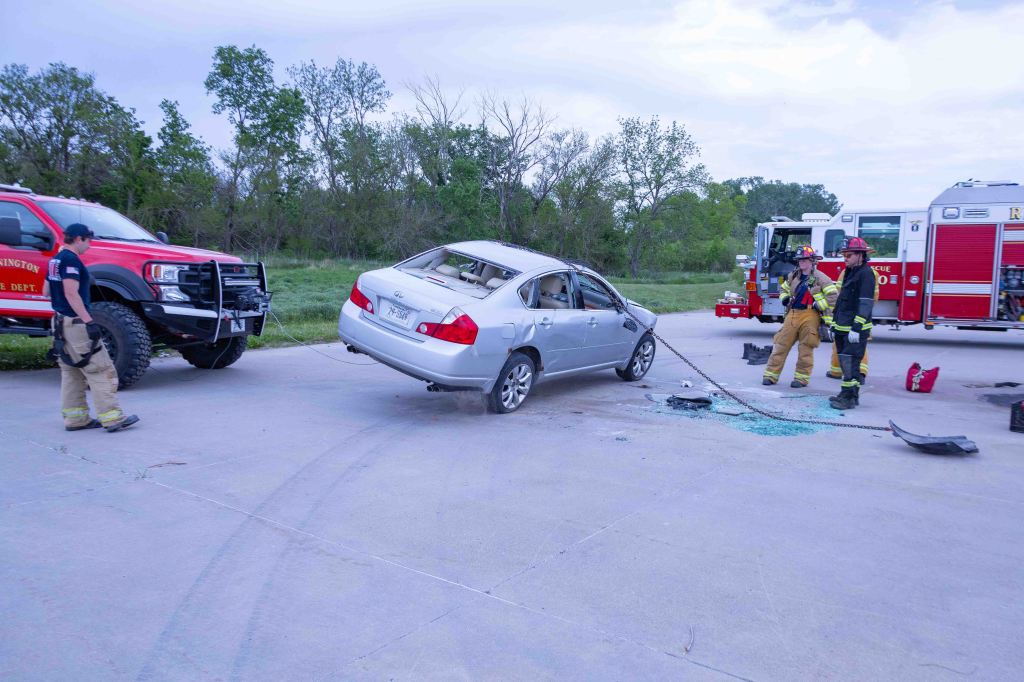
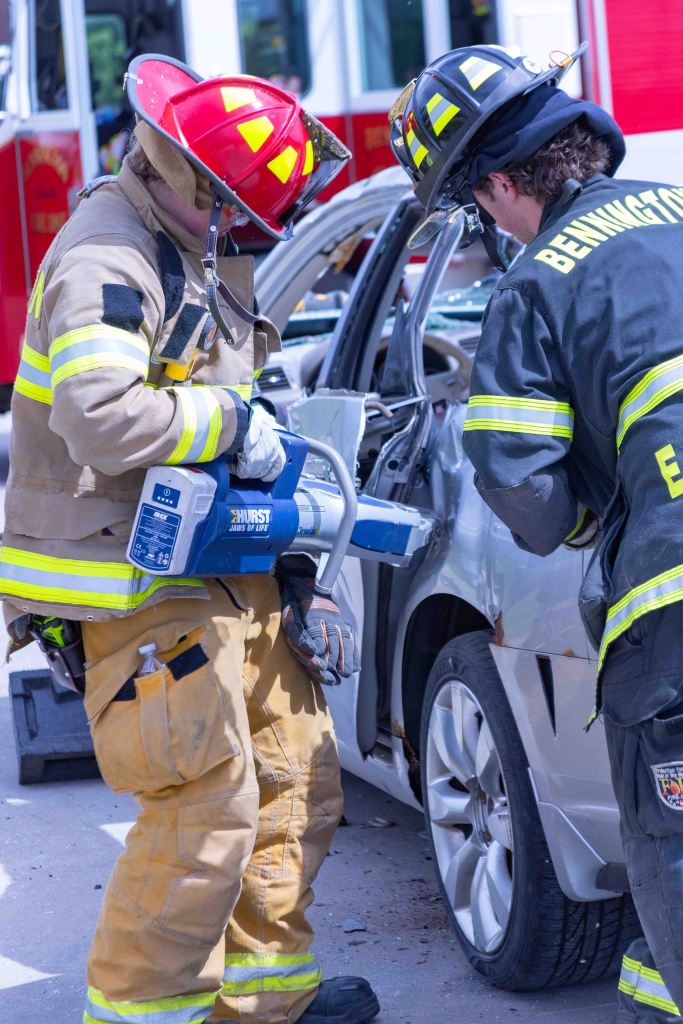
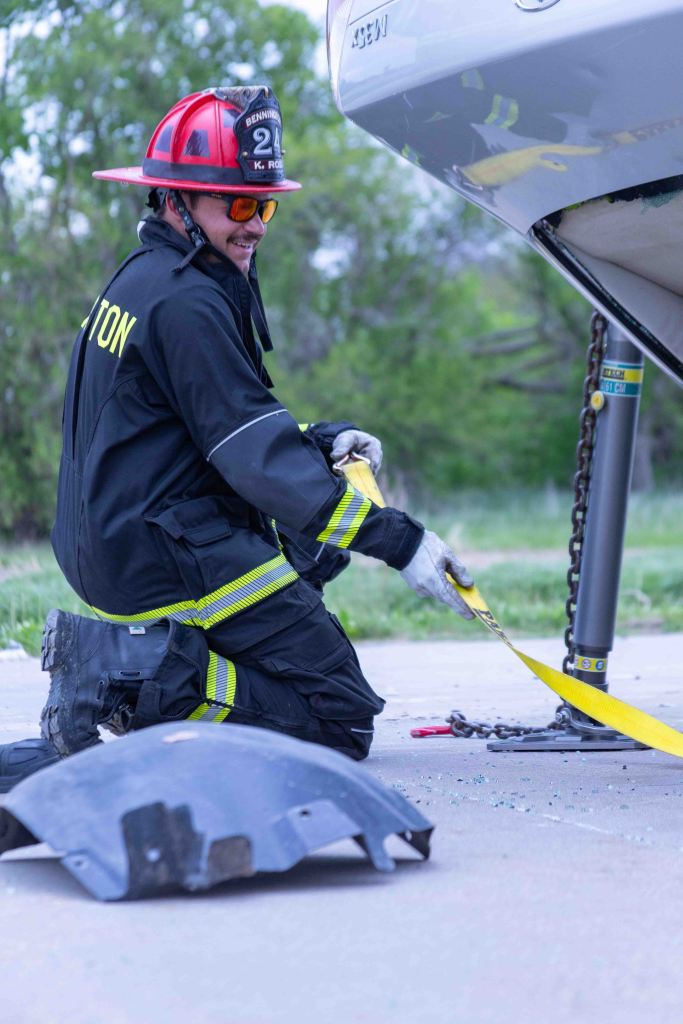
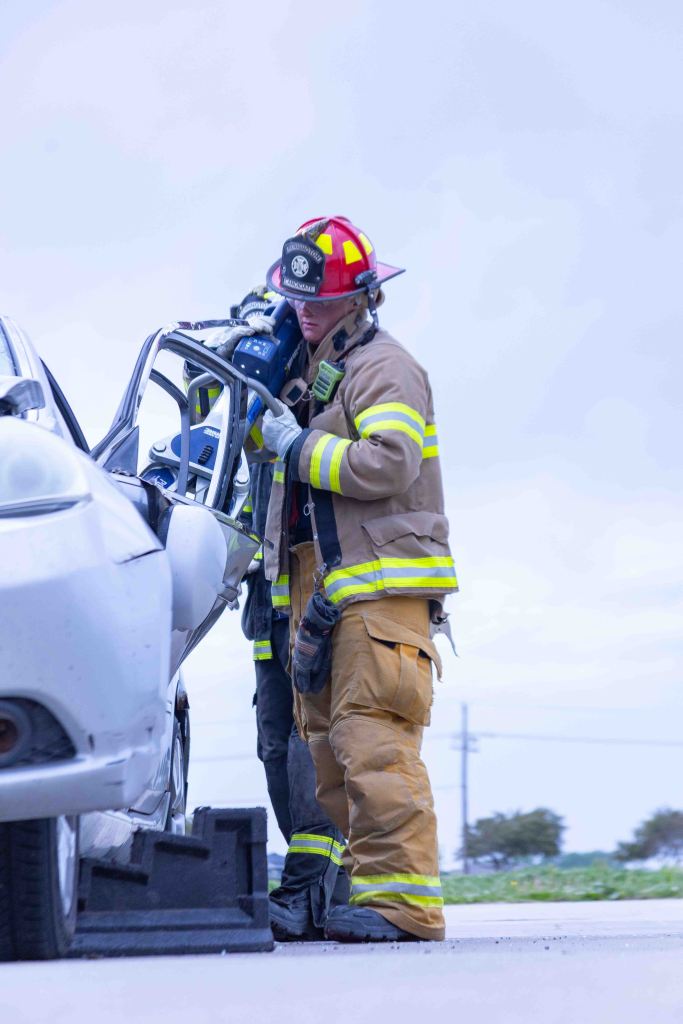
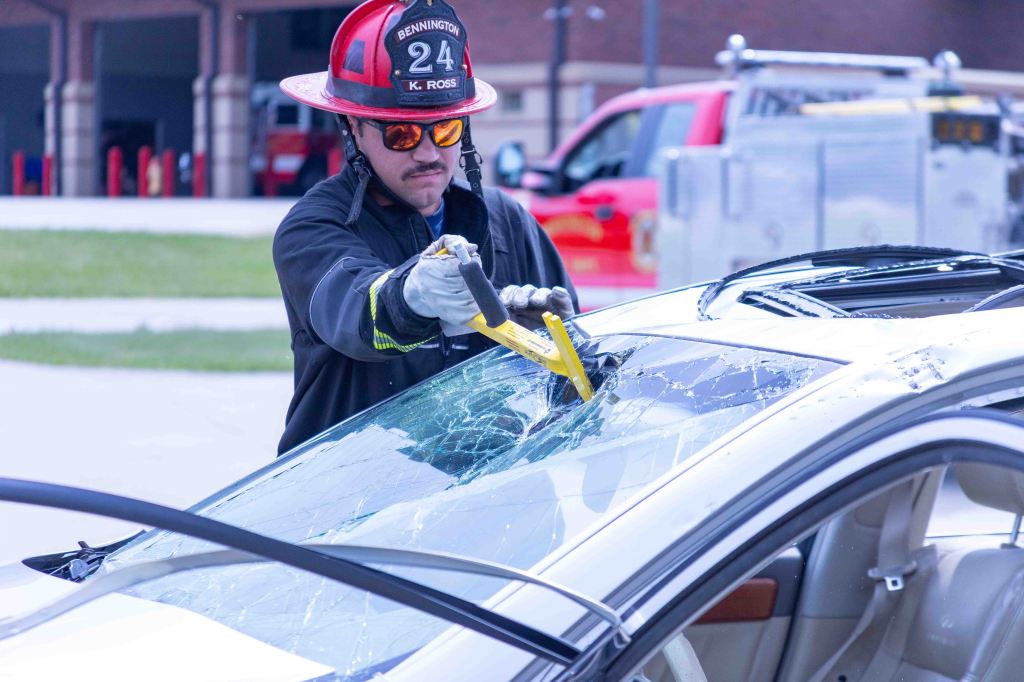
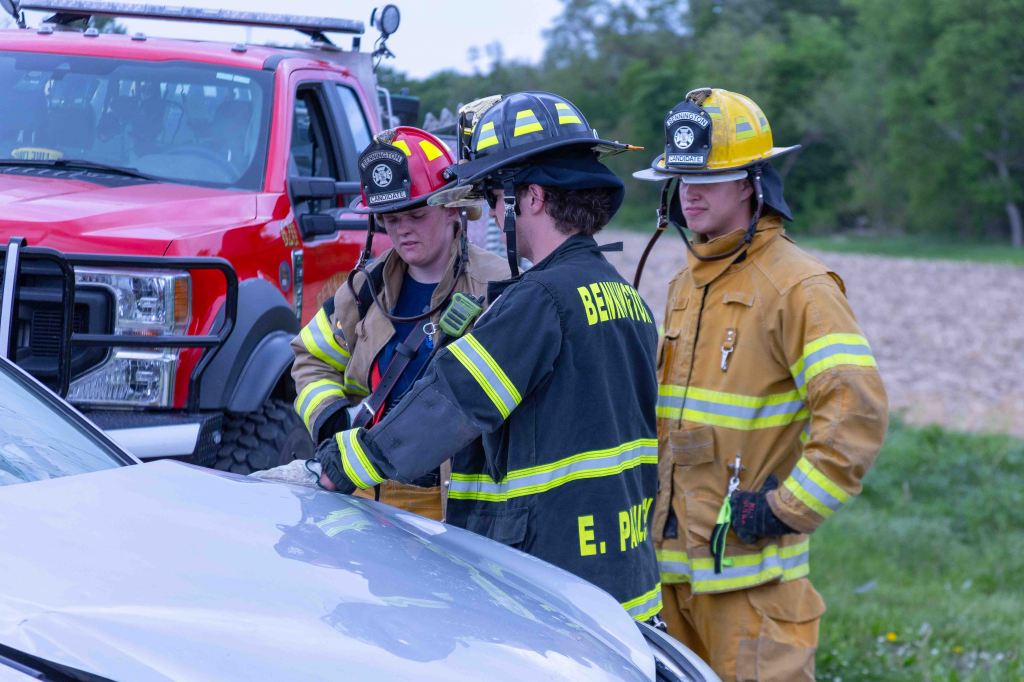
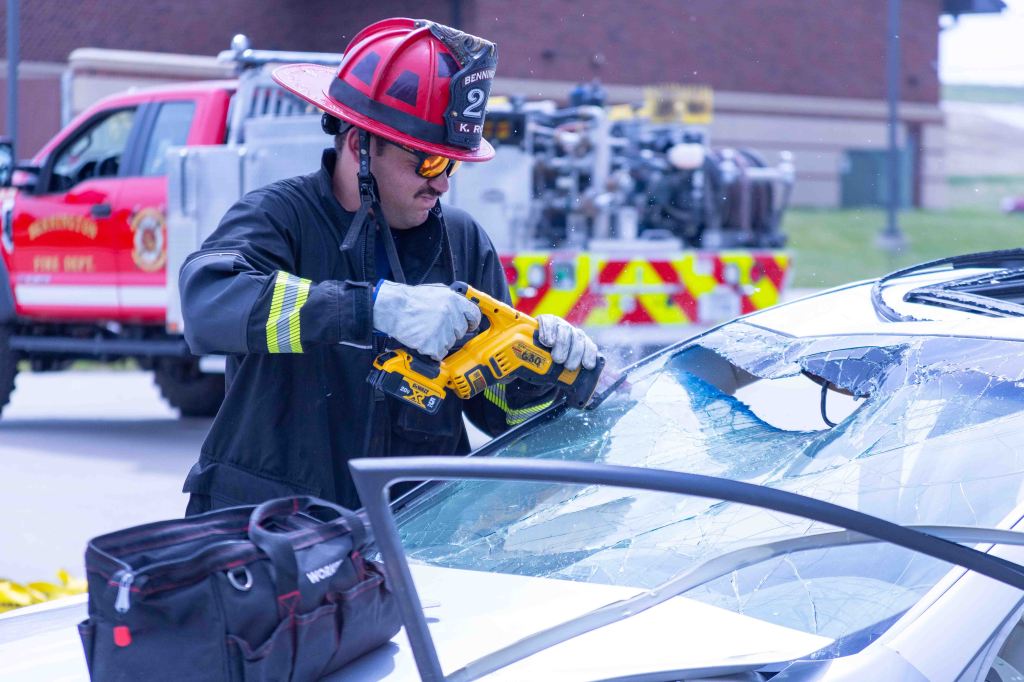
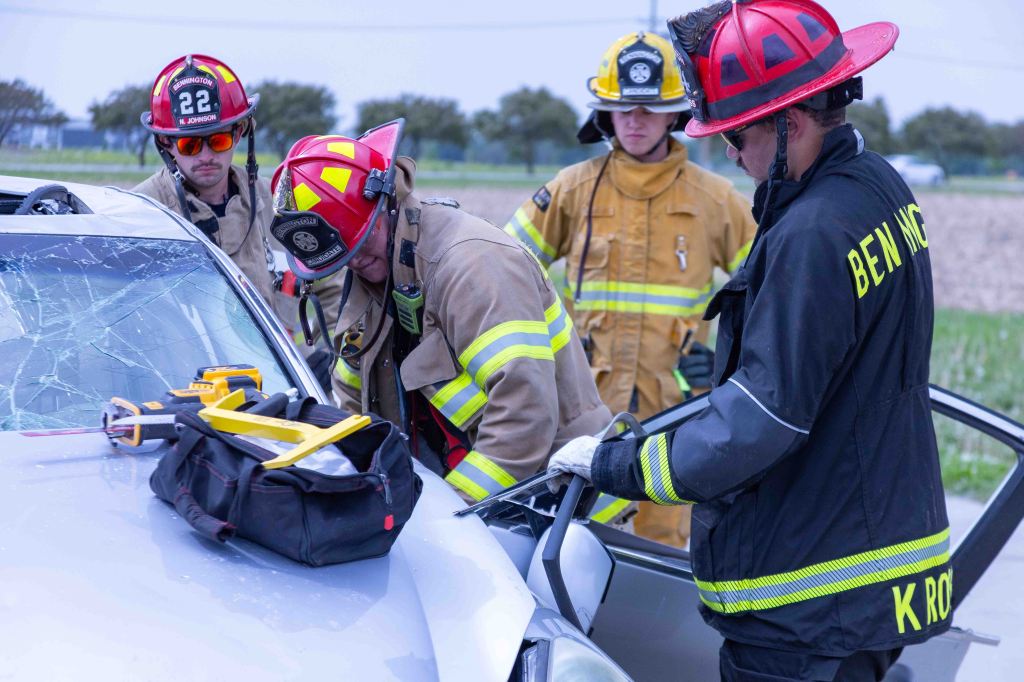
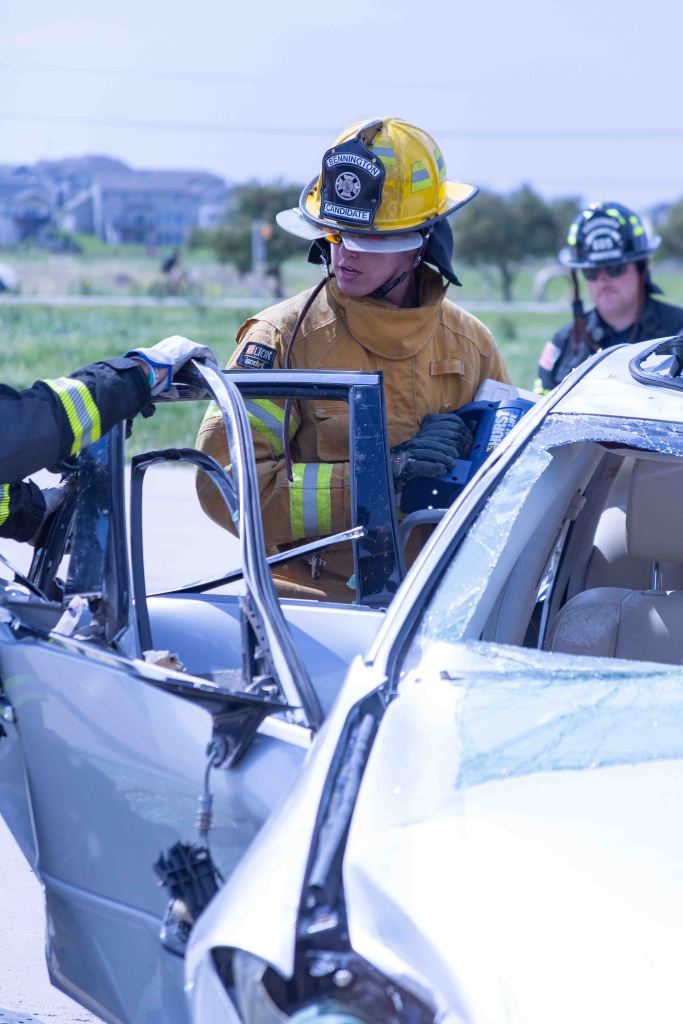
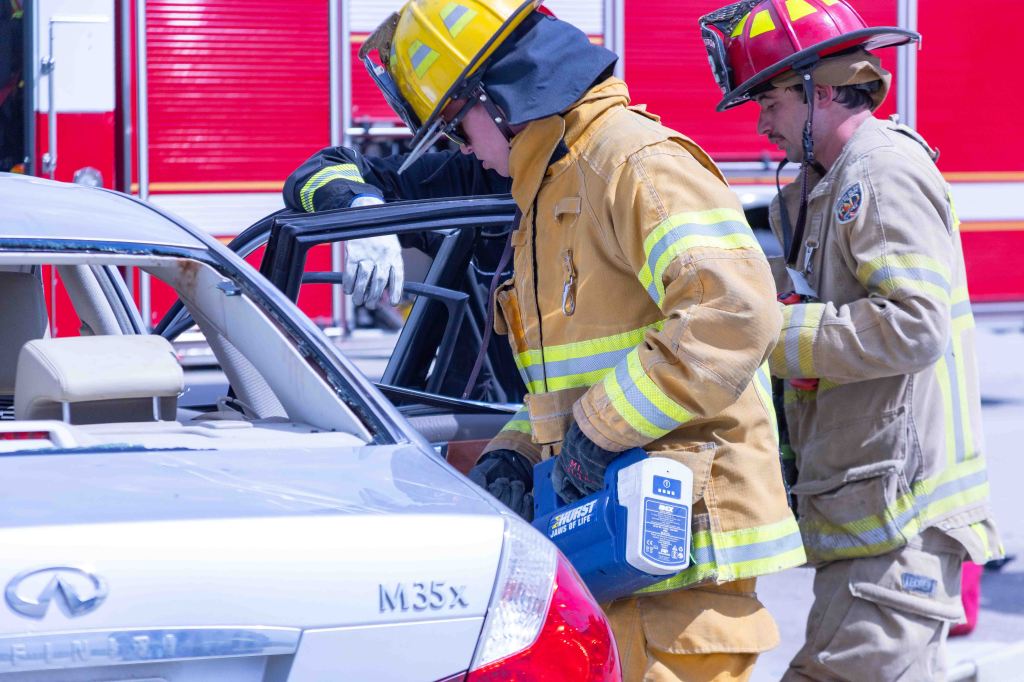
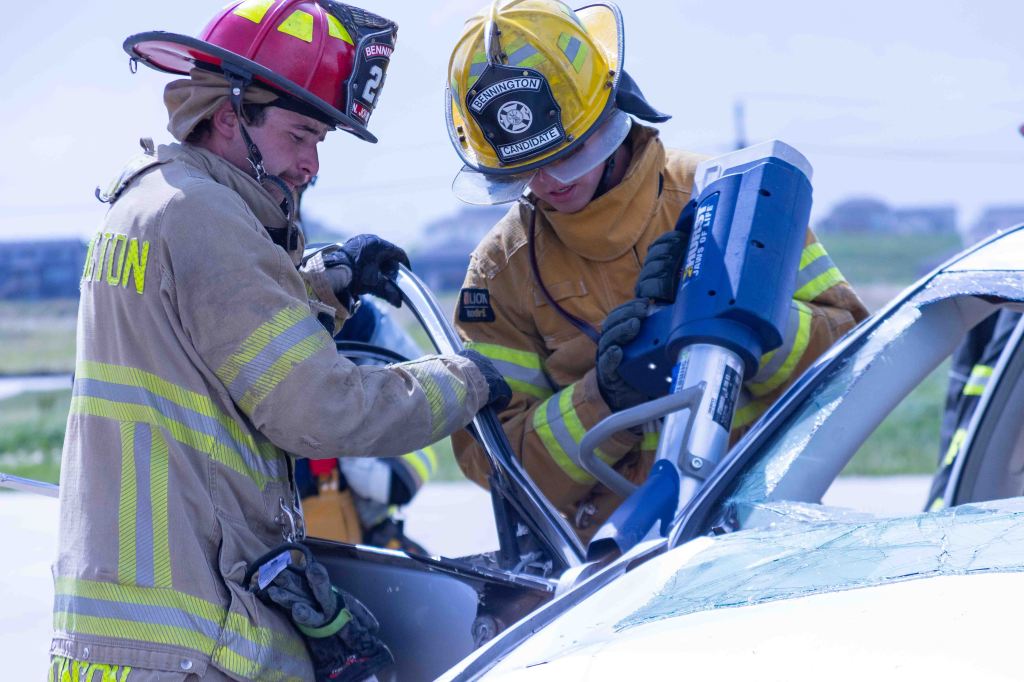
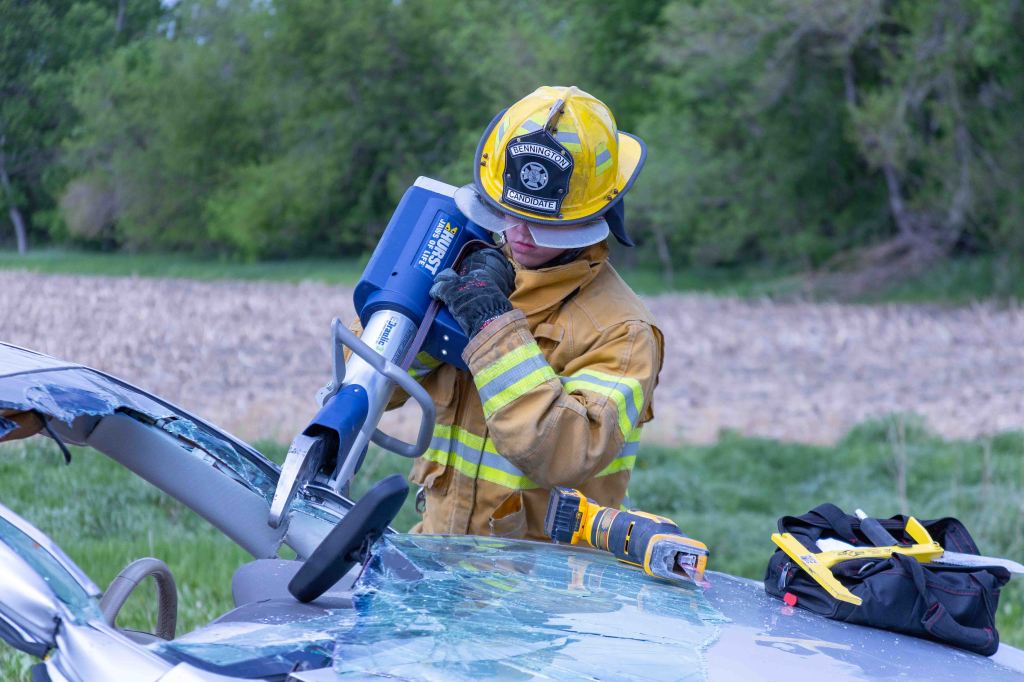
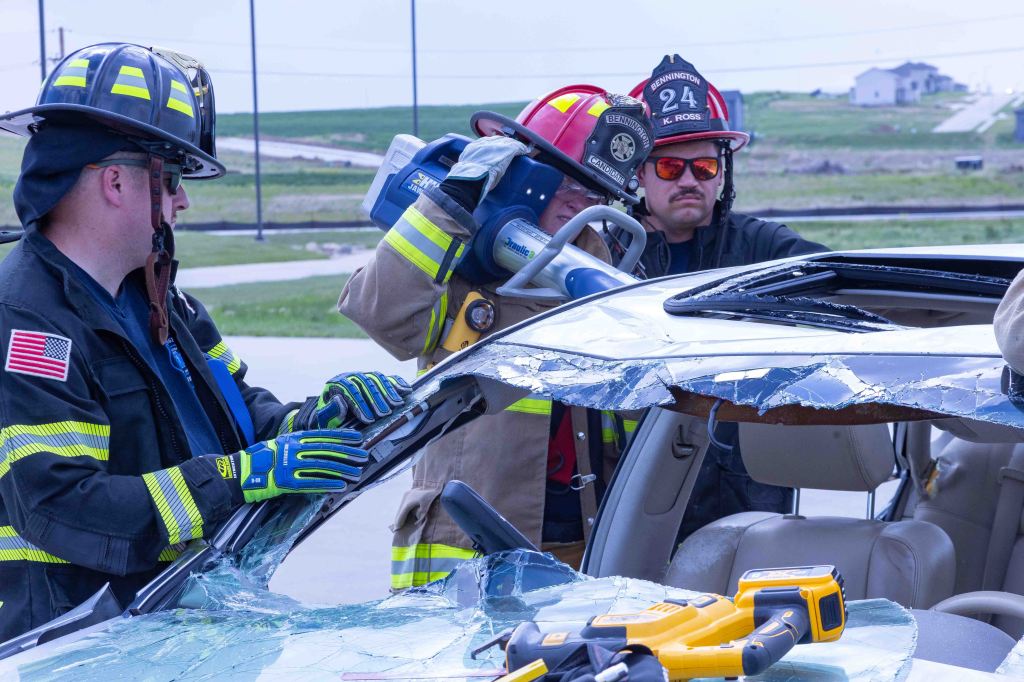
The hands-on training focused on stabilizing overturned vehicles and safely removing trapped patients, with firefighters practicing multiple stabilization techniques and full vehicle extrications. New crew member Kennedy Karschner and volunteer Nathan Wilch took part in much of the hands-on work as the department emphasized skill development and repetition.
According to the National Fire Protection Association, vehicle crashes remain one of the most common emergency responses for fire departments across the country, with responders frequently facing hazards including unstable vehicles, undeployed airbags, leaking fuel and entrapment of occupants. Modern vehicles have also introduced new challenges due to advanced materials and electric vehicle technology.
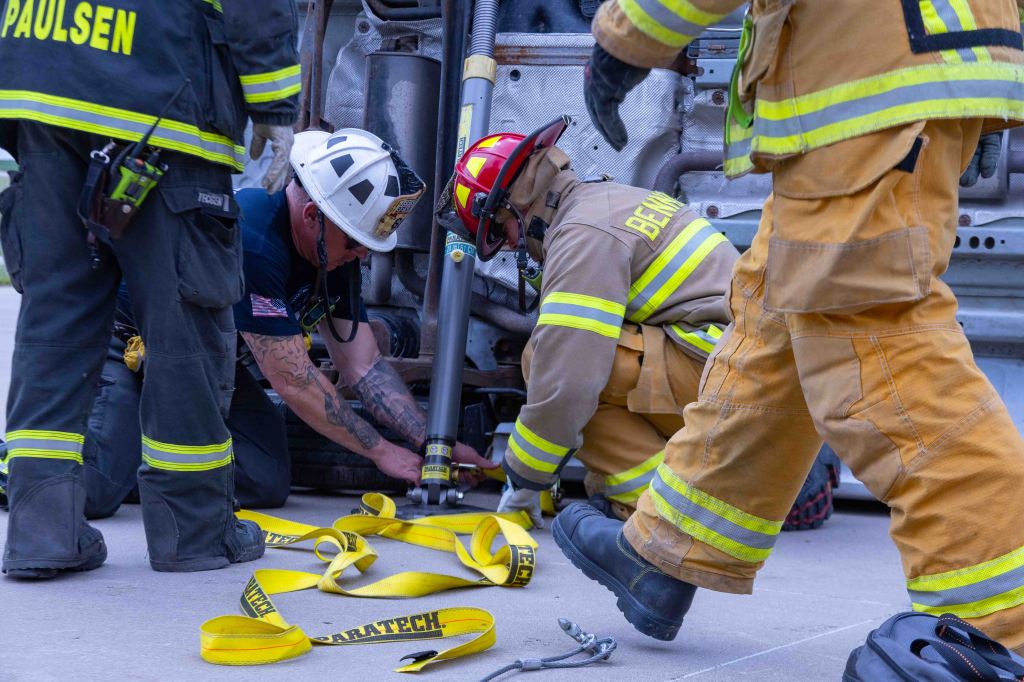
Captain Eric Paulsen said one of the most important aspects of extrication training is not necessarily the physical tools themselves, but the ability to quickly assess a scene and adapt.
“The biggest skill is not even a hands on skill,” Paulsen said. “It’s the ability to critically think and make a judgment based on the things you see in front of you. If you aren’t able to get that good decision made immediately, it’s just going to make everything longer and more complicated.”
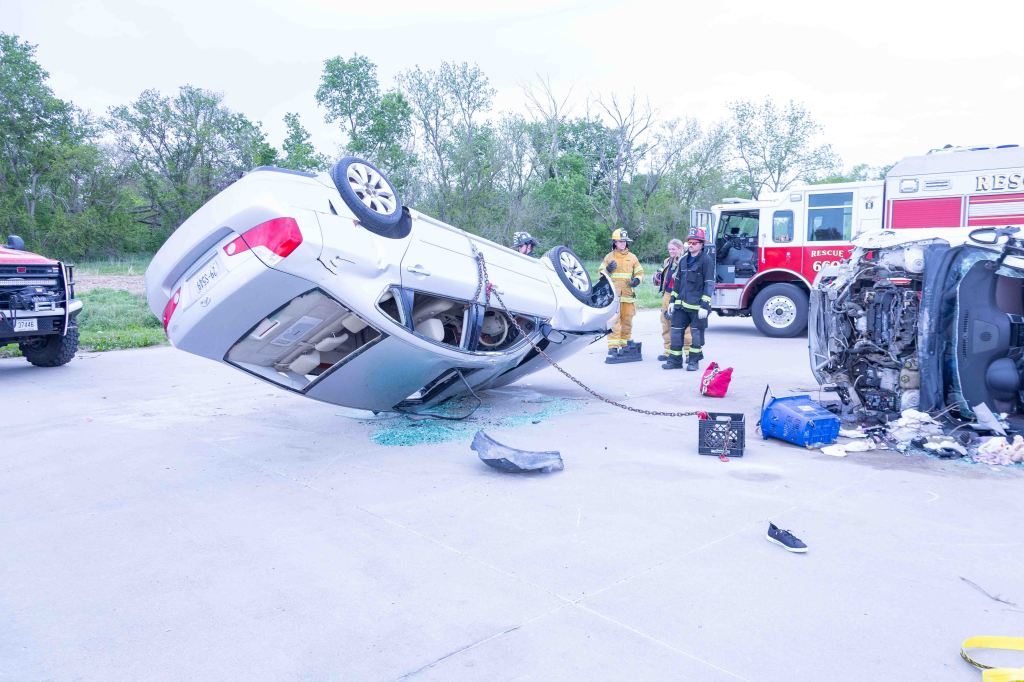
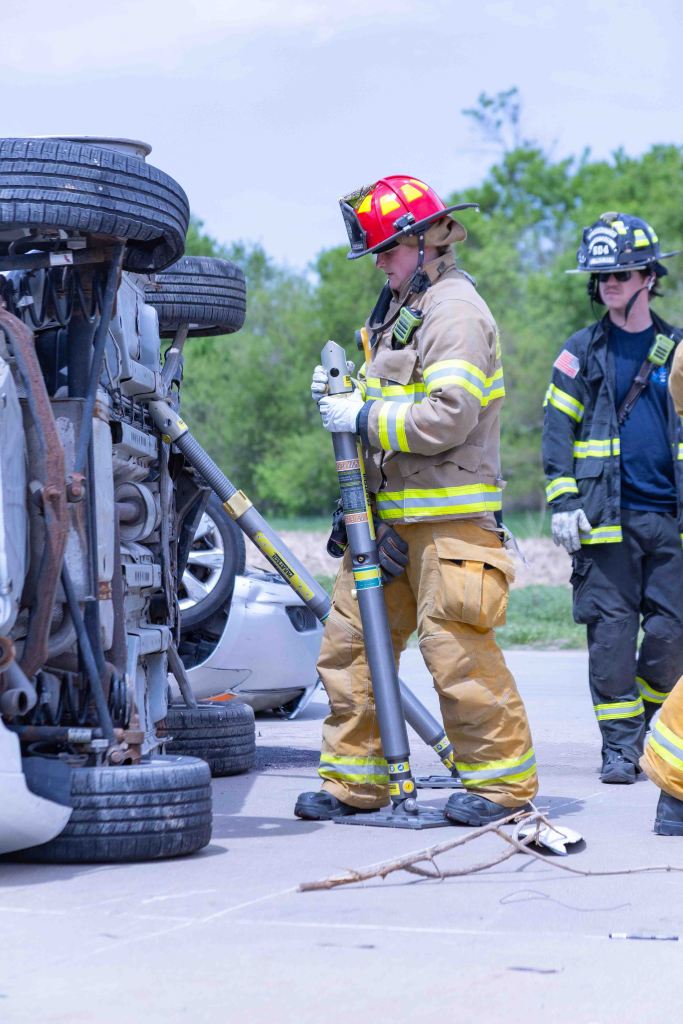
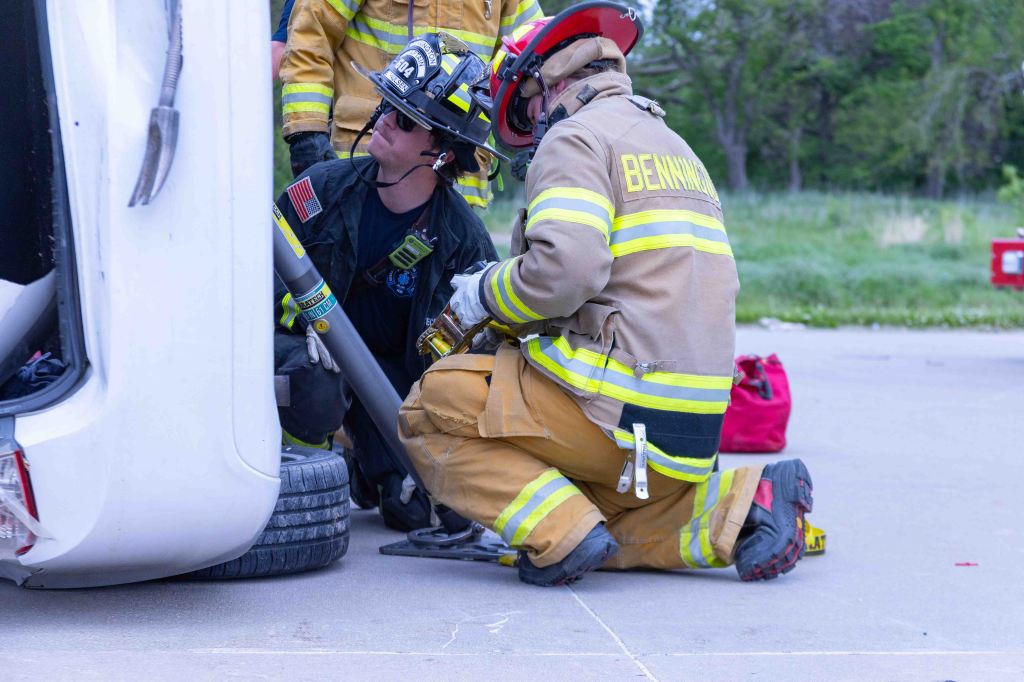
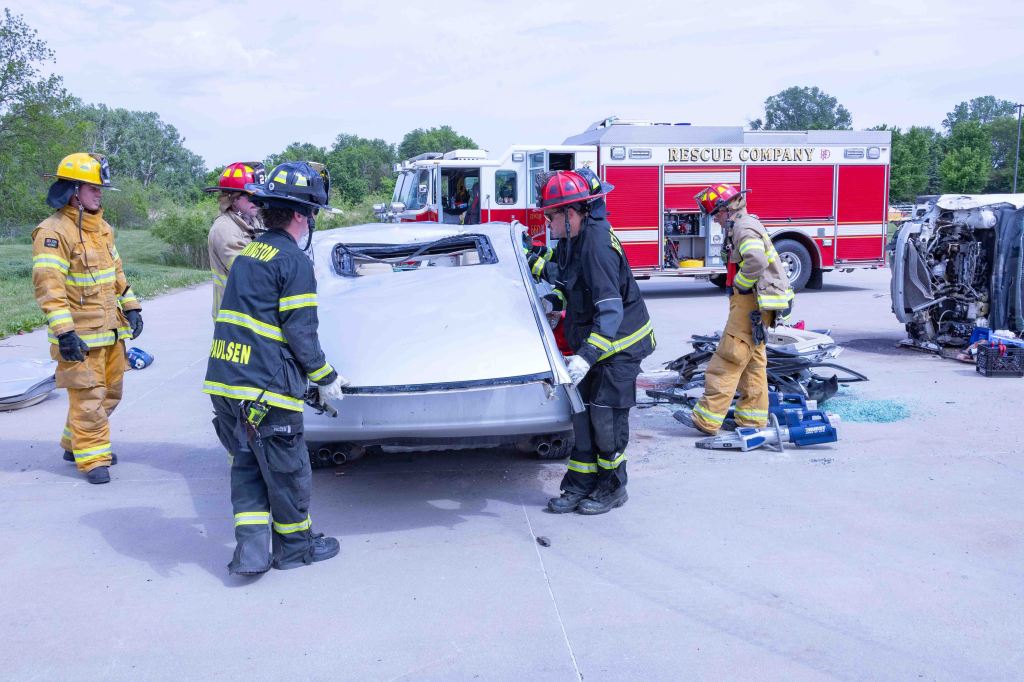
Throughout the training, firefighters worked through several scenarios involving vehicles positioned on their side, upside down and upright. Paulsen explained that each situation requires different stabilization methods before crews can safely begin cutting into the vehicle.
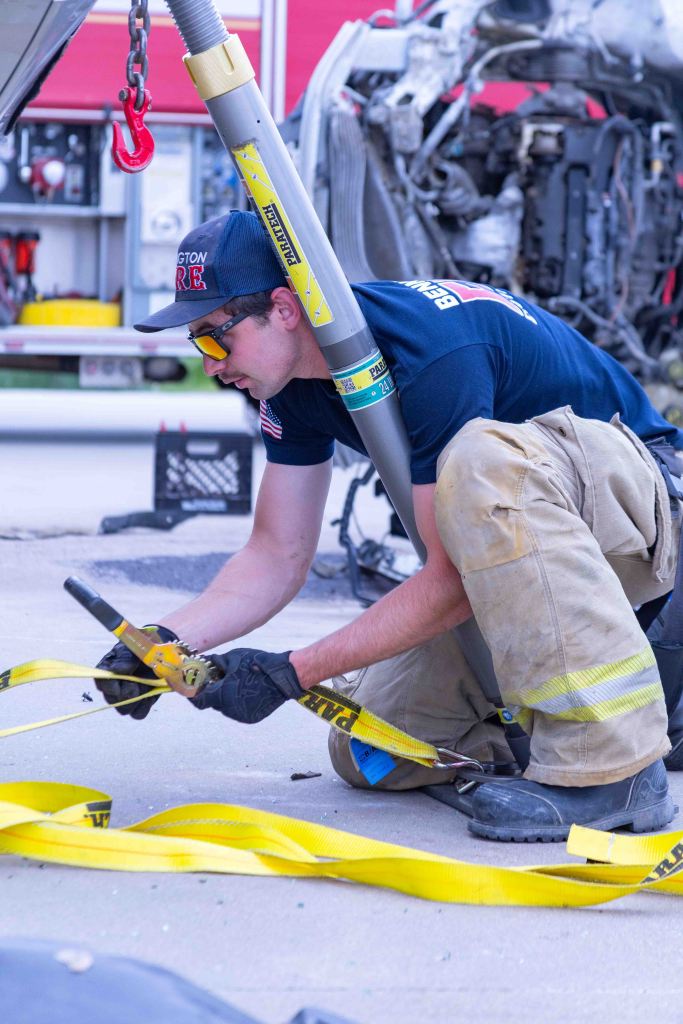
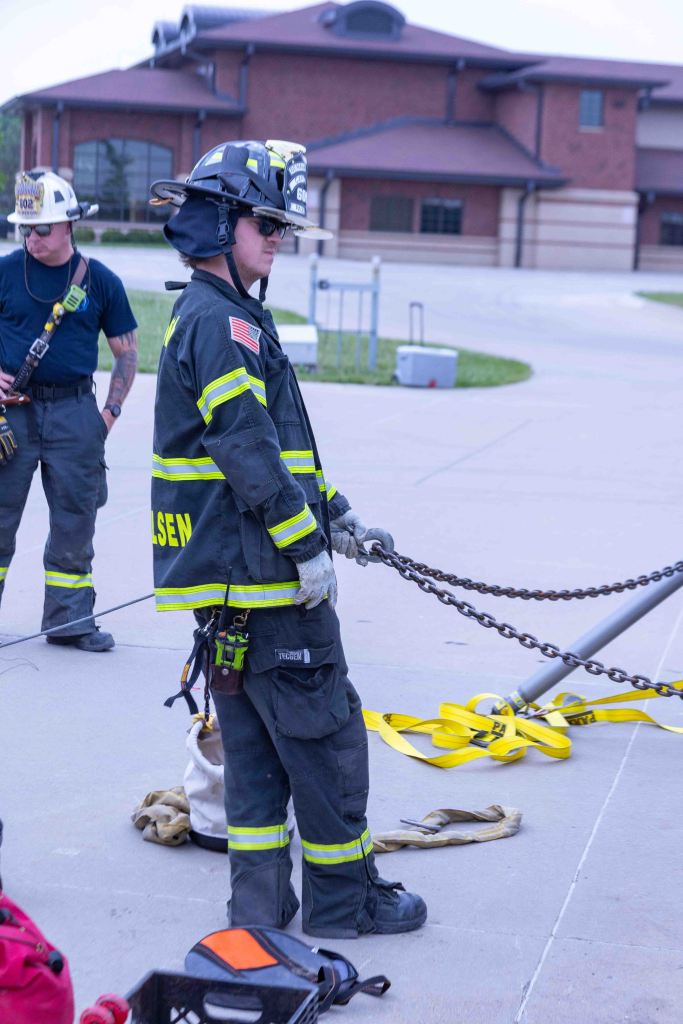
For vehicles resting on their side, firefighters used a stabilization technique known as a “tie back,” which uses struts, chains and winches to secure the vehicle and prevent movement while rescuers work. During another scenario involving a vehicle on its roof, crews practiced a “chain basket” stabilization method. Both of these methods create a sturdy, multi-point anchor system that secures vehicles while allowing crews to work on extracting patients without the vehicle shifting.
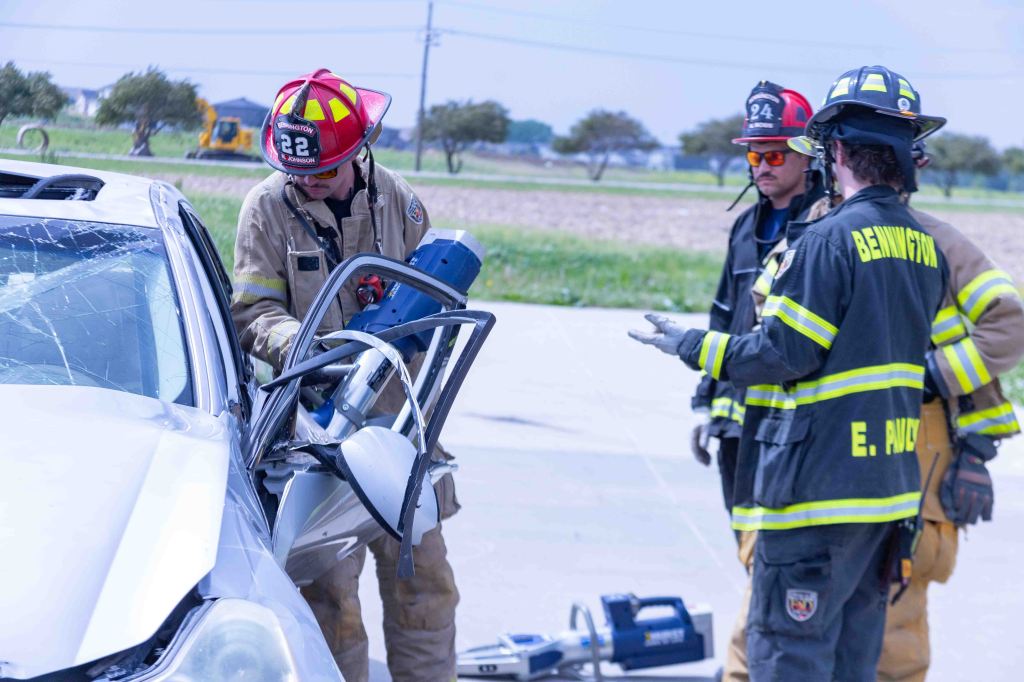
After stabilizing the vehicles, firefighters returned a vehicle to its upright position to continue the training. They removed doors, cut the roof off, and practiced lifting the dashboard to simulate rescuing trapped patients whose legs may be pinned after a serious collision.
Paulsen said one of the biggest training challenges is that practice vehicles rarely reflect the true condition of wrecked vehicles encountered during emergencies.
“The anatomy of the vehicle changes drastically because it’s been in a wreck,” he said. “There’s parts that were once strong that we would rely on that strength for that’s now weak. So we have to change up our game plan a lot.”
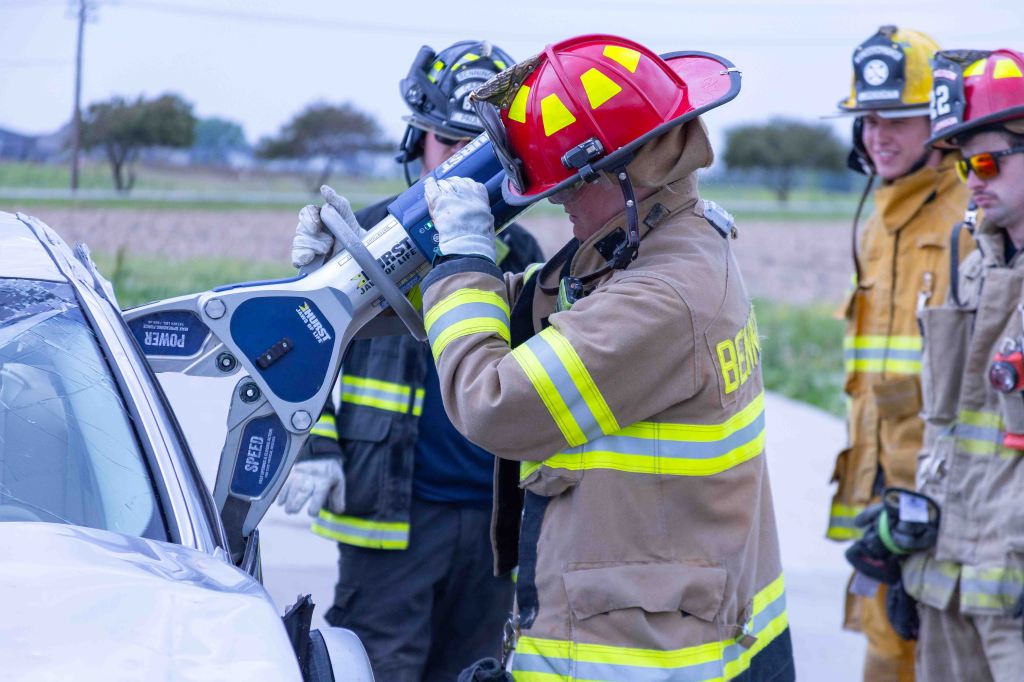
He added that rapidly changing vehicle technology has also forced fire departments to continuously evolve their training methods. “With modern day vehicles you’re seeing a lot of new innovations,” Paulsen said. “Going from two front airbags to side curtains to 360, that brings in new hazards when we go to enter the vehicle.”
He noted that reinforced steel components and electric vehicles continue to create new obstacles for emergency responders. “Electric vehicles are a huge obstacle that nobody really has a great solution for yet,” Paulsen said. “A lot of the speed of innovation with vehicles really challenges the fire service in trying to keep up.”
According to the National Highway Traffic Safety Administration, advanced vehicle safety systems and alternative fuel technologies can create additional risks for first responders if crews are not properly trained on vehicle anatomy and safety procedures.
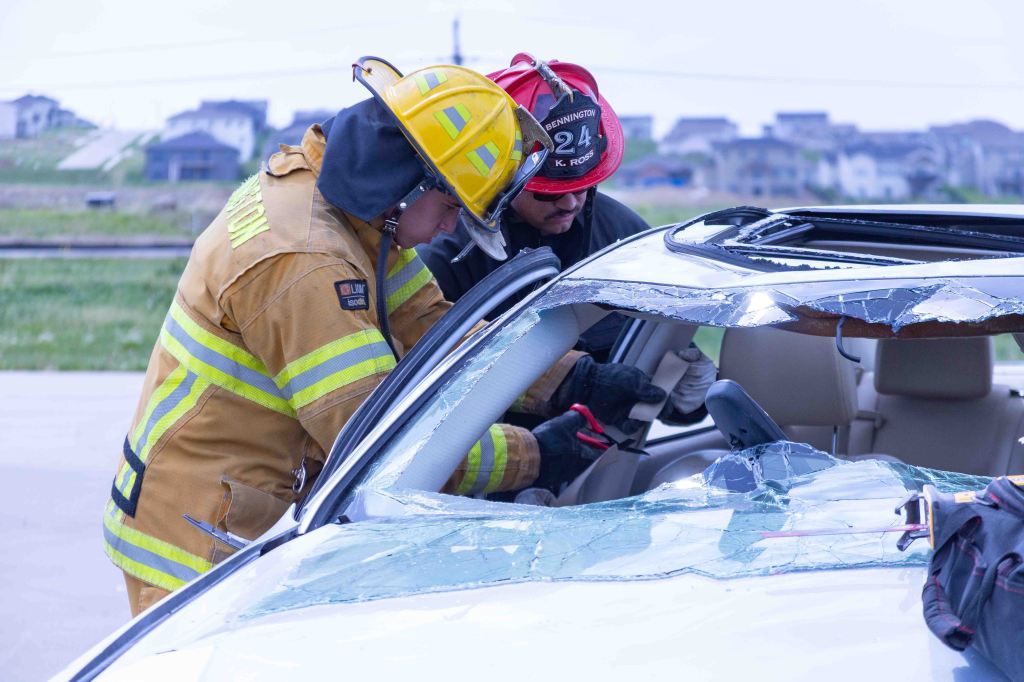
Paulsen said ongoing repetition is essential because firefighters may not frequently encounter complex extrications in real-world situations. “It’s one of those things that we don’t always get the opportunity to do hands-on skills with,” he said. “If we don’t train on them regularly, they quickly lapse or are not quite as proficient. In a job like this, there’s no excuse to be anything less than extremely proficient,” he added.
In addition to practical exercises, firefighters spend time discussing techniques and vehicle anatomy outside of formal training sessions in order to strengthen both technical knowledge and decision-making skills. “The hands-on skills are important,” Paulsen said. “But if we can pair the actual knowledge of the car and the task itself with the hands on skills, that really drives the full proficiency of it.” With severe crash victims often suffering traumatic injuries, firefighters train to complete complex extrications in 10 minutes from arrival on scene to patient removal.
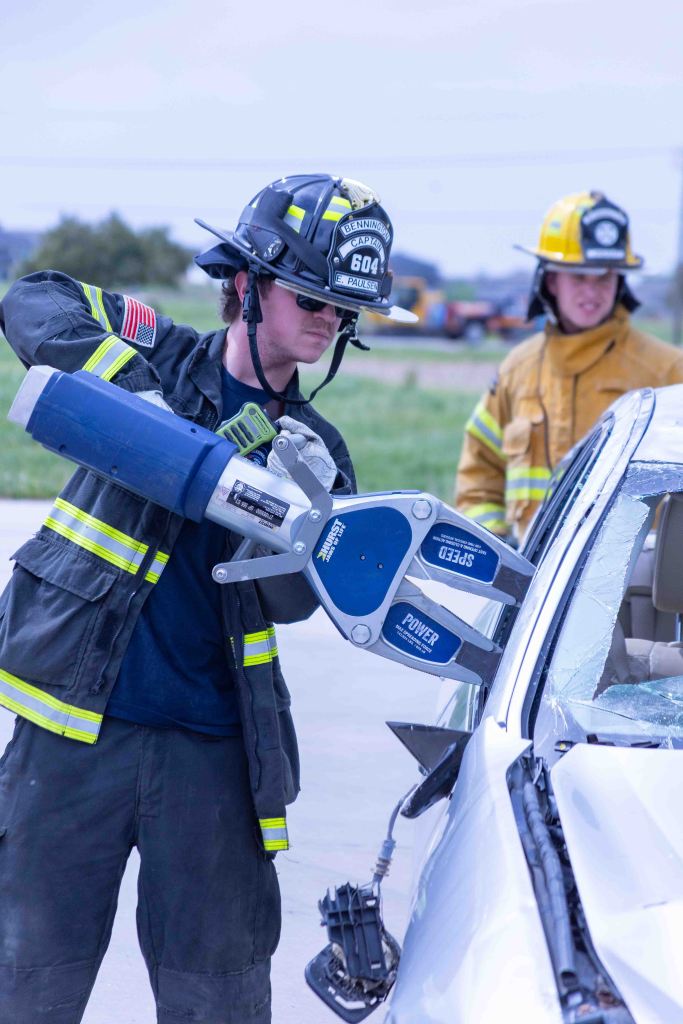
Paulsen also encouraged drivers to slow down and move over when approaching emergency scenes, saying traffic near accident scenes is often one of the greatest dangers firefighters face.
“We know how to do our job when it comes to extricating,” he said. “But it’s the people that are driving on the street, the highway, whatever, within 10 to 20 feet of us that I think scares a lot of people more than the actual skills and the issue itself.”