By Marisa Dawson, Photos by Stacy Hawn- Bennington Public Schools (BMS event) & Marisa Dawson (Library event)
From fiery rocket demonstrations and a bed of nails to LEGO creations and robot visitors, Bennington students and families celebrated a historic moment in space exploration through a day of science, discovery and curiosity.
Nearly 50 years after launching from Earth, NASA’s Voyager 1 spacecraft reached a milestone no human-made object has ever achieved: traveling one light-day from Earth.
On Wednesday, Nov. 18, 2026, Voyager 1 reached approximately 16.1 billion miles from Earth, the equivalent of the distance light travels in 24 hours. That means a radio signal sent from Earth now takes an entire day to reach the spacecraft, with another day needed for a response to make the journey home.
Launched in 1977, Voyager 1 has traveled farther than any other human-made object and became the first spacecraft to enter interstellar space in 2012. Its one-light-day milestone provided an opportunity to celebrate not only an extraordinary achievement in space exploration, but also the curiosity, engineering and human ingenuity that made it possible.
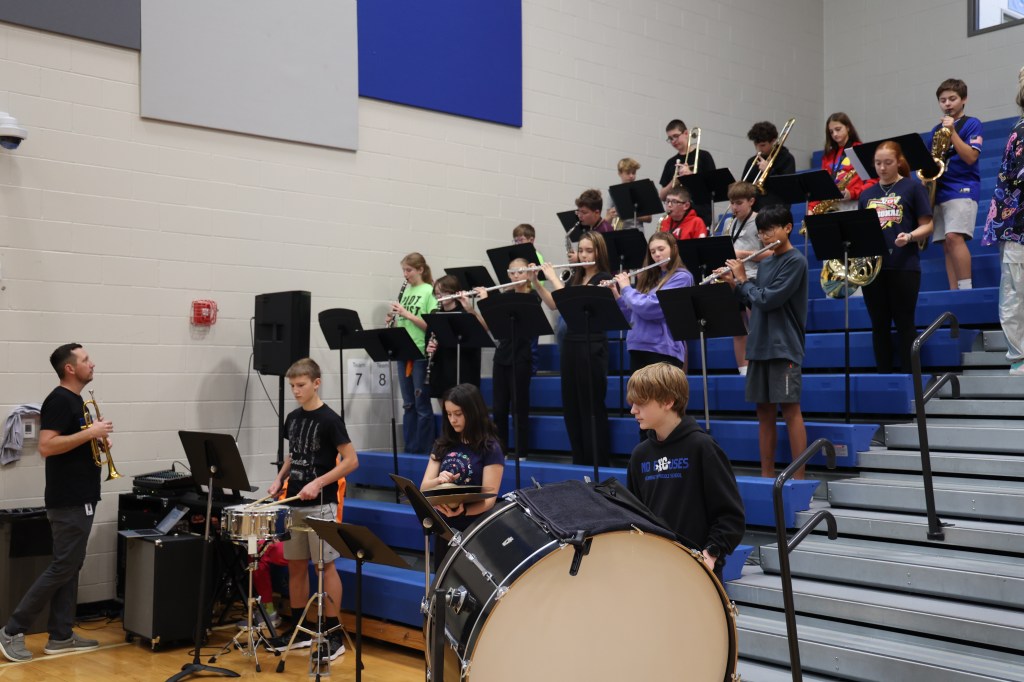
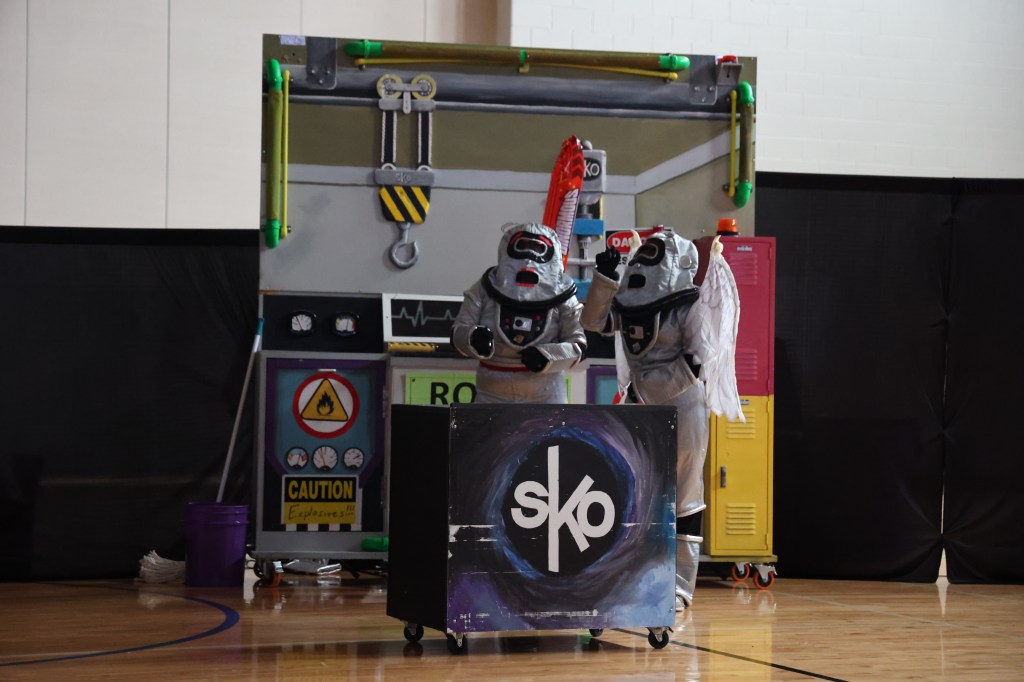
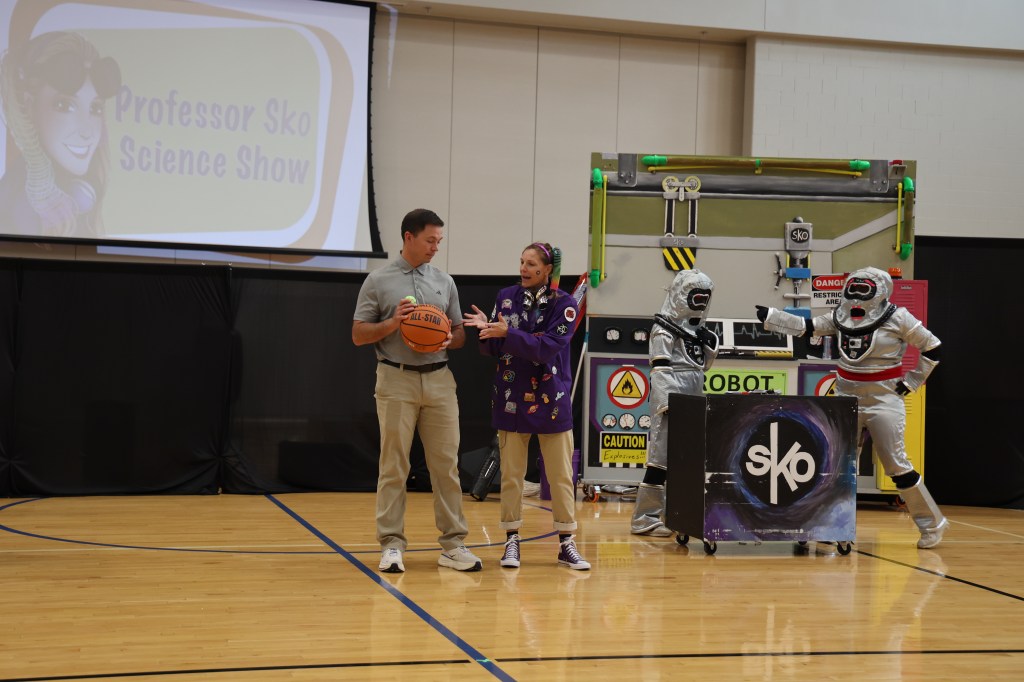
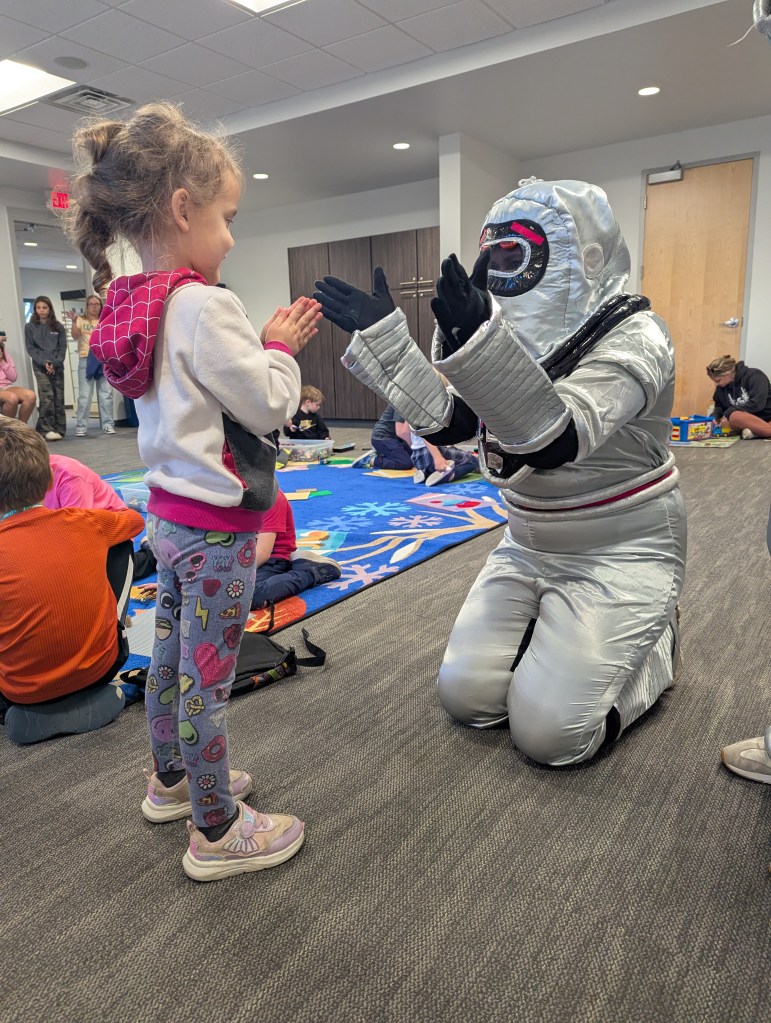
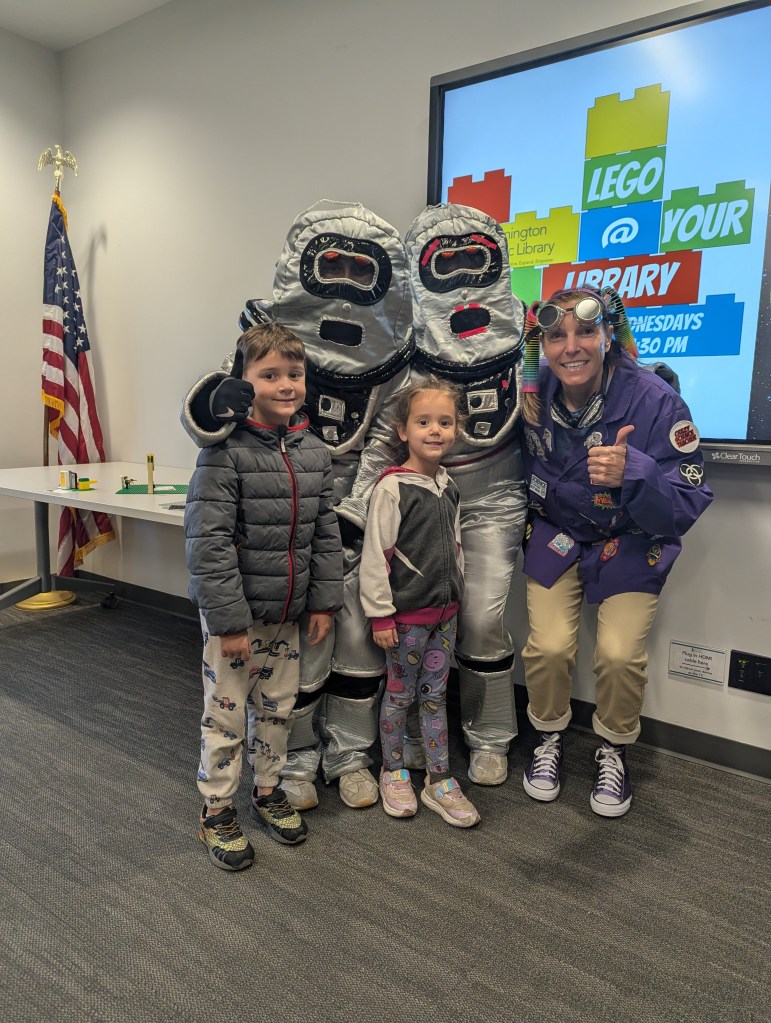
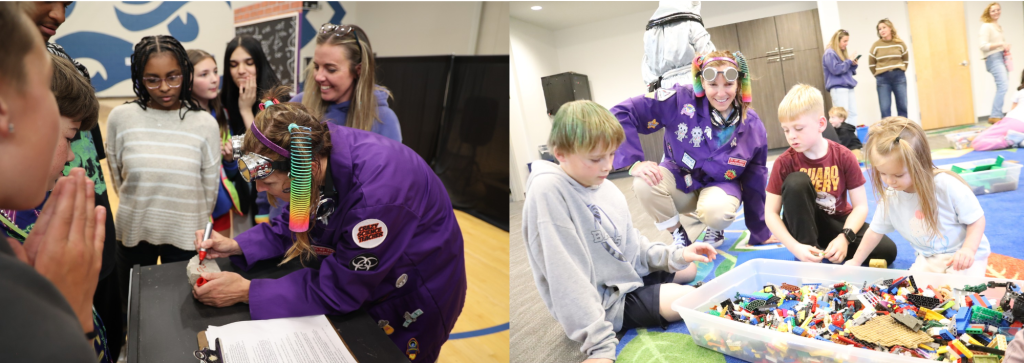
Bennington Middle School took that opportunity to bring science to life for students and the broader community, hosting a special schoolwide celebration featuring Professor Sko and her two robot companions, Rusty and Sparky. The celebration continued beyond the school day with a special appearance at the Bennington Public Library’s open-play LEGO building event.
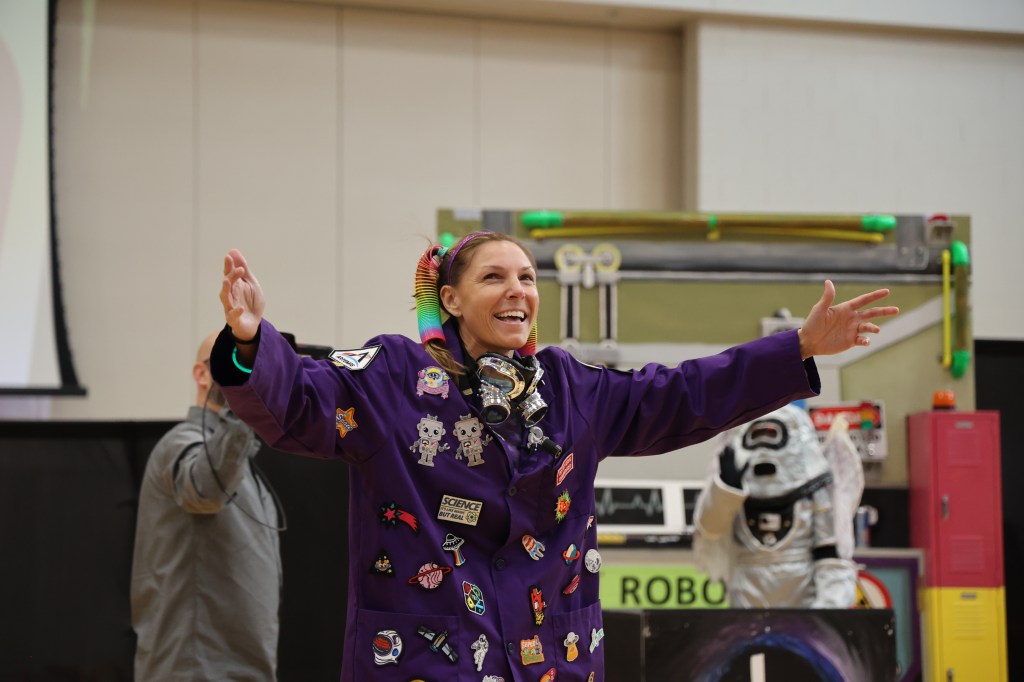
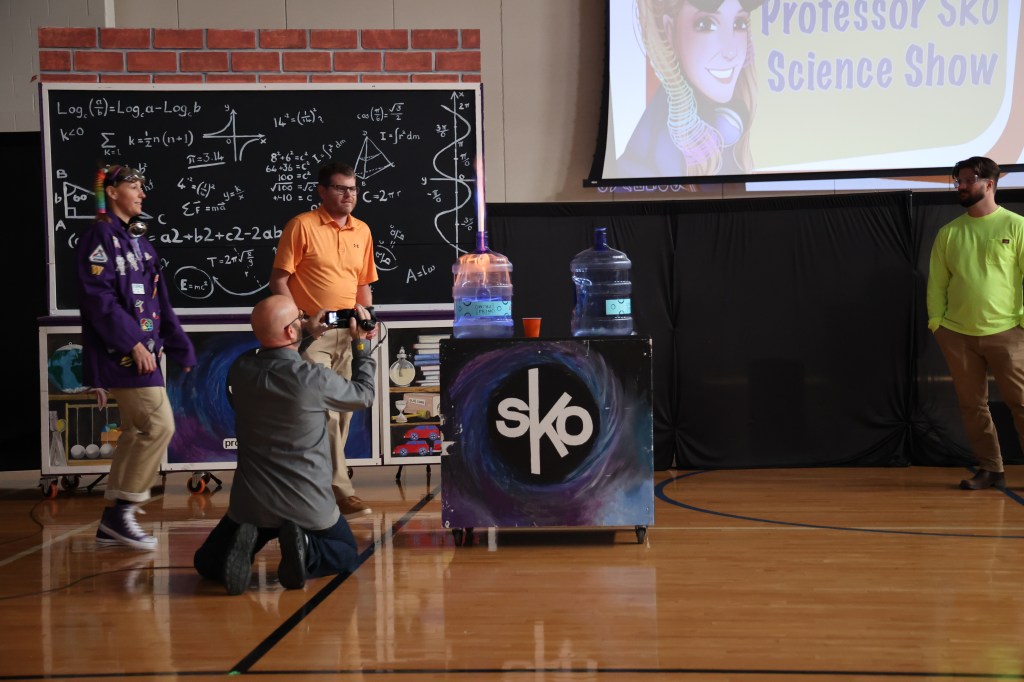
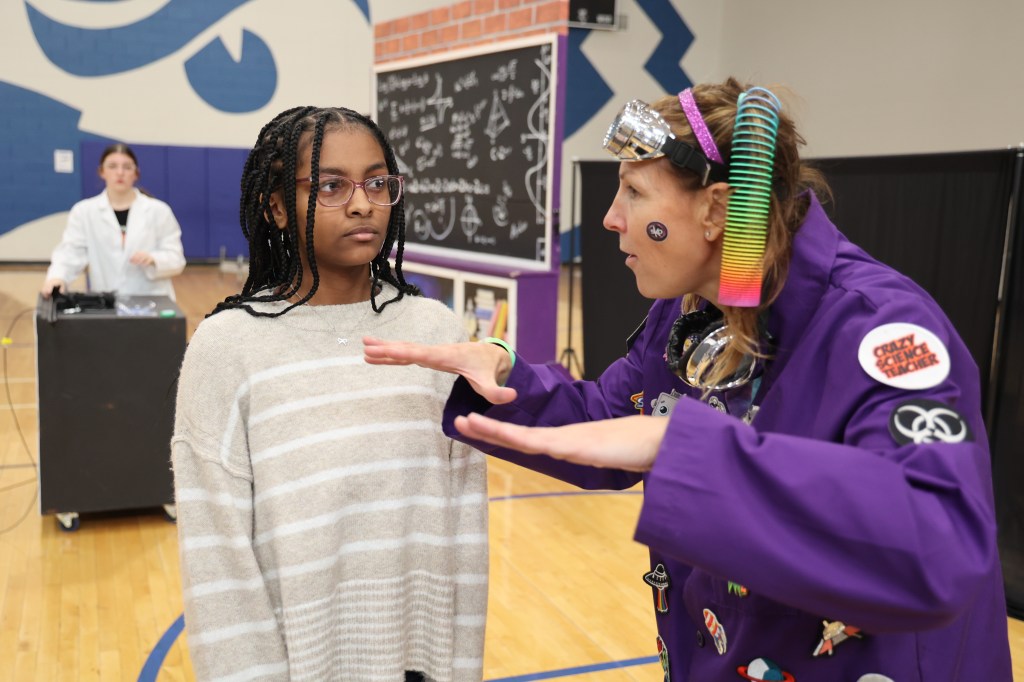
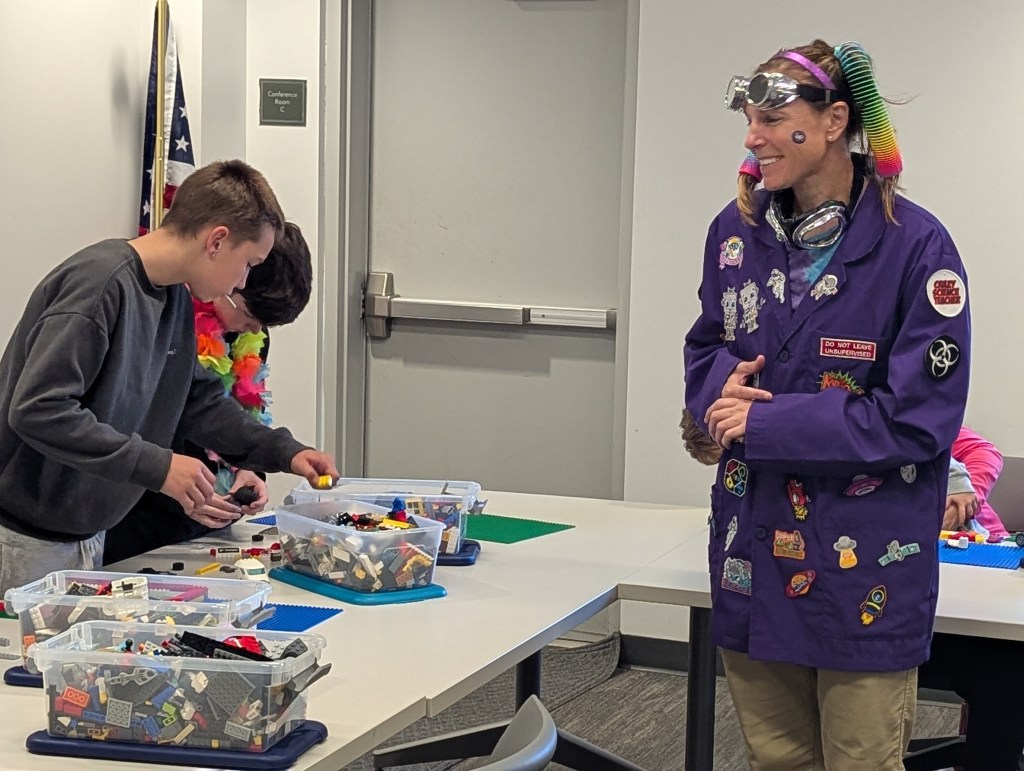
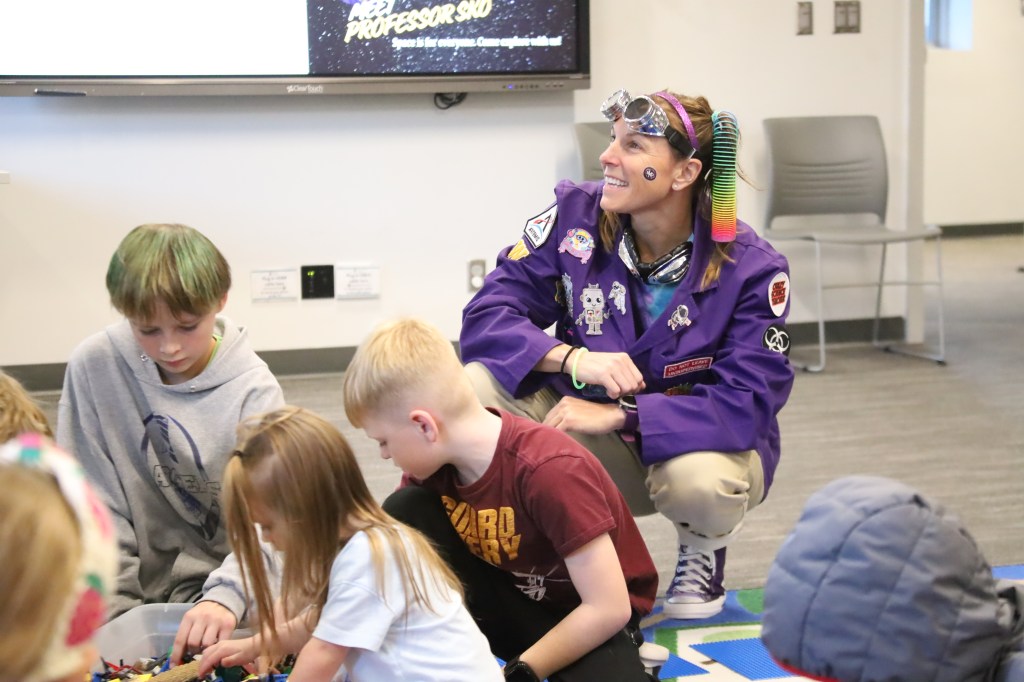
The demonstrations were led by Brenda Skoczelas, better known to young science enthusiasts as Professor Sko (pictured above). A physicist and educator, Skoczelas created the award-winning Professor Sko Science Show through Sko Labs, Inc., a nonprofit organization dedicated to making science engaging and accessible. With a background in mathematics and physics, including a master’s degree in physics from Ball State University, she combines theatrical storytelling, hands-on experiments and humor to bring scientific concepts to life. She was named Florida Professor of the Year in 2018 and has since partnered with Nebraska Wesleyan University’s Wesleyan Institute for Successful Educators to help develop educational resources and provide hands-on experiences for future educators.
For seventh-grade science and social studies teacher (and 2025 Nebraska Teacher of the Year) Lindsey Wilson, who worked to organize the celebration, the idea was about creating an opportunity for the entire school and community to experience something extraordinary together.
After connecting with what she called the “Light Day Team,” which included Professor Sko, Dr. Mark Thompson from Nebraska Wesleyan University, 2026 Nebraska Teacher of the Year Sarah Hardin and Tom Whissinand from Millard, Wilson knew she wanted to find a way to bring the milestone to Bennington.
“We spend a lot of time talking about how we are real scientists, the importance of curiosity and exploration, and to me, Voyager 1 is the perfect symbol of that,” Wilson said. “I always want to find ways for my students to connect with real science.”
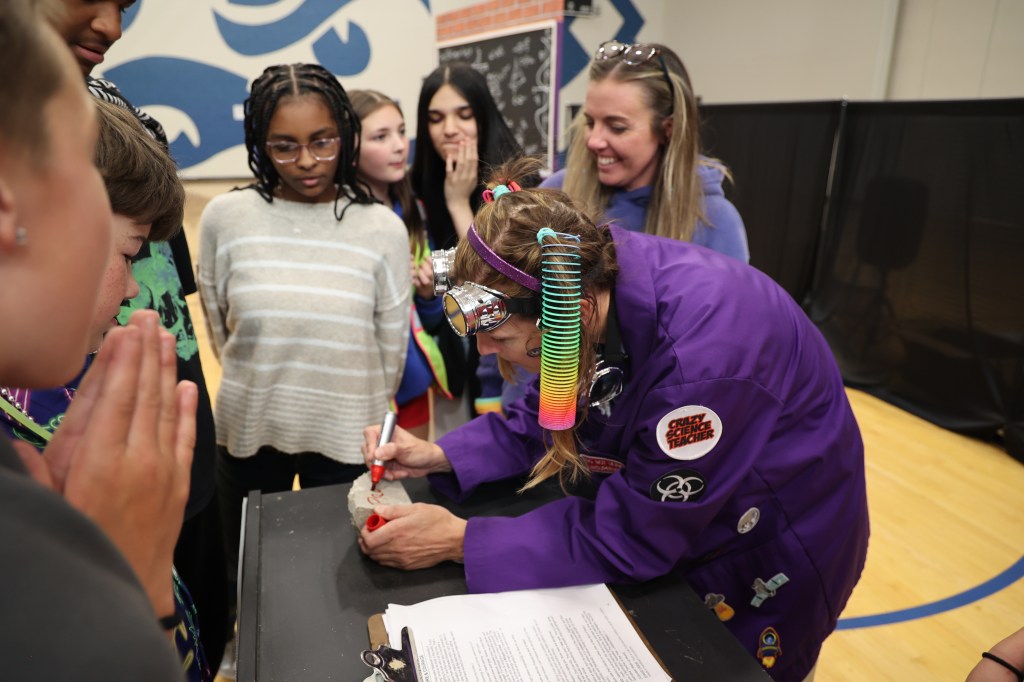
In the days leading up to the celebration, students explored Voyager 1’s journey, why it was launched, what it has taught scientists and the Golden Record carried aboard the spacecraft. They also created mission patches, made Golden Record messages for their teachers and worked through collaborative puzzles and challenges.
Rather than focusing on memorizing facts and enormous distances that can be difficult to comprehend, Wilson wanted students to experience science through activities that connected the historic milestone to different areas of learning.
“We talked about what it would mean to wait a whole day for a message to travel one way,” she said. “We looked at Voyager’s actual path and where it is compared to our solar system. We made things, solved things, celebrated it and kept coming back to the fact that this little spacecraft has been out there longer than we have been alive.”
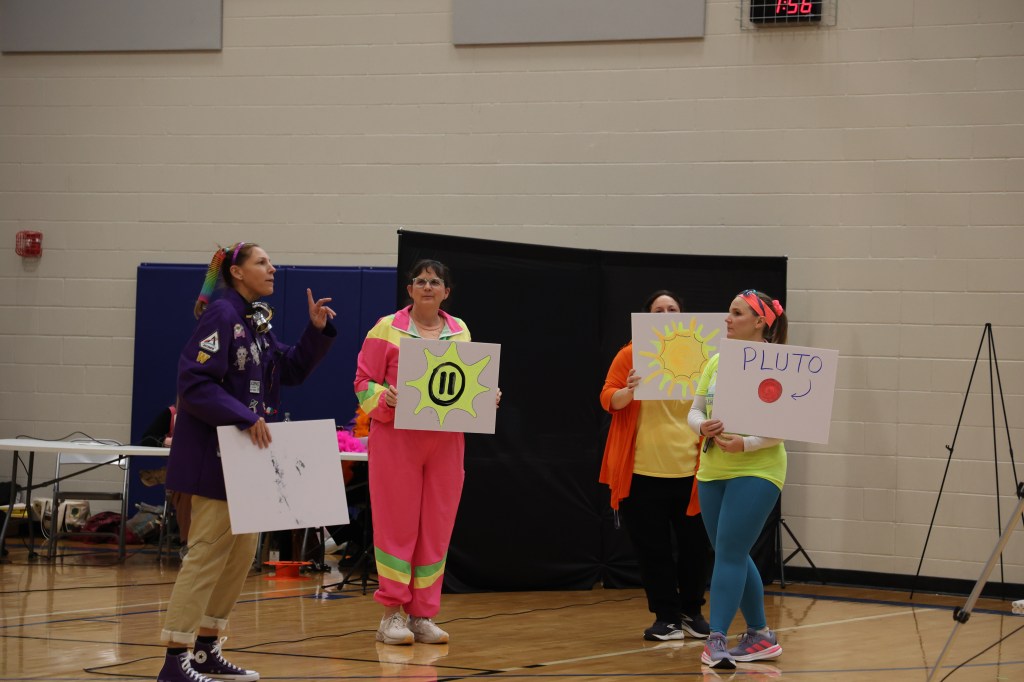
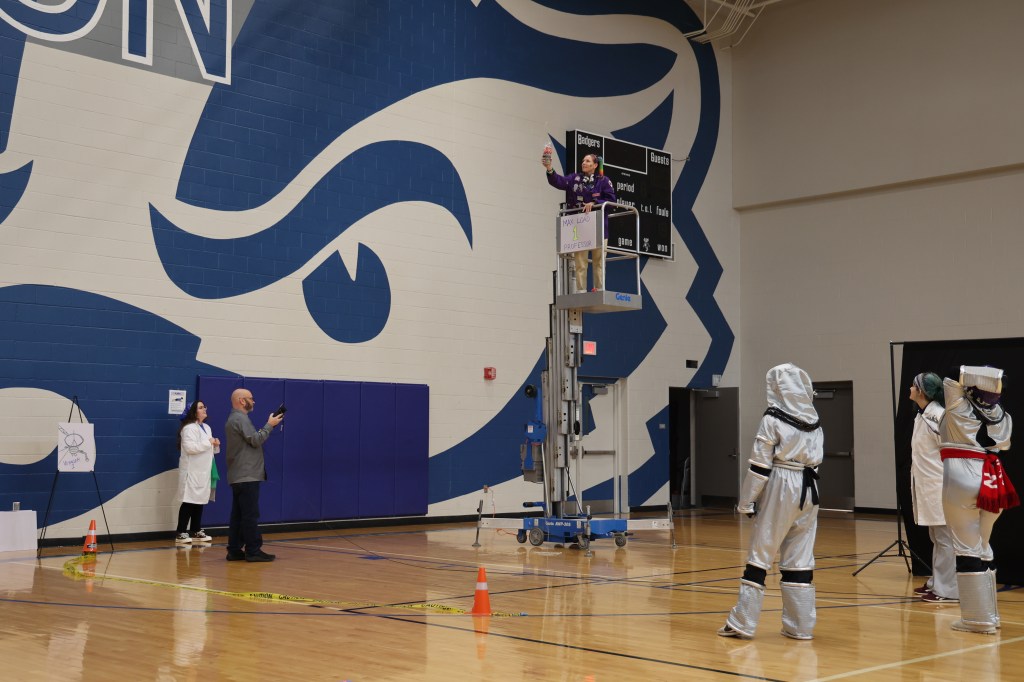
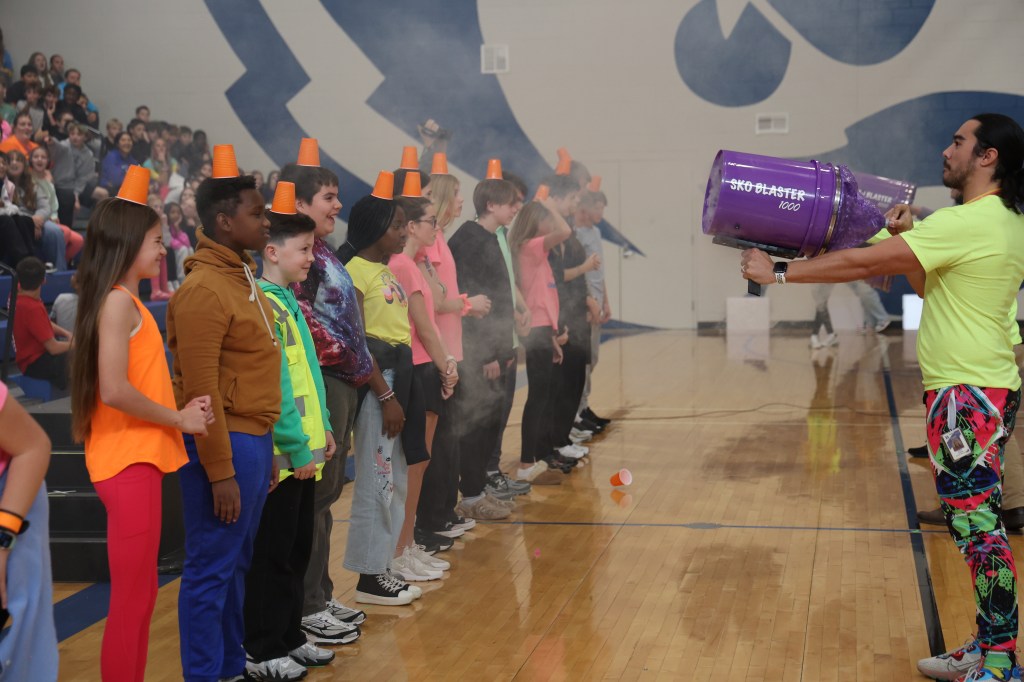
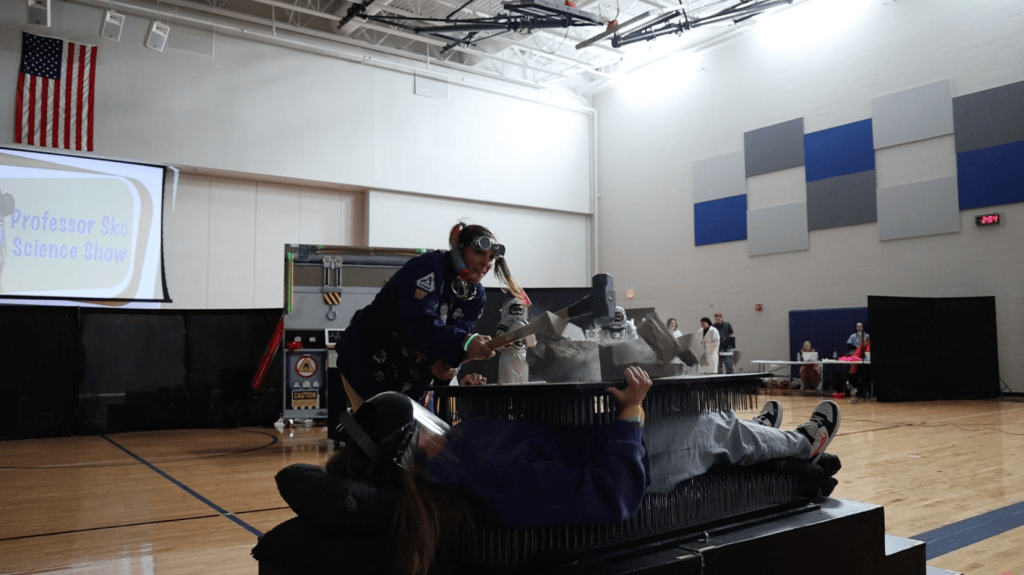
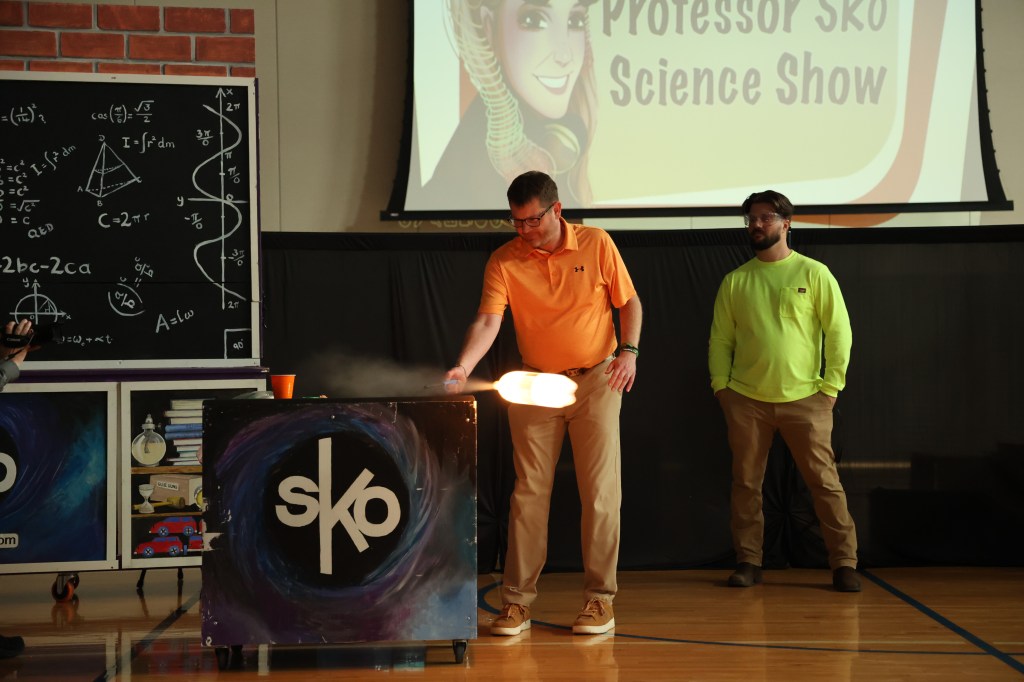
The schoolwide celebration brought those lessons to life with an energetic demonstration from Professor Sko. Activities were tied to different aspects of Voyager 1 and the science behind its journey, including a scale model of the solar system, rocket demonstrations, air blasters to explore the atmosphere and even a demonstration involving Wilson on a bed of nails to illustrate the distribution of pressure (as seen below).

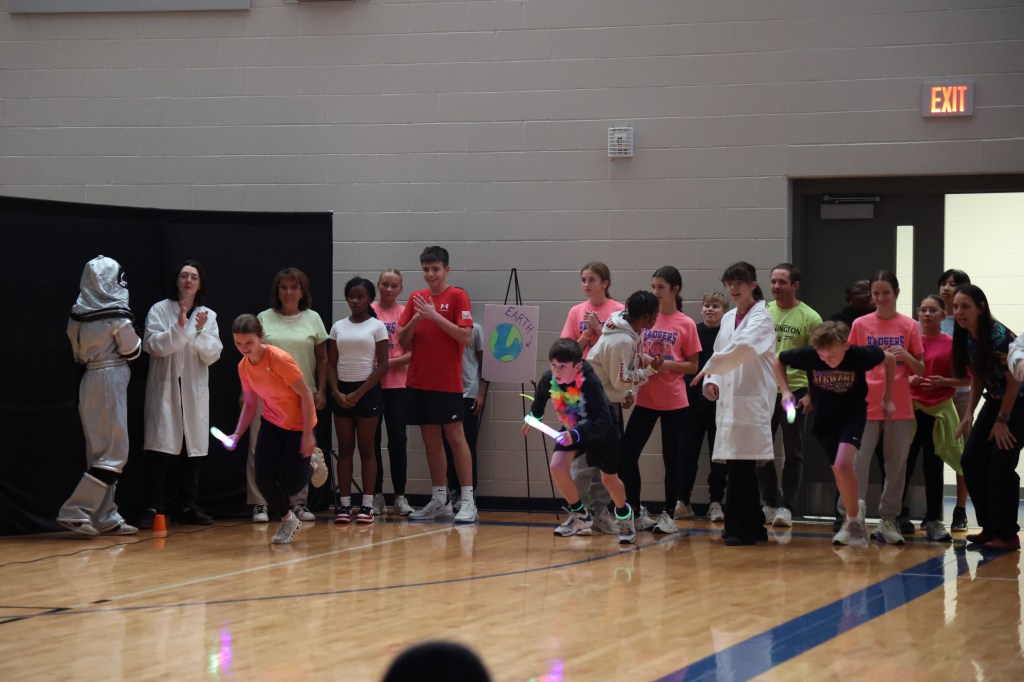
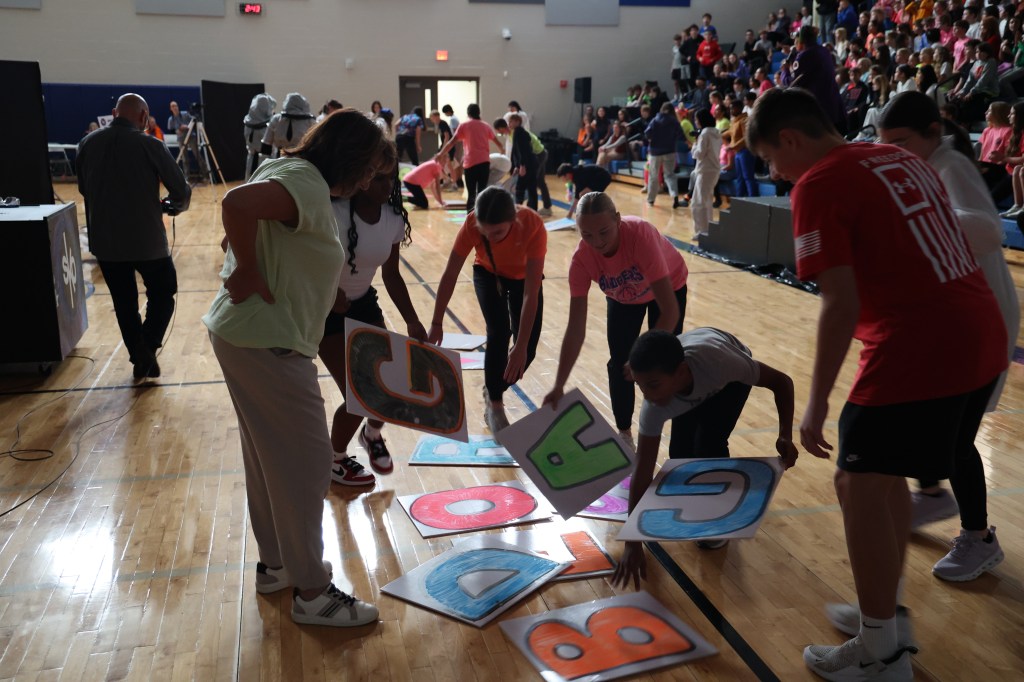
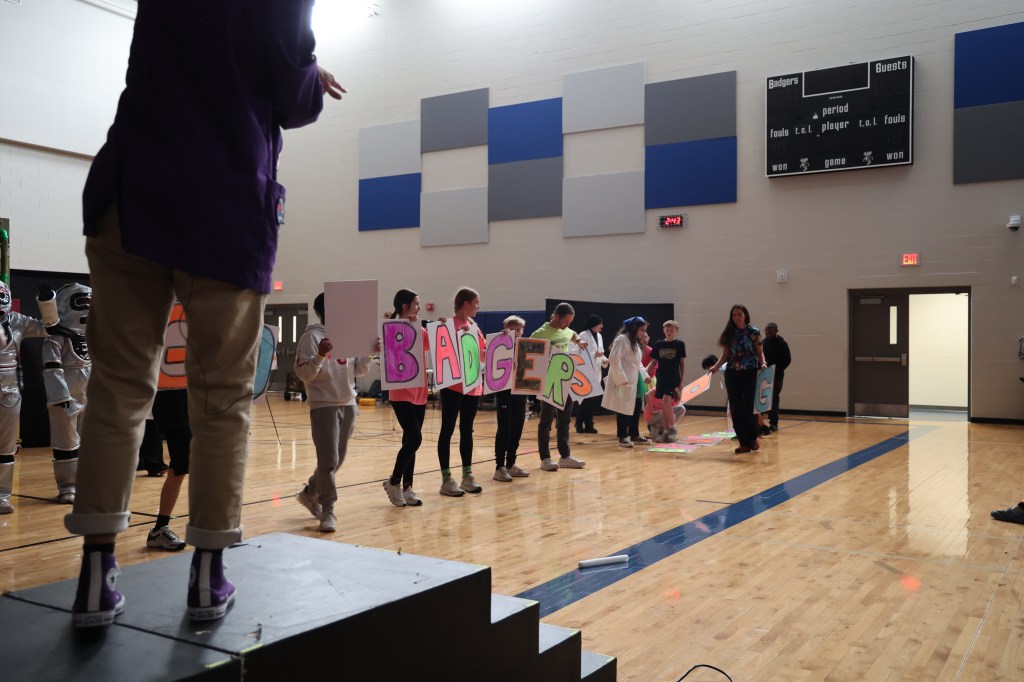
Students also participated in a relay race that required them to decode a message from Voyager 1, demonstrating the time delay involved in communicating with a spacecraft so far from Earth.
Professor Sko said the goal was to make the historic milestone an experience students would remember while giving them opportunities to learn alongside one another.
“For me, some of the most memorable experiences for me at school were those days when we had an all school assembly and I got the chance to run home off the bus and tell my parents, I had the best day ever and thank you,” Professor Sko said. “And that’s what I want to recreate for these kids.”
She also emphasized that science should be accessible to everyone, regardless of age or background.
“I think the other thing that’s important to me is that science is for everyone,” she said. “So I really want to bring in adults, kids, no matter your age, if you love science, then it’s the right place for you.”
For students, the demonstrations provided an opportunity to see scientific concepts in action and connect what they had been learning to something much bigger.
Seventh-grader Mila Baczwaski said she had been introduced to Voyager 1 about a month earlier through an article in reading class before continuing to explore the spacecraft in science. Her favorite part of the celebration was watching her classmates participate in the demonstrations.
“My favorite part was getting to see my friends and other students participate in the show, this was really fun because we got to cheer them on, while learning about different parts of Voyager one,” Baczwaski said.
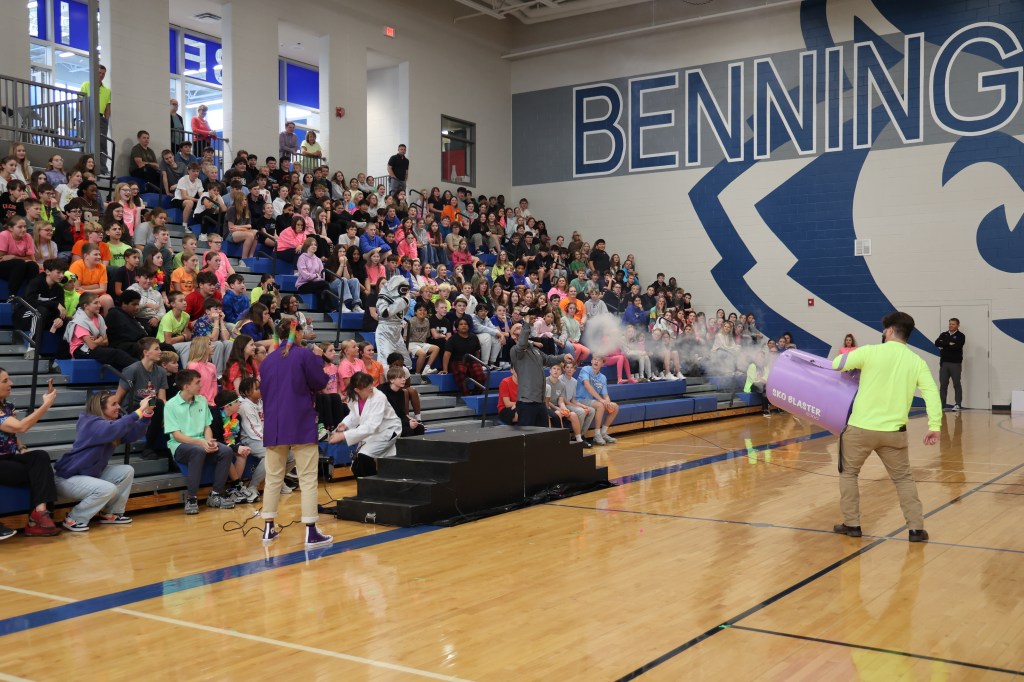
Seventh-grader Saifullo Nematov said he had not heard of Voyager 1 before the lessons and celebration. He was surprised to learn the spacecraft had been traveling through space for nearly 50 years. His favorite part was the demonstrations, particularly the experiments involving soda bottles.
“I got to see cool things happen yesterday and I keep on learning and being more interested in science,” he added.
Charlie Cizek, also a seventh-grader, said he had heard a little about Voyager 1 previously, but learning more about its journey helped spark his interest.
“I have heard about it a little bit but it never really sparked my interest until we started learning about it, I never thought anything would be able to go that far in space,” Cizek said.
All three students said the experience increased their interest in science and space exploration. Baczwaski said seeing things happen that she had not thought possible made her want to continue researching what lies beyond Earth. Nematov said the demonstrations encouraged him to keep learning about science, while Cizek said the experience helped him better understand what humanity is capable of accomplishing in the future.
Their perspectives reflected exactly what Wilson hoped students would take away from the celebration: an understanding that science is something they can actively participate in, not simply something they read about in a textbook.
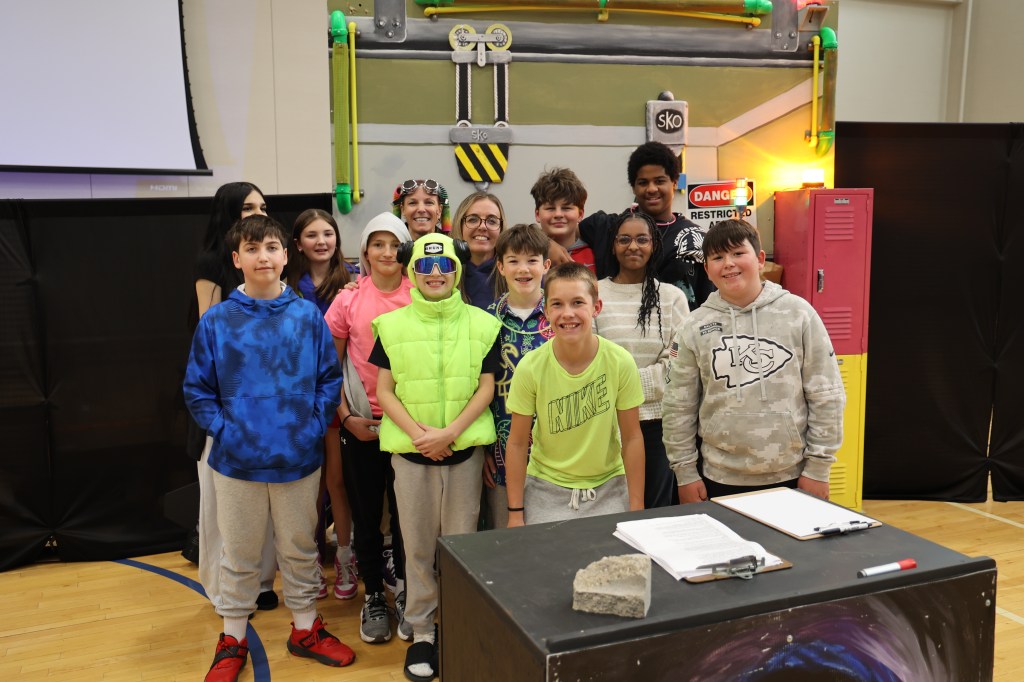
“There is a place for learning the vocabulary and understanding the science, but kids need opportunities to actually DO science,” Wilson shared. “Some of the best moments in my classroom happen when students are asking questions, trying something, making mistakes, changing their thinking and trying again.”
She hopes students recognize that they don’t have to become astronauts or aerospace engineers to make meaningful contributions to science.
“I want my students to see themselves as scientists and know that there is space for them in this world to contribute knowledge,” Wilson said. “At the end of the day, if a student walks away thinking, ‘I want to know more about that,’ then we have done something important.”
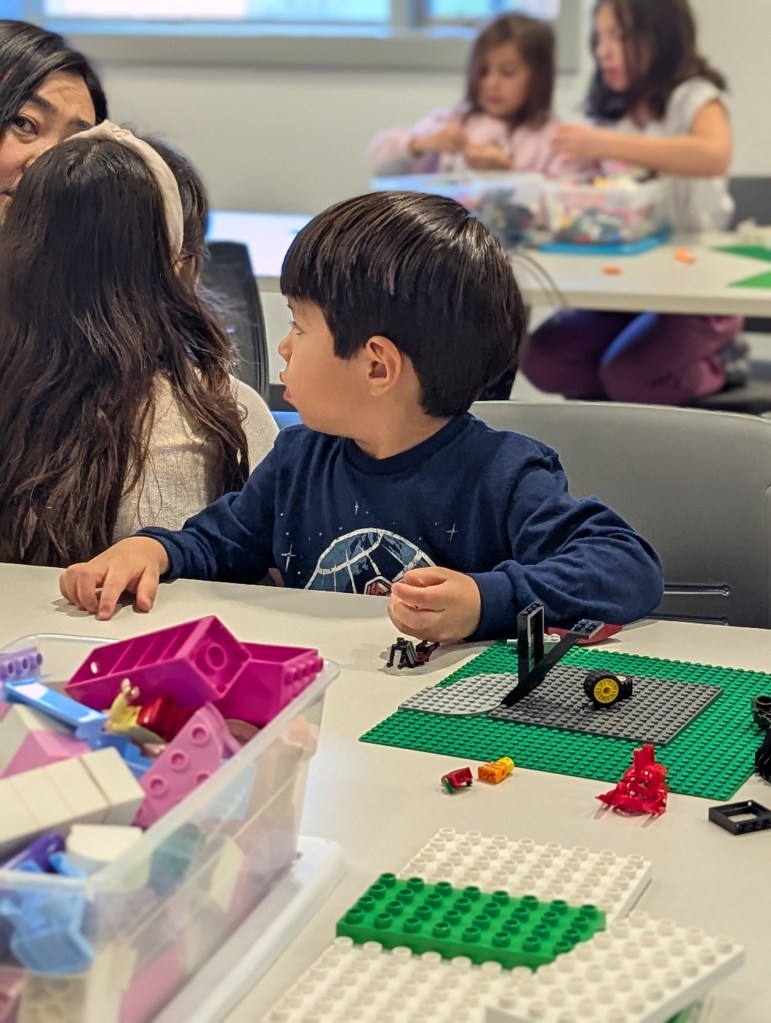
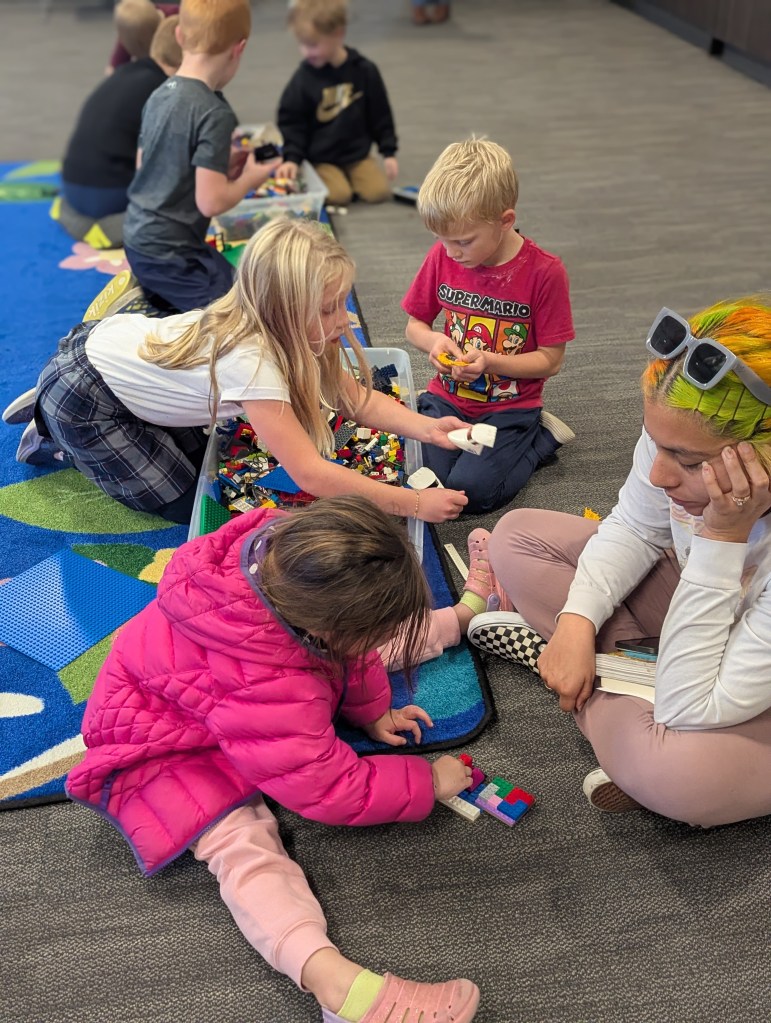
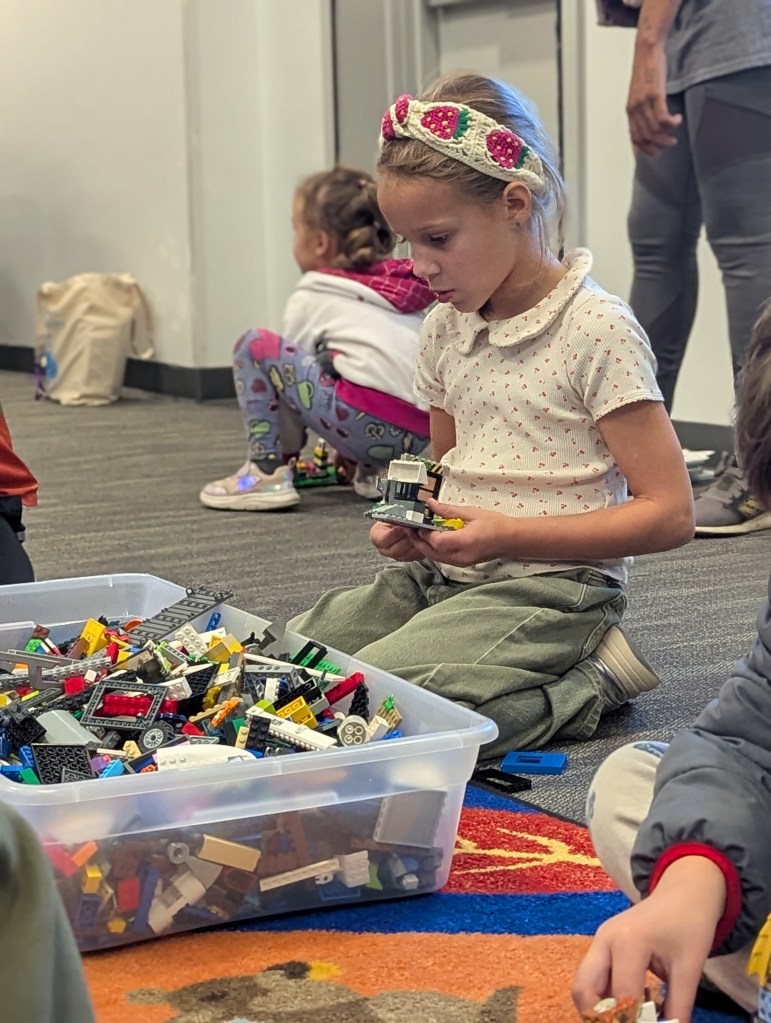
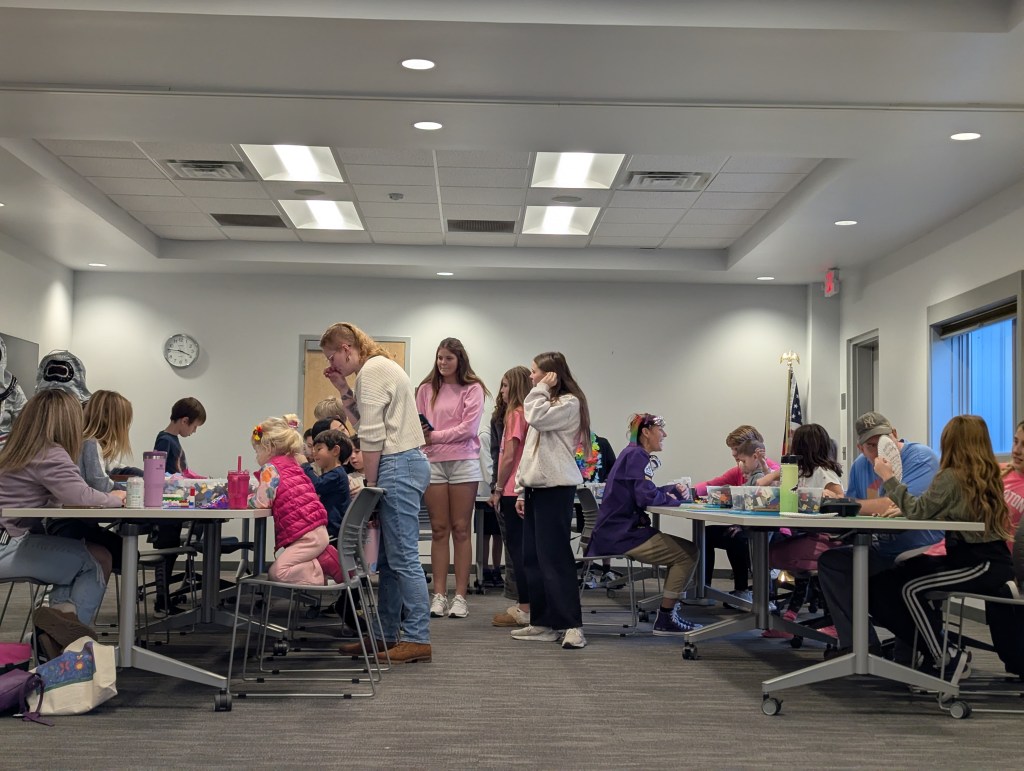
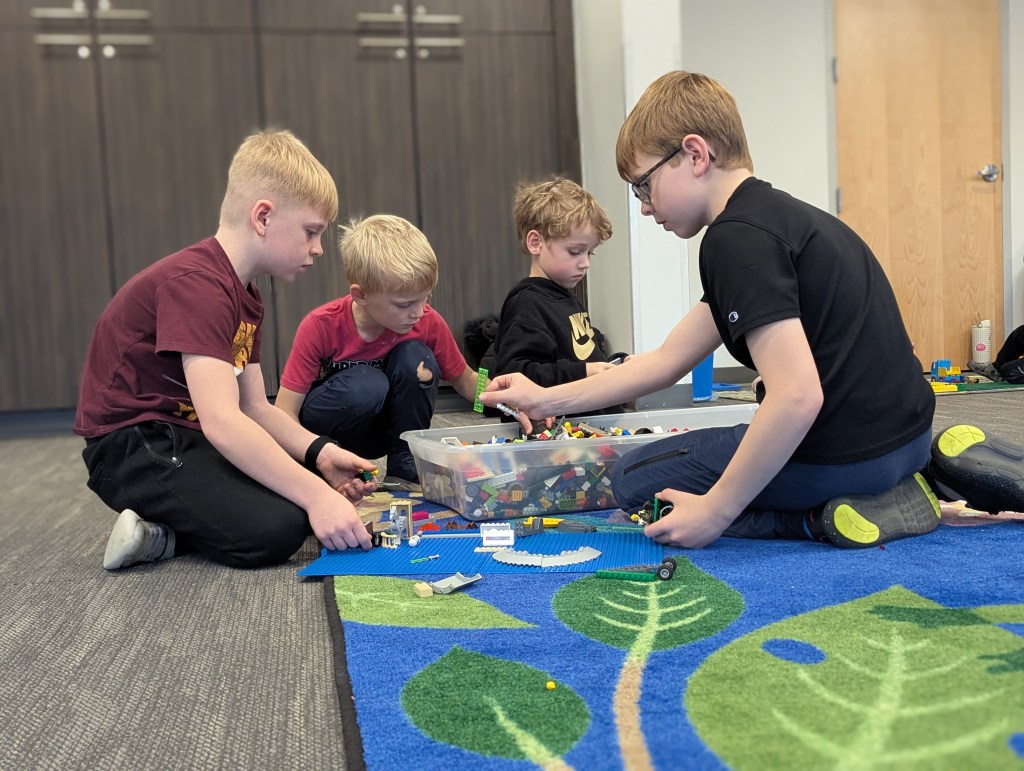
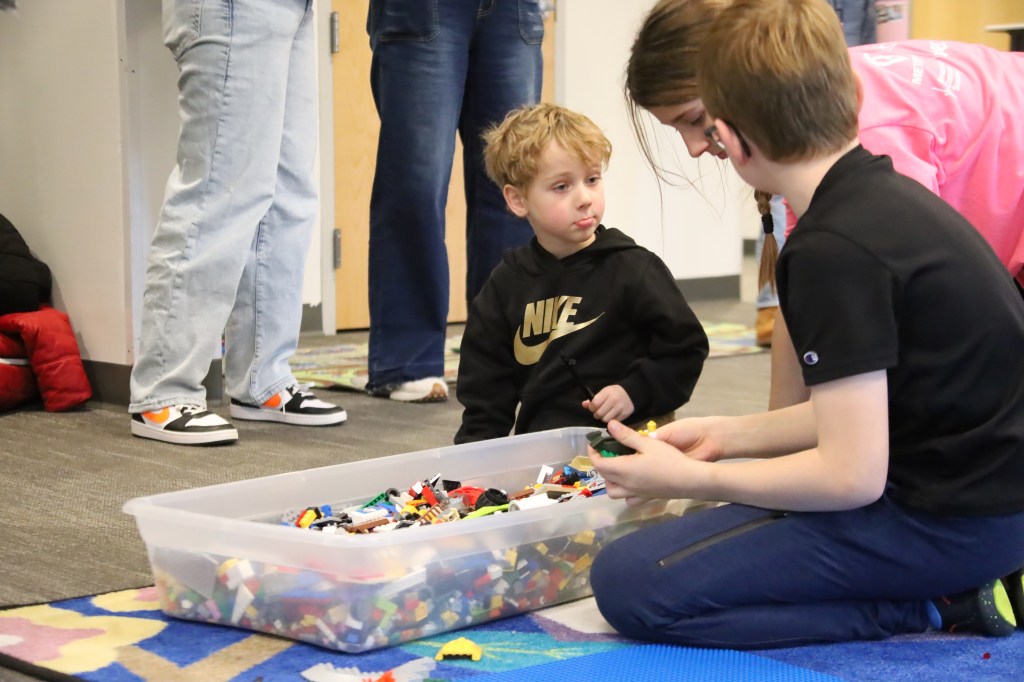
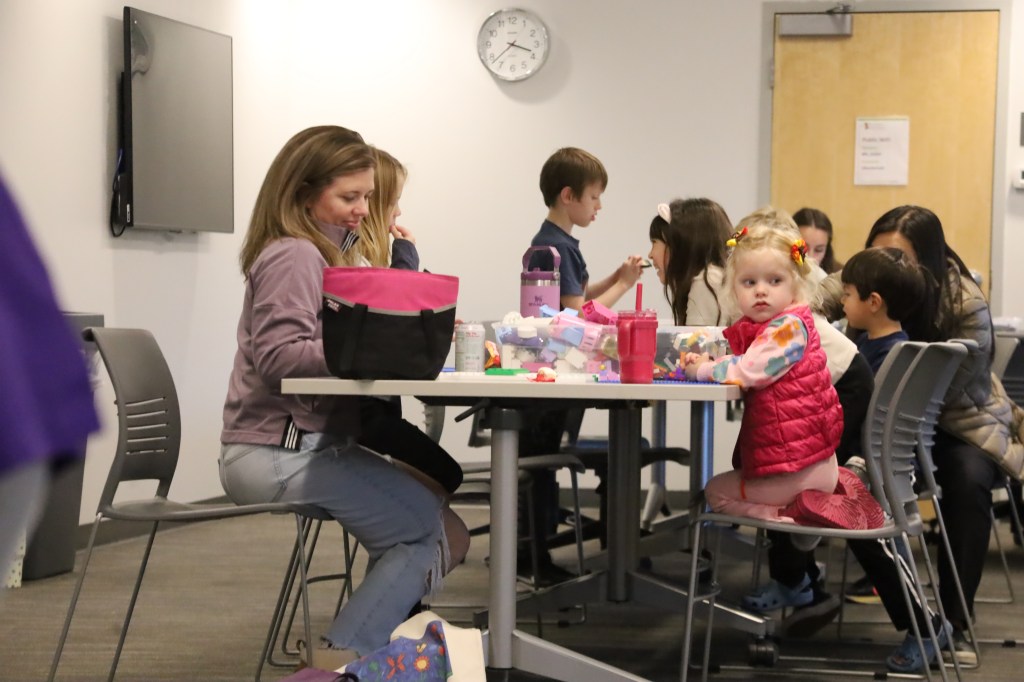
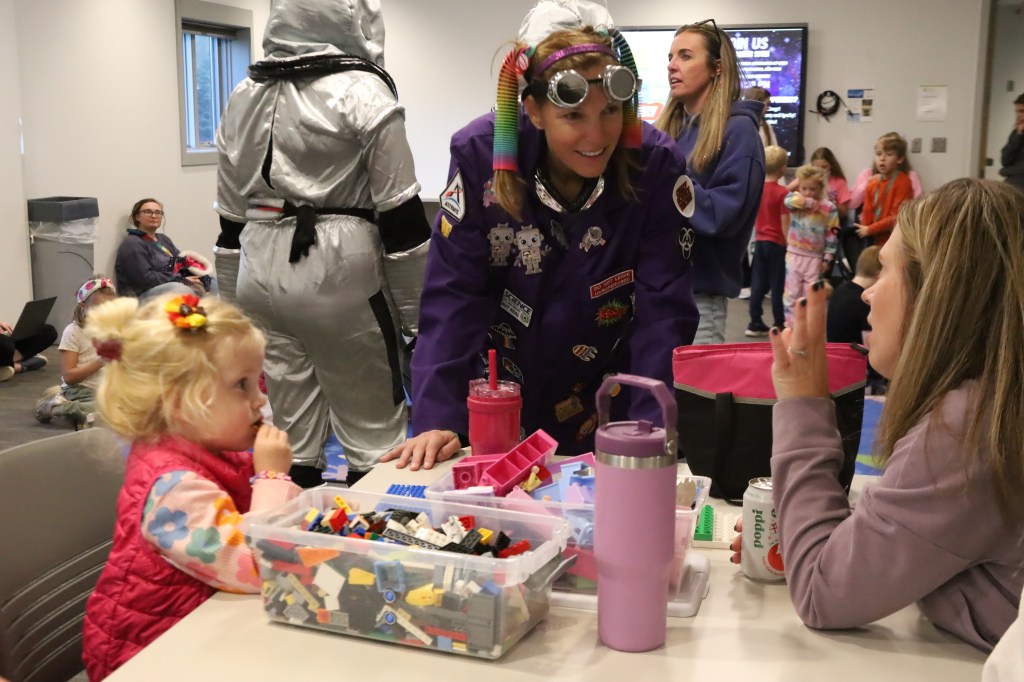
The celebration extended into the community that afternoon, when Professor Sko, Rusty and Sparky visited the Bennington Public Library during its regular open-play LEGO Wednesday programming. The event offered kids and families an opportunity to continue exploring science and engineering through creative building, with Professor Sko’s robots providing an added attraction.
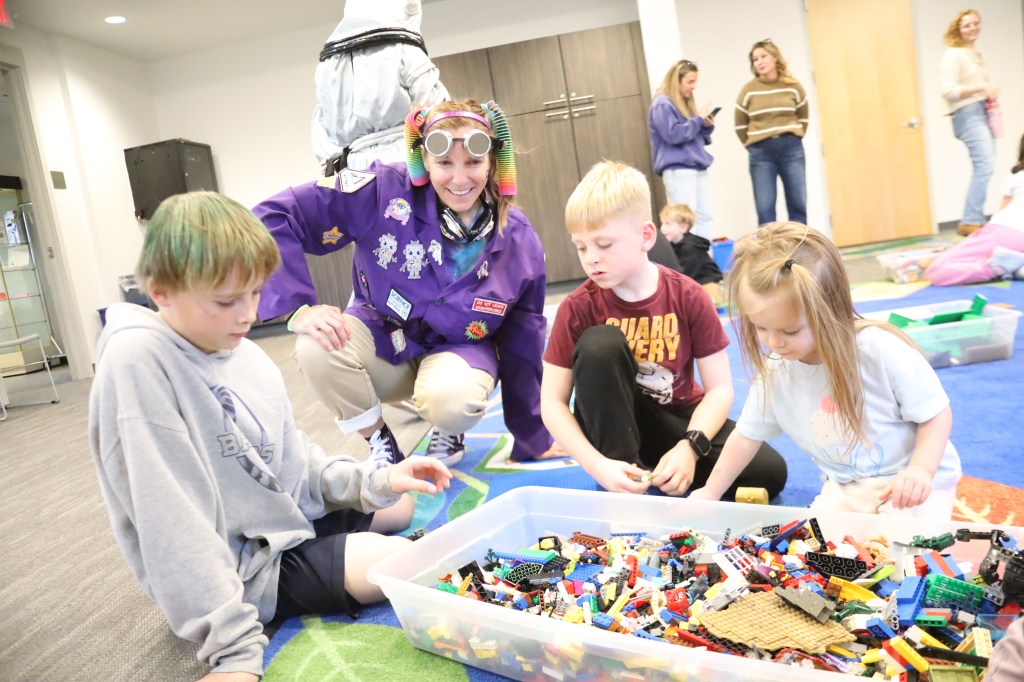
Johnna Ware, youth services librarian at the Bennington Public Library, said LEGO naturally encourages creativity and lends itself to science, technology, engineering and mathematics (STEM) learning.
“I hope by having Professor Sko here and her robots and her science knowledge that she’s inspired a little bit more curiosity and science and engineering in the kiddos that come regularly and the kids who came just to see her,” Ware said.
The robots quickly became a favorite among the children. Ware said several LEGO creations were specifically designed for the robots, including one group of kids who built what they called a robot junkyard.
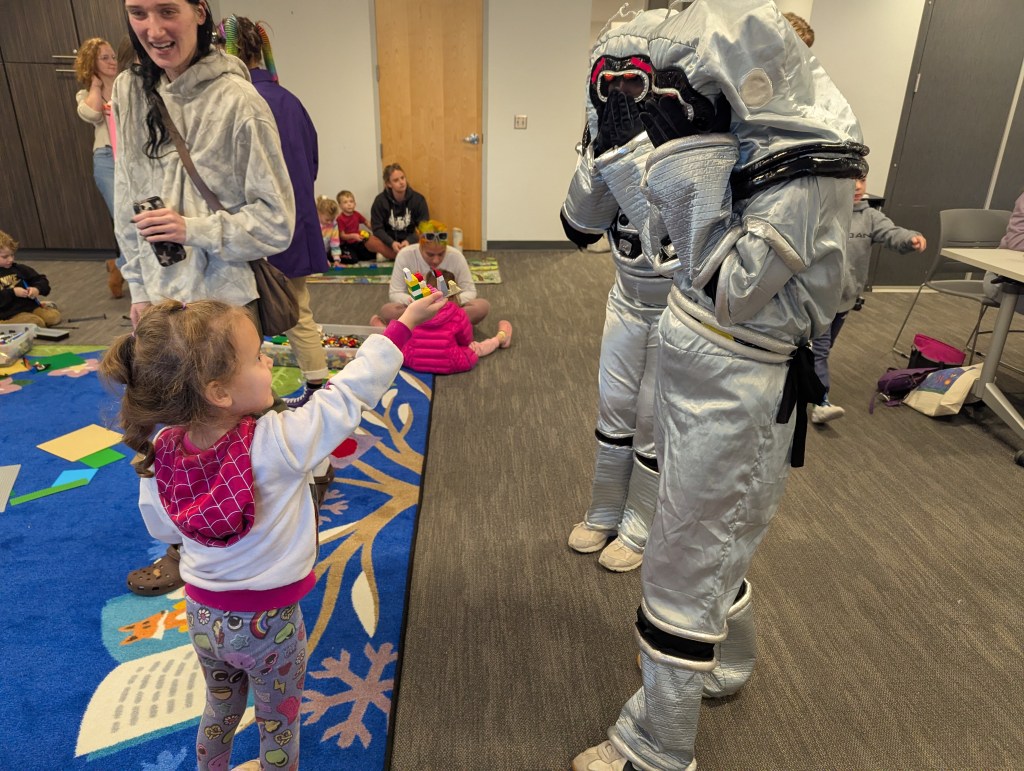
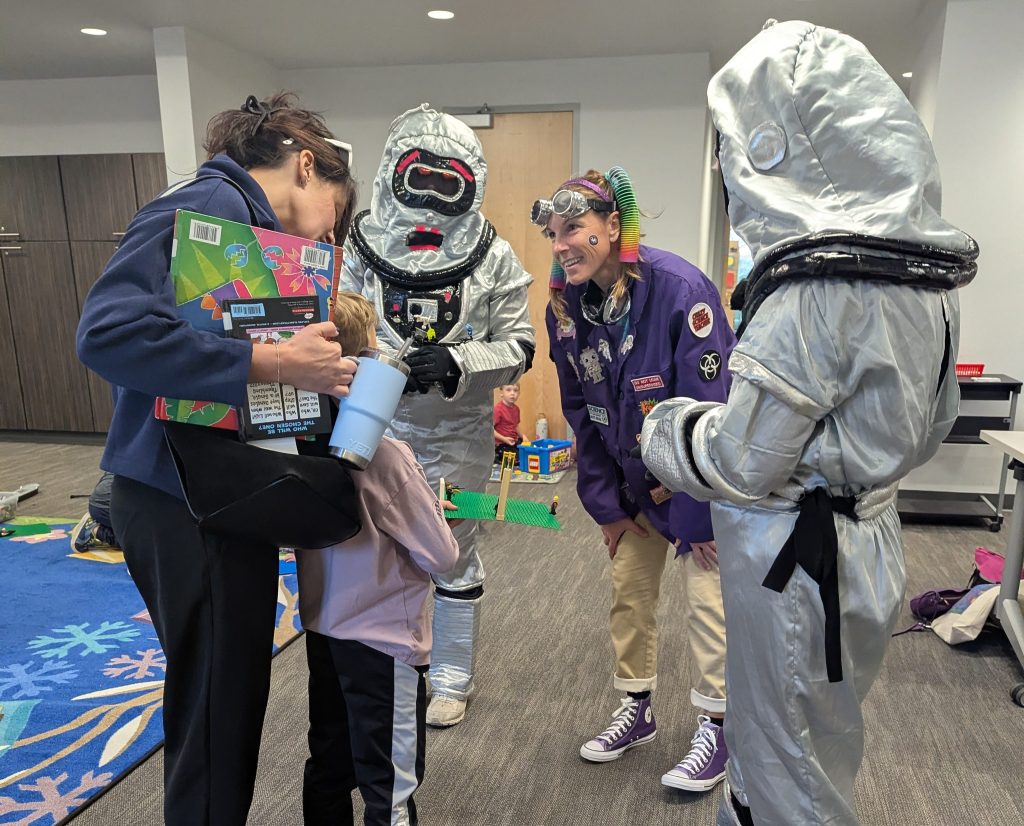
Beyond the excitement of seeing the robots, Ware said she enjoyed watching children and parents participate together and hoped the event would encourage families who may not regularly visit the library to return for future programming.
For Professor Sko, seeing families and children of different ages learning and playing together was one of the highlights of extending the celebration into the library.
“I just love that the parents are here,” she said. “Watching the parents participate along with the kids is a really cool learning moment.”
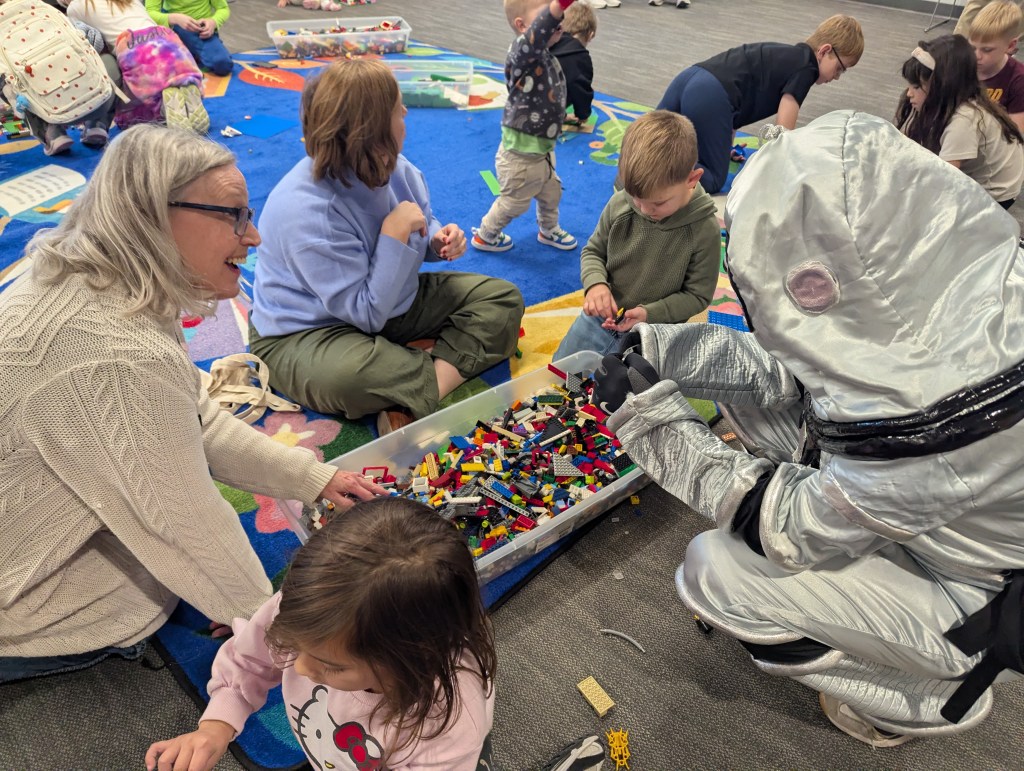
Wilson said bringing the celebration beyond the middle school was an important part of the original vision. The library’s existing STEM programming and connection to the community made it a natural partner, allowing even the district’s youngest children to meet Professor Sko and her robots.
“I loved seeing my own students alongside younger students from our district, talking about science and space over Legos while they danced, high-fived and hung out with Professor Sko and the robots,” Wilson said.
Ware said partnerships like this one also reflect the library’s broader mission of strengthening community connections and creating opportunities for people to come together.
“This was a great example of the community reaching out to us to partner because they know we have space and we have dedicated programming already,” Ware said. “So just staying with the community and strengthening those bonds is really important to us.”
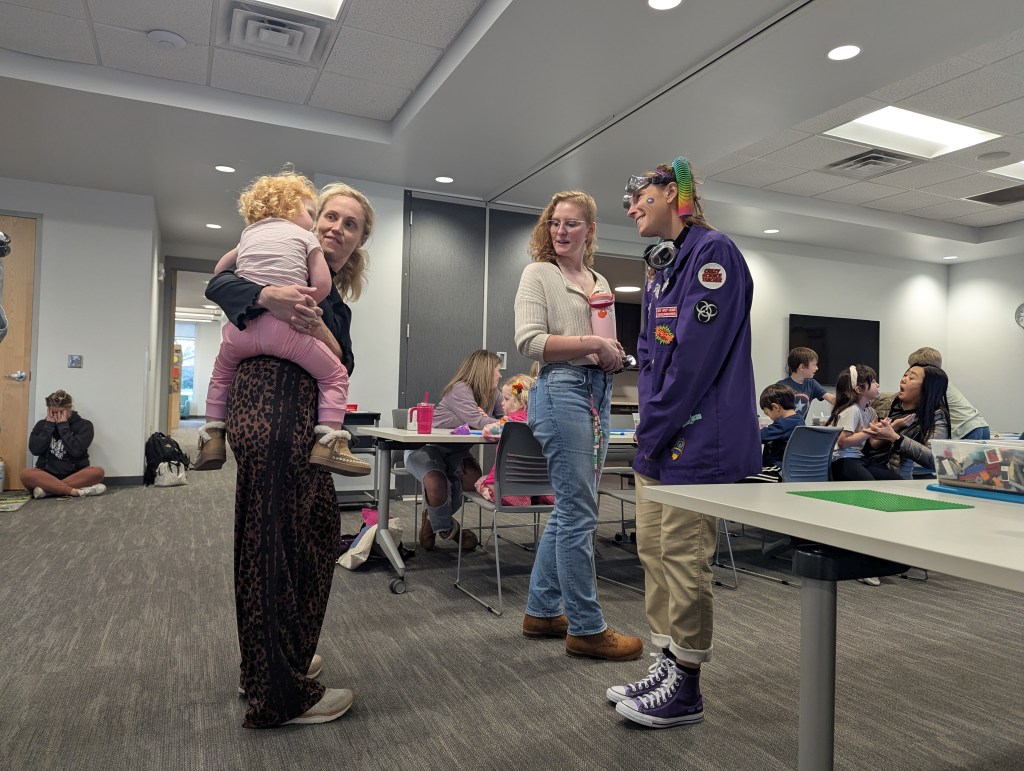
As for what the students might send into space if they had the opportunity to add a message for someone or something to discover, their answers reflected the spirit of the celebration.
Baczwaski said she would send a message about teamwork, recognizing the collaboration involved in the Voyager mission. Nematov offered a simple reminder: “everyone is a scientist in their own way.”
Cizek would send a message recognizing the achievement itself, saying, “it’s one of humanity’s greatest achievements and we can only advance from there.”
For Wilson, that sense of possibility is what made the milestone worth celebrating in the first place.
“I want my students to see that science is something to be part of,” she said. “My students know they are scientists. We just have to keep questioning, keep observing and keep being curious about the world around us.”