By Marisa Dawson, Courtesy Photos
From investigating algae-covered water to testing water quality and identifying tiny aquatic creatures, Bennington Middle School students are discovering what it means to be scientists through hands-on research in Nebraska’s wetlands.
Lindsey Wilson, seventh-grade science and social studies teacher and sixth- through eighth-grade science research coach at BMS, has developed ExploreLab: Wetlands and Wildlife Research, a new student-driven initiative designed to help students explore local ecosystems, develop their own research questions and collect real-world data.
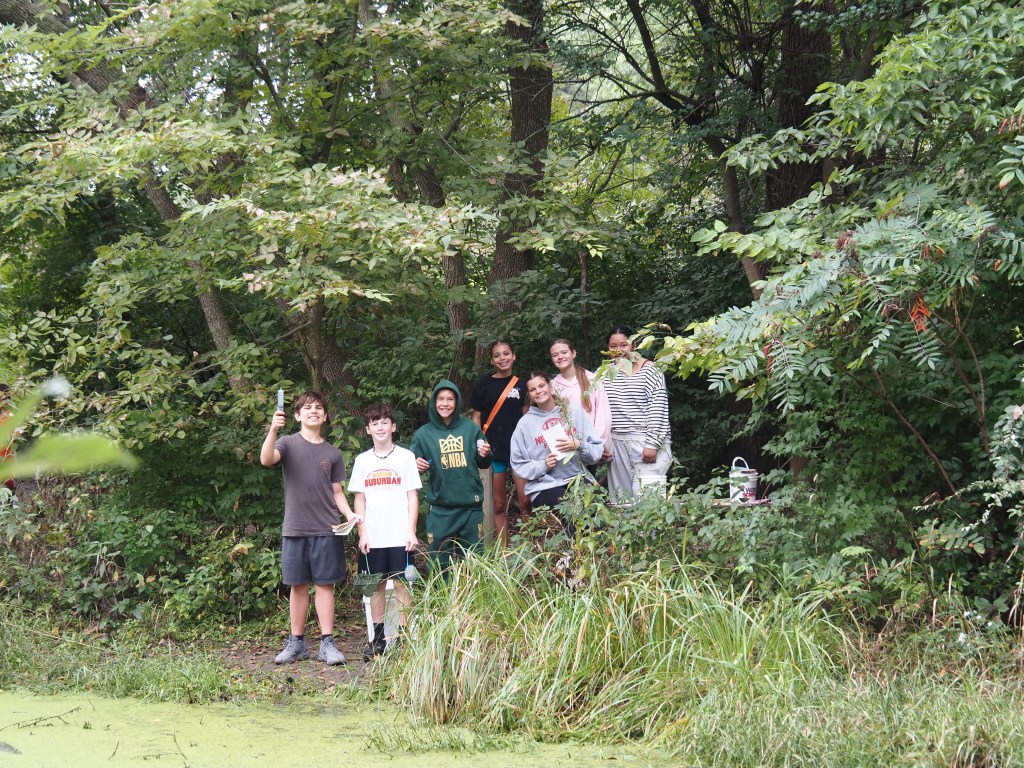
Rather than following a predetermined set of questions, students are encouraged to let their observations guide their investigations. Throughout the school year, participants will visit Nebraska ecosystems, study the plants and wildlife they encounter, and collaborate to collect and analyze field data.
“We meet one Saturday a month and plan to take advantage of wetland areas close to “home”,” Wilson said.
The program’s first field experience recently took place at Heron Haven. While exploring the wetland, students became particularly interested in the algae-covered water, prompting them to develop several different investigations.
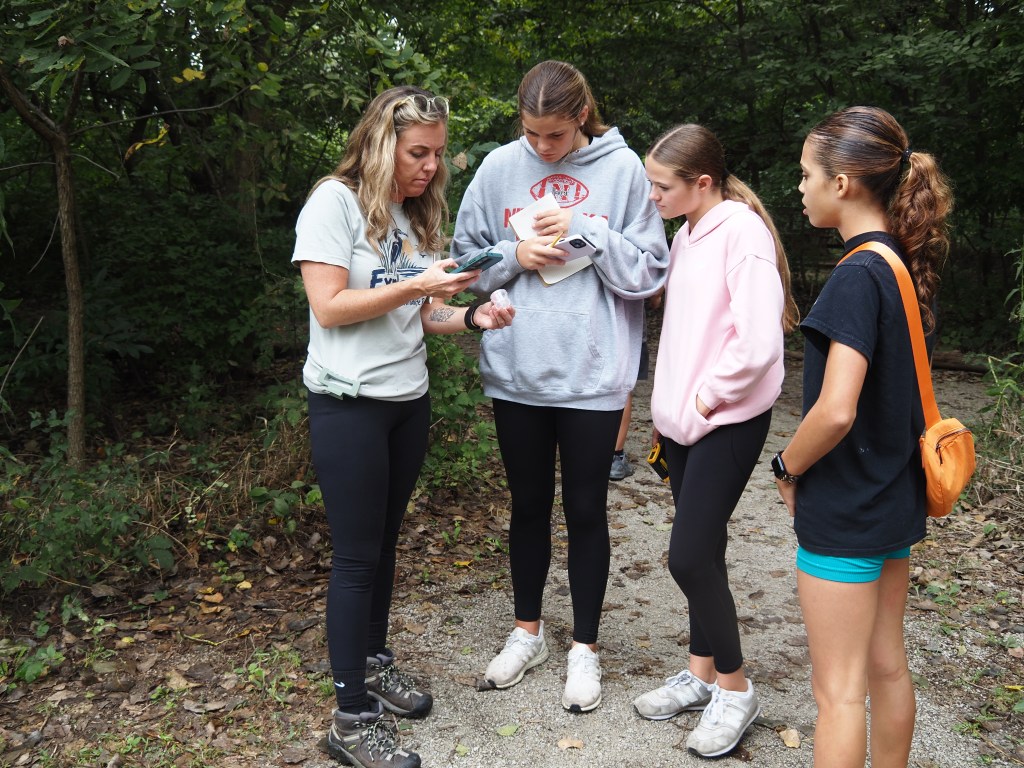
Working in teams, students explored different aspects of the phenomenon. Some focused on identifying and comparing species, others tested water quality, and another group investigated the algae layer itself. Students collected evidence, examined their findings and shared observations with one another, using what they learned to develop additional questions.
The experience reflects the central idea behind ExploreLab: giving students the freedom to pursue their curiosity while learning how scientific research works beyond the classroom.
“Rather than being given a set of questions to answer, students have the freedom to follow their curiosity and develop investigations based on what they observe,” Wilson said.
Through this approach, students can build connections to Nebraska’s ecosystems while developing skills in observation, collaboration, data collection and analysis.
In addition to the monthly ExploreLab initiative, Wilson recently helped bring a larger-scale field research experience to the entire seventh grade at BMS.
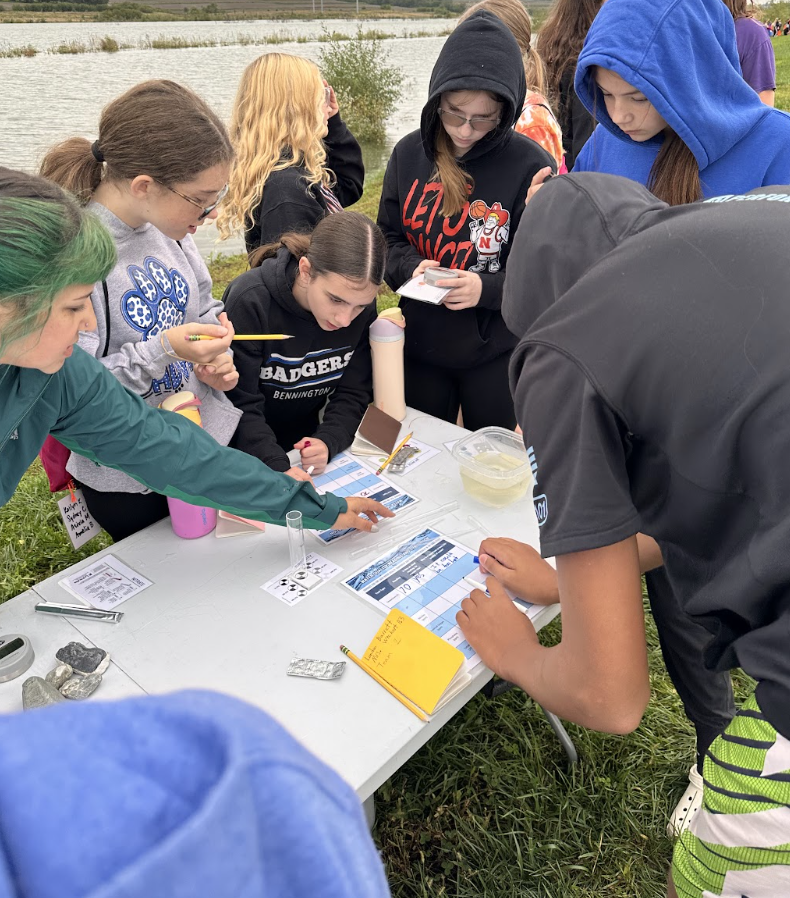
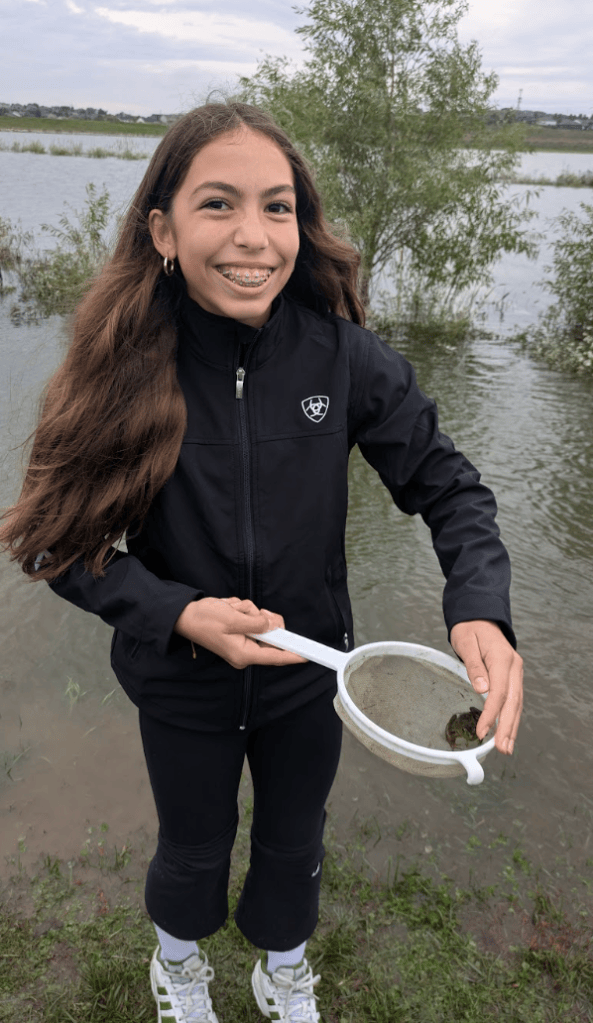
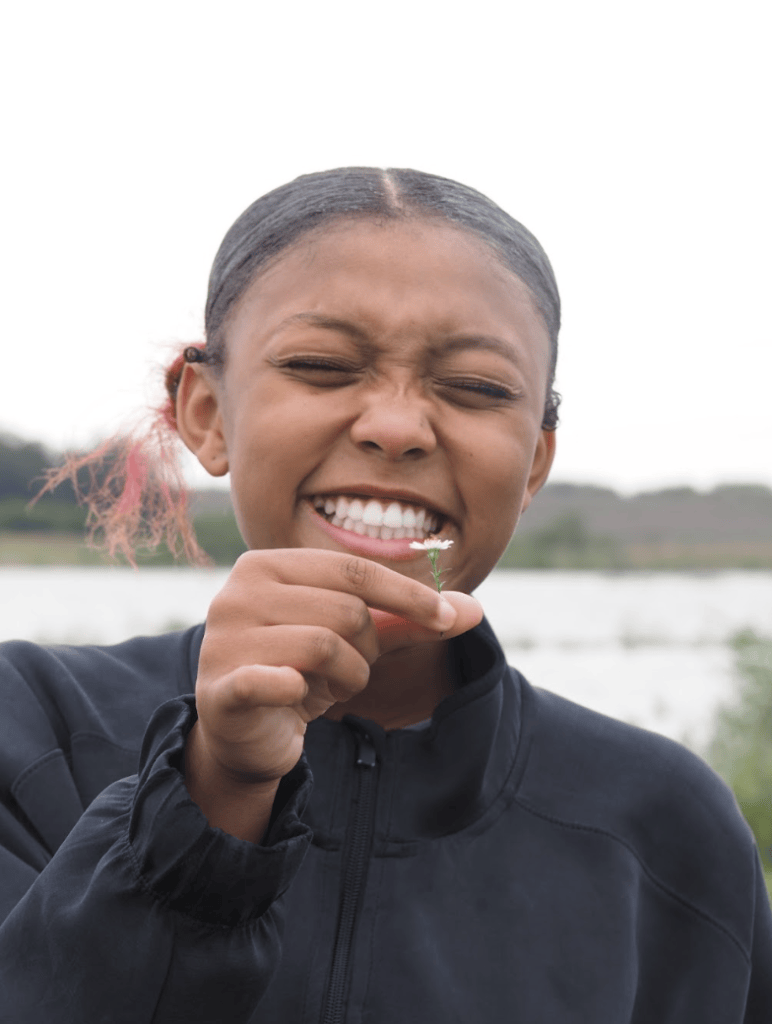
The opportunity grew out of Wilson’s participation in the Nebraska Game and Parks Wetlands Field School over the summer. Following the program, Bennington Middle School was selected to bring its seventh-graders to Flanagan Lake for a two-day field experience supported by Nebraska Game and Parks. The agency provided transportation, materials and staff to work alongside students during their investigations.
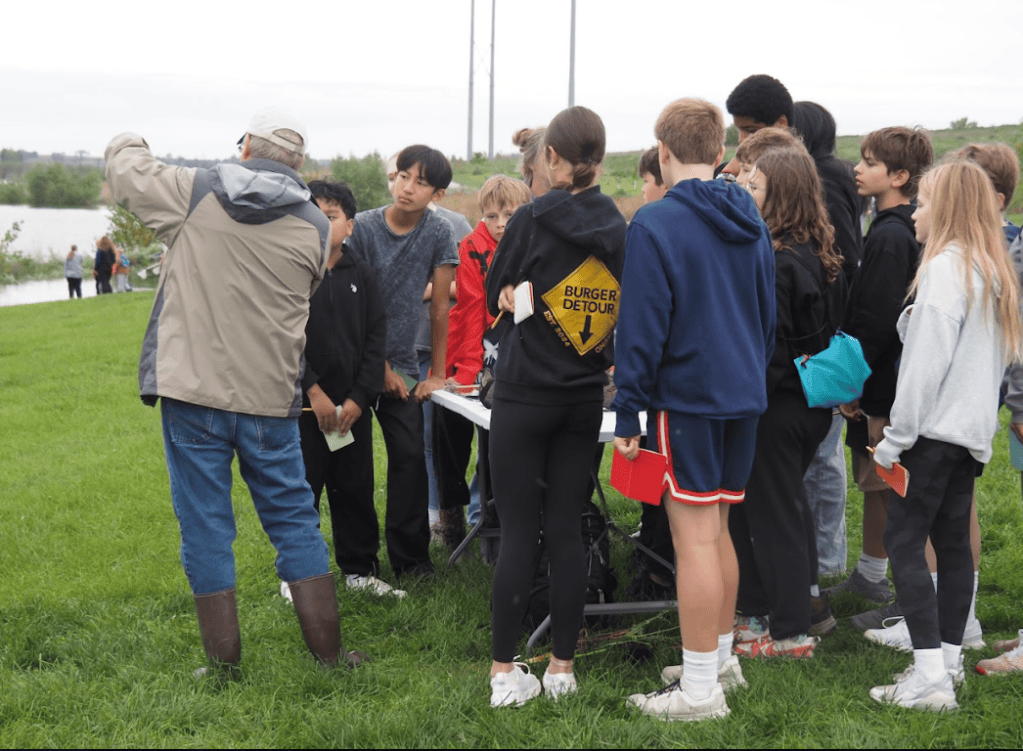
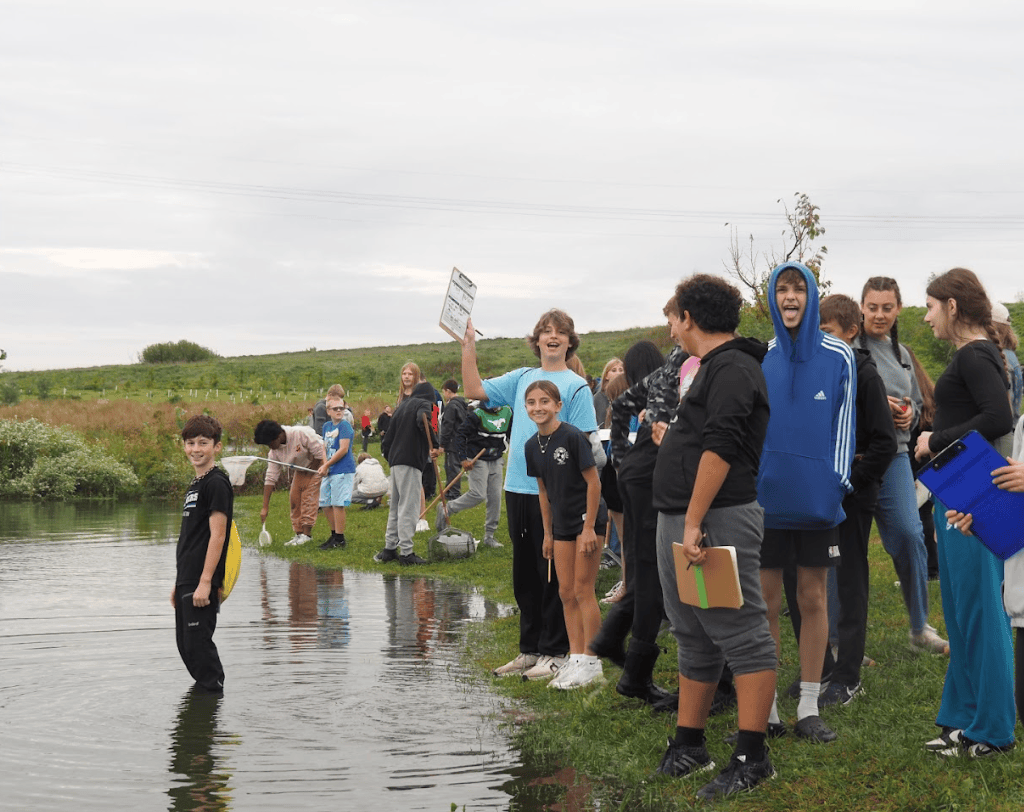
Wilson said the goal was to make the experience more meaningful than a traditional field trip by allowing students to participate in the scientific process firsthand. Students spent the first day exploring the area and identifying things they wanted to investigate. Working with their science teams, they rotated through hands-on activities focused on water quality, wetland vegetation and mapping, macroinvertebrates, and conservation storytelling.
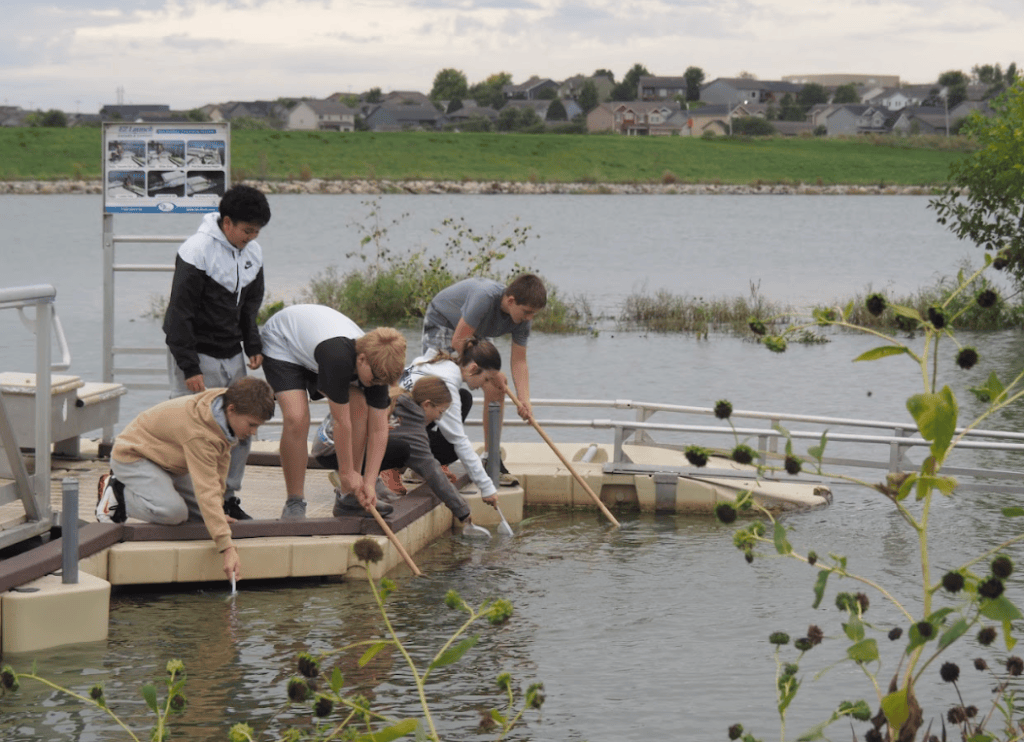
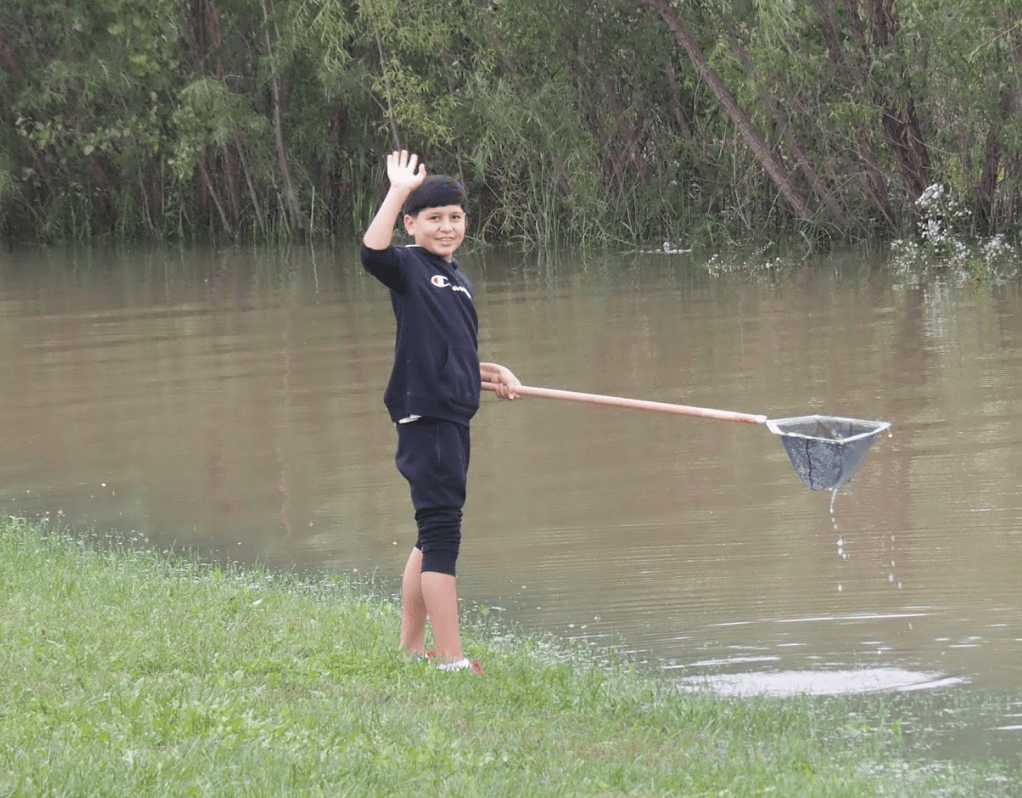
Using water-quality testing kits, dip nets, maps, identification tools and other field equipment, students worked alongside Game and Parks staff to examine the wetland and gather information about the environment. After returning to school, students reflected on their observations and began developing questions for further investigation.
On the second day, Monday, Oct. 5, students returned to the field to build on their initial experience. They used the questions they had developed to determine what additional evidence they needed and collect data to investigate their ideas.
Although the Flanagan Lake experience and ExploreLab are separate opportunities, both emphasize student curiosity, hands-on learning and the importance of gathering evidence to understand the natural world.
For Wilson, the value of these experiences extends beyond learning scientific terminology or completing an assignment. She wants students to understand that science is an active process of observing, questioning, investigating and learning from evidence.
“The bigger goal is to help students see that science isn’t just something that happens in a classroom or from a textbook,” Wilson said.
That could mean getting outside and exploring a place closely enough to notice details that might otherwise go overlooked.
“Sometimes you have to get outside, get a little muddy, slow down, look closely, and figure out what you want to know,” she said.
The experiences have already sparked excitement among students, particularly as they encounter creatures and discover details about wetland environments they might not have noticed before. Wilson said students are beginning to recognize how much activity takes place in these ecosystems when they take the time to observe them carefully.
Through ExploreLab, students will continue visiting different Nebraska ecosystems throughout the school year, contributing to ongoing research and data collection. They will eventually have opportunities to share what they discover with their school and community.
By combining classroom learning with authentic fieldwork, Wilson hopes to help students develop a deeper understanding of Nebraska’s natural environments while giving them the confidence to ask questions, investigate their surroundings and see themselves as scientists.