
By Marisa Dawson, Photo courtesy of Bennington Historical Society
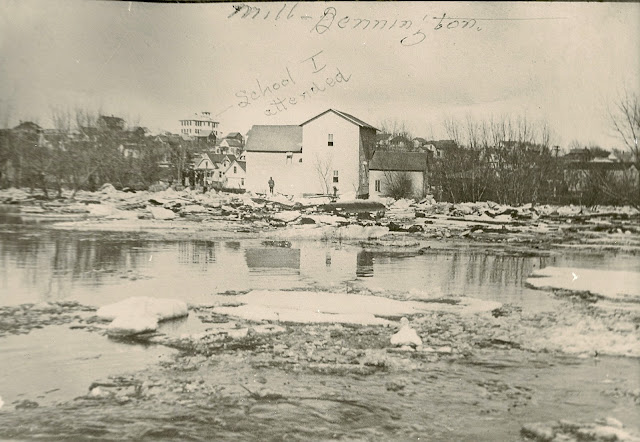
In the early days of Bennington, when the community was still taking root on the Nebraska plains, few enterprises were as essential to daily life as Claus Oft’s grist mill along the Papio Creek. A circa post-1910 photograph, looking northeast toward town, captures the mill during spring flooding, a scene that speaks volumes about the ingenuity, challenges, and resourcefulness of our pioneering descendants.
Claus Oft, a farmer, miller, and civic leader, arrived in the area during a time of opportunity and hardship. In 1878, he married Antje Kramer, and together they built a life centered on hard work and community service. Oft dammed the Papio Creek and established his grist mill, which became a cornerstone of Bennington’s early economy. Local farmers brought their grain to be ground into flour and meal, sustaining households and supporting agricultural growth in the region.
The mill’s location on the west side of 156th Street south of the Papio Creek put it at the mercy of the waterway’s seasonal moods. Spring flooding, as vividly shown in the historic image taken prior to dredging, would swell the creek and create ponds around the mill. While these floods could disrupt operations, they also formed natural ice ponds in winter, a valuable resource for the town.
During the cold months, residents harvested ice from these ponds. Once the ice reached sufficient thickness, it was scored, sawed into blocks, and hauled away to be stored in icehouses throughout Bennington. Packed in sawdust or straw for insulation, the ice would last through the summer, providing crucial refrigeration for food preservation in an era before electric refrigerators. This annual harvest was a community effort that helped bridge the seasons and supported daily life in early Bennington.
Oft was more than a miller. A charter member of St. John’s Lutheran Church and active in local affairs, he helped shape the growing village. The land he developed south of the main road, including areas near the mill and creek, became the first annexation to Bennington. His family’s enterprises, including related businesses run by relatives like Eggert Oft, contributed to the town’s commercial foundation alongside blacksmith shops, saloons, and stores.
The grist mill no longer stands today, and the Papio Creek has been managed and dredged over the decades, altering its historic flood patterns. Yet the legacy of Claus Oft endures through the institutions he helped build and the stories preserved by the Bennington Historical Society.
Special thanks to the Bennington Historical Society for preserving and sharing these glimpses into our past.