By Marisa Dawson, Photos Courtesy of Dale McGavran & Larry Arp

For the sixth time, Bennington resident and retired Air Force veteran Dale McGavran set out on a journey that would test him physically and mentally, but one he says is ultimately about something much bigger than walking 50 miles.
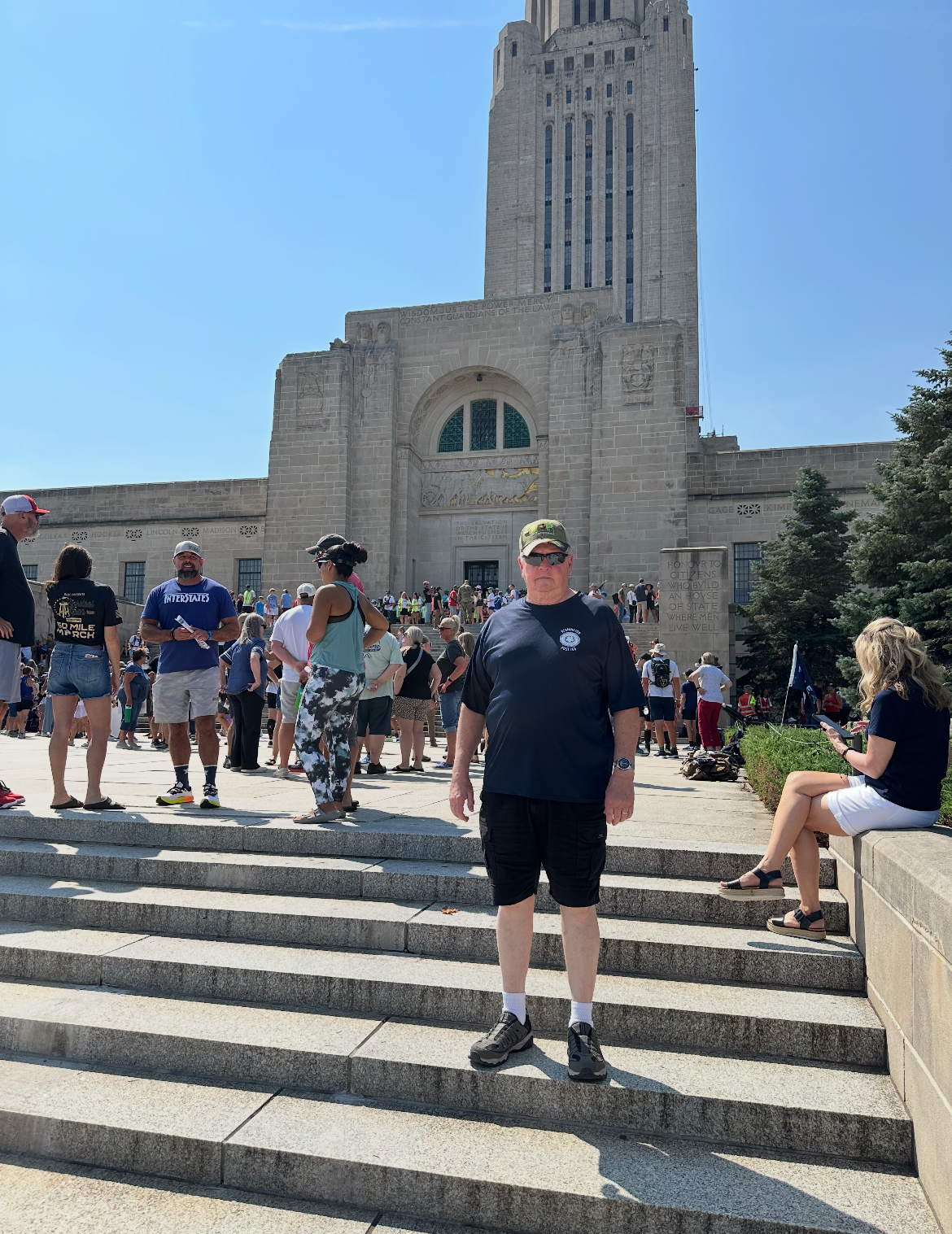
McGavran was among the participants in the recent 50 Mile March, an annual trek that began on the steps of the Nebraska State Capitol in Lincoln and ended at Werner Park in the Omaha metro. The event brings together veterans and supporters to raise awareness and support for veterans facing mental health challenges and homelessness.
For McGavran, who spent 30 years on active duty in the Air Force, the organization’s mission is personal.
“During that time, I experienced several incidents of suicide, some friends, some co-workers, all tragedies,” he said. “In my last 12 years, I worked in a career field where I spent time with those in crisis, providing intervention counseling to hundreds.”
After retiring, McGavran said he found himself missing the sense of purpose his military career had provided.
“When I retired that left a space in my life that went void for a while. I guess you could say that I lost a sense of purpose,” he said. “And actually, losing one’s purpose, or at least a portion of a purpose is not uncommon in individuals who leave the military.”
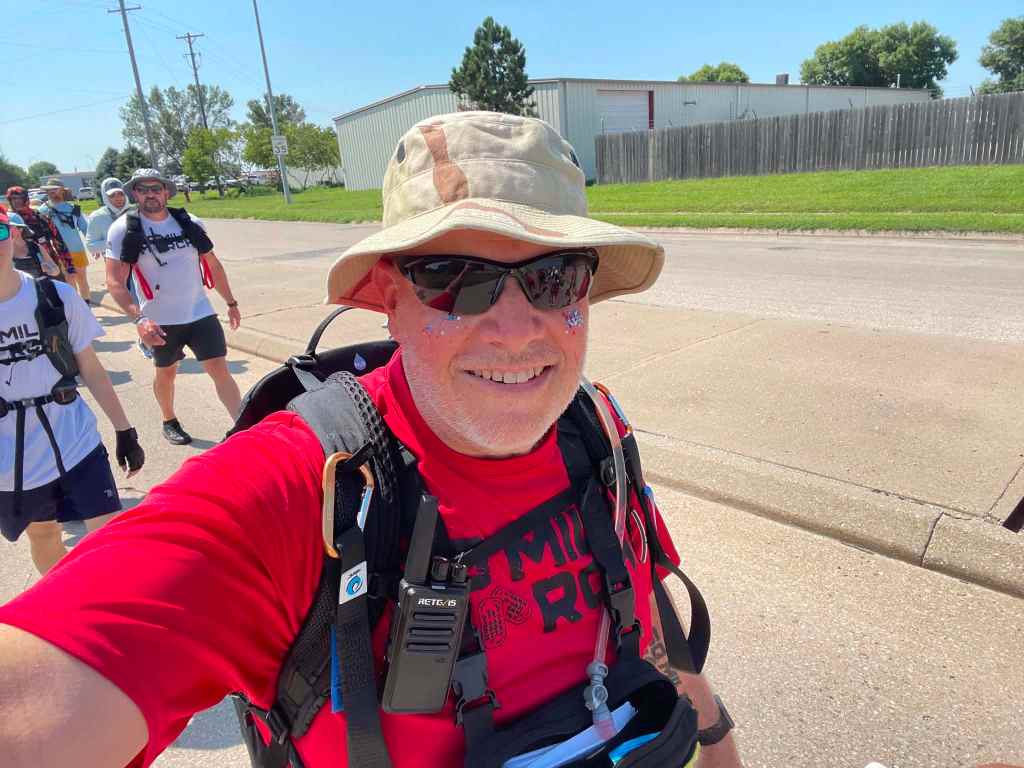
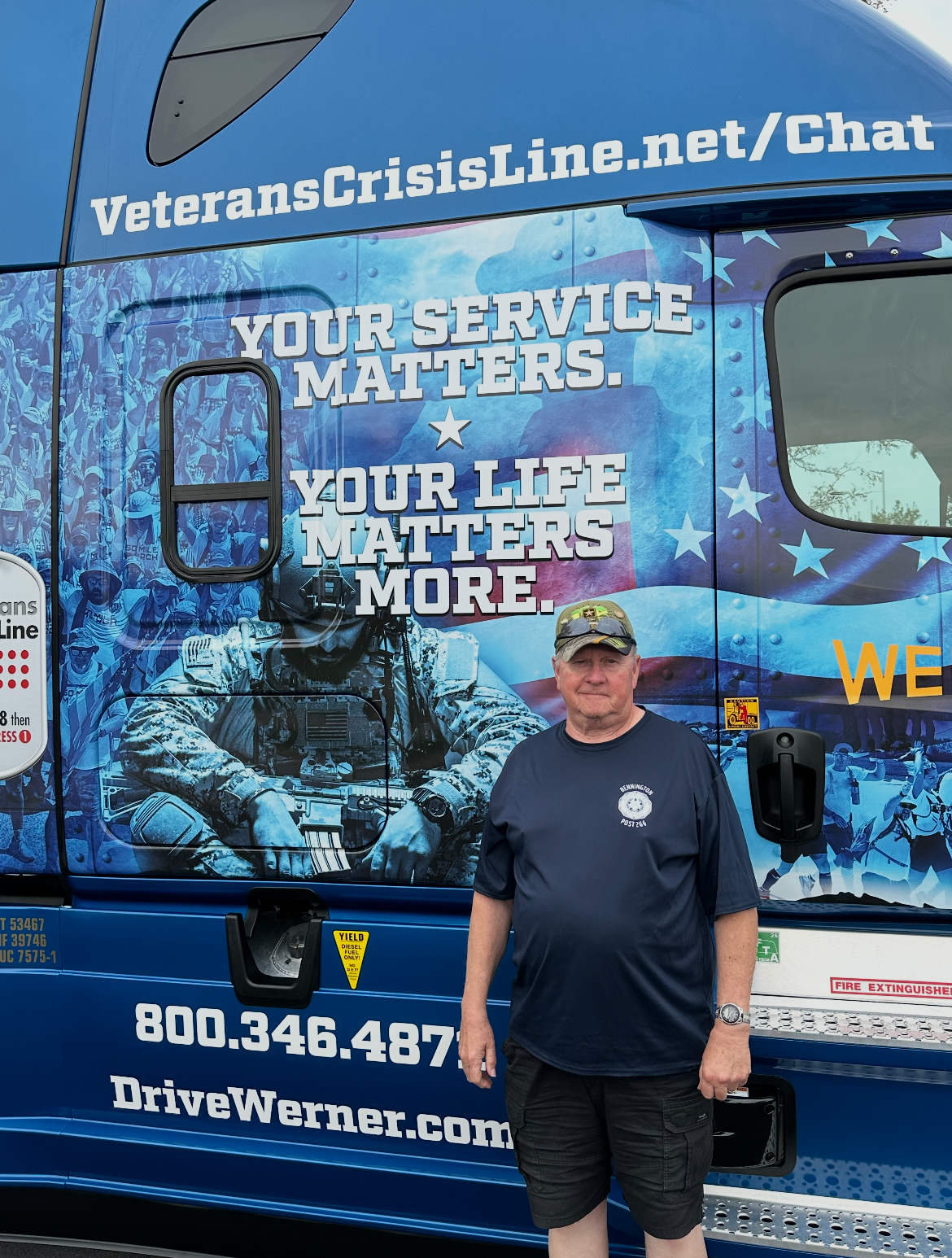
McGavran (pictured above) met the founder of the 50 Mile March shortly after the inaugural walk and has participated every year since, with the exception of that first year, when he did not yet know about the event.
The experience begins with a powerful moment of silence on the steps of the Capitol.
“There is a 22 minute period of silence as we lay on the steps of the capital, in remembrance of those who have no roof over their heads, no bed to sleep on,” McGavran said. “The 22 minutes symbolize the roughly 22 Veterans we lose by suicide every day.”
From there, the energy shifts as participants organize into groups and begin the long journey toward Omaha. The route takes walkers through communities including Waverly, Greenwood, Ashland and Gretna, with support crews accompanying them along the way.
Every several miles, participants stop to hydrate, eat, change clothes and address any medical or physical needs. McGavran said the event depends heavily on the volunteers who make those stops possible.
“We have hospitality crews, medical crews, and foot care crews,” he said. “It is quite a remarkable scene. The march would not happen without these volunteers at the stops.”
Among those helping support participants this year was Bennington Legion member and retired paramedic Larry Arp, who served as part of the ambulance crew alongside his daughter, paramedic Kara Kummer, and paramedic Andrew Brahms. Pioneer Ambulance Service donated medical services with medics donating their time, and several companies sponsored the walk in many ways as well.
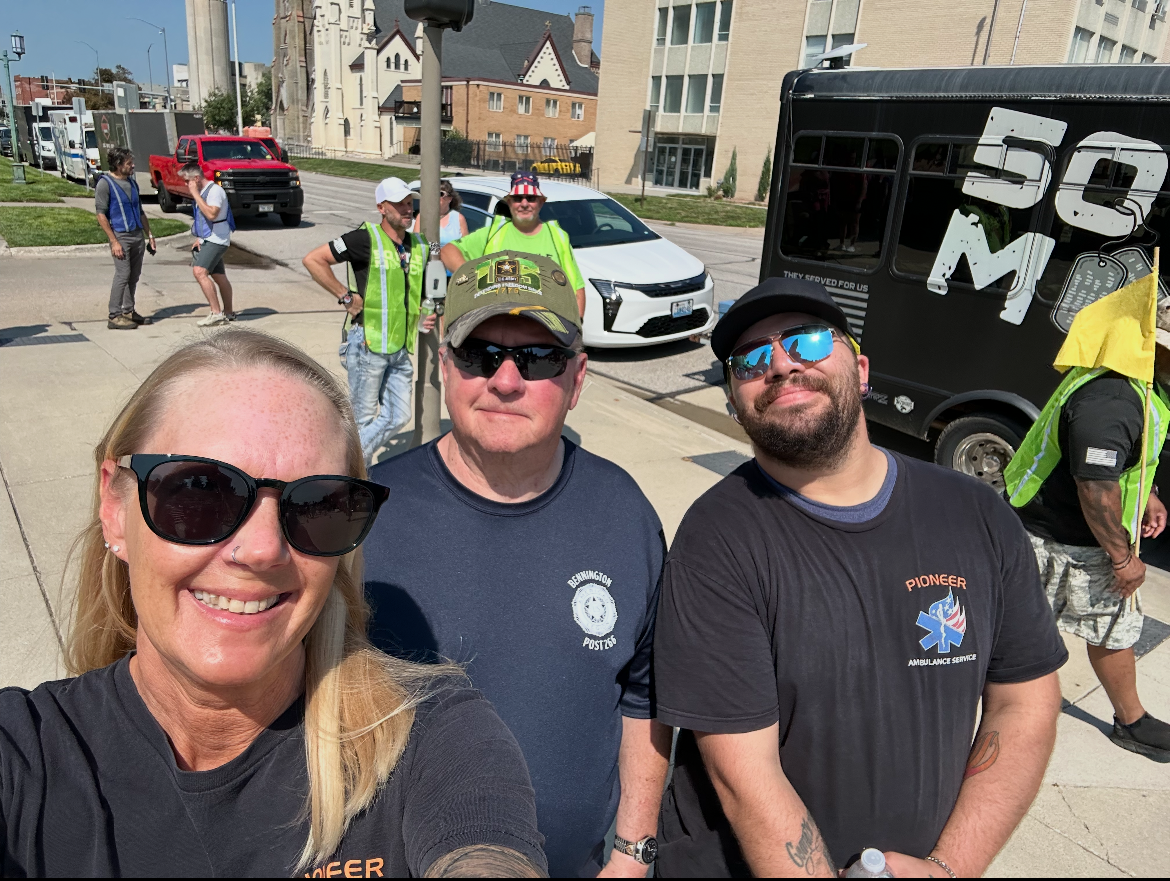
From his position on the support team, Arp watched participants of all ages push through the physical demands of the 50-mile route.
“The men and women of all ages, some teens, some middle aged, some in their 70’s. Walked at a brisk pace,” Arp said. “They averaged around 3.5 mph. That is a pretty impressive pace.”
One participant in particular left a lasting impression on him.
“At the start of the walk. There was an individual who was in a wheelchair,” Arp said. “I thought he would go a short distance. But he went the entire 50 miles. I was overwhelmed by his determination and grit. I think he probably inspired a lot of the walkers to tough it out.”
The march included both veterans and community members who had never served in the military but wanted to show their support.
“A number of walkers were not vets,” Arp said. “They were there to show support for the veterans who served their country, to protect their freedoms.”
For McGavran, the most difficult part of the journey comes after hours of walking, often in the middle of the night when exhaustion and pain begin to take their toll.
“Sometime between 1 and 3 in the morning is when a lot of people start struggling,” he said. “Pain has set in, you have been awake for a long time. There are still 25 miles to walk.”
Completing the march, he said, requires more than physical preparation.
“If you do not have the grit, or commitment to keep going, you might give in to the voices in your head, and quit,” McGavran said.
But for him, the finish line makes every difficult mile worthwhile.
“There is a crowd of several thousand cheering,” he said. “And it all comes back around to why you walked 50 miles to begin with. Helping Veterans.”
Arp described a similar scene at Werner Park, where a large crowd gathered to welcome the walkers after their journey. Support was also visible throughout the route, he said, as community members cheered, honked and local fire and rescue departments turned out to encourage participants.
For McGavran, however, the emotional impact of reaching the finish line goes even deeper.
“For me it is always the finish line,” he said. “It is very emotional. You are drained. And the memories of those I served with that we lost comes back with a vengeance. The huge crowds cheering. Flags everywhere. It is one of the most physically, mentally, emotionally, and spiritually defining moments one can have.”
Despite having now completed the march six times, McGavran said the experience has not become routine. In fact, he has already committed to returning.
“Well, the first thing I take away every year is this: The work is not done, so I register for the next year,” he said.
McGavran has already signed up for the 2027 march, which will mark his seventh time making the 50-mile journey.
For him, the reason is simple: the need continues.
“It truly is a remarkable organization,” McGavran said. “The work is not done.”