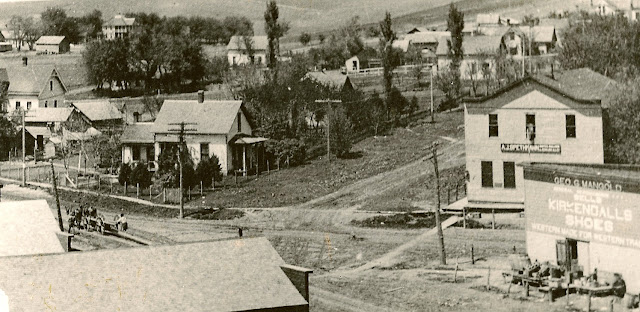
By Gordon Mueller & Marisa Dawson, Photo Courtesy of the Bennington Historical Society
Did You Know?
Our nation began celebrating its 250th anniversary last year, with our salute to the U.S Military. This years focus will undoubtedly be on the eastern Colonies and the Revolutionary War. But consider what was happening here in Eastern Nebraska.
The name “Nebraska” was derived from an Indian word meaning “flat water”. This referred to the Platte River. The Platte River represents the longest length of uninterrupted river found in a state. The river’s current name, Platte River was named by early French explorers; meaning “flat” river. It was described by early travelers as “a river a mile wide and only an inch deep” and representing the most easily traveled corridor going west.
Omaha was named for an Indian tribe who migrated into this area from the Ohio River basin in the late 1770’s. Many of our towns were named after Indians (i.e., Sioux City, Tecumseh, Pawnee, Red Cloud, Fontenelle, Ponca, Yutan and others). During this same period, French trappers were traveling through this country in search of the lucrative fur trade. This territory was claimed by France until Congress bought it from Napolean in 1803. It remained Indian Territory until 1854 when it was redesignated by Congress as Nebraska Territory.
While the railroad sparked Bennington’s earliest growth, the land itself carries an even deeper history. The original townsite can be traced back to a Presidential land grant awarded to Archibald Tuttle in lieu of wages for his service in the War of 1812. As the area developed, families like the Bunz family and others helped shape the community’s identity, bringing agricultural roots and a strong sense of connection that would define the town for generations. Early businesses clustered near the tracks not only served practical needs but also became gathering places, helping transform the settlement from a railroad stop into a true hometown. The original grid of streets, still recognizable today, reflected both the ambitions of its founders and the everyday lives of those who called it home.
More than a century later, that foundation continues to influence Bennington’s character. Though growth from nearby Omaha has brought new development and residents, echoes of the town’s origins remain visible in its layout, street names and community traditions. Bennington is also home to one of the oldest houses in the state, built in 1864 during Abraham Lincoln’s presidency, offering a tangible link to its early days. From local parks, once part of Peter Bunz’s land, to the enduring pride in local history, Bennington’s story remains one of both progress and preservation, where the vision of its founders still meets the spirit of the present day.