By Marisa Dawson, Photos Courtesy of BPS
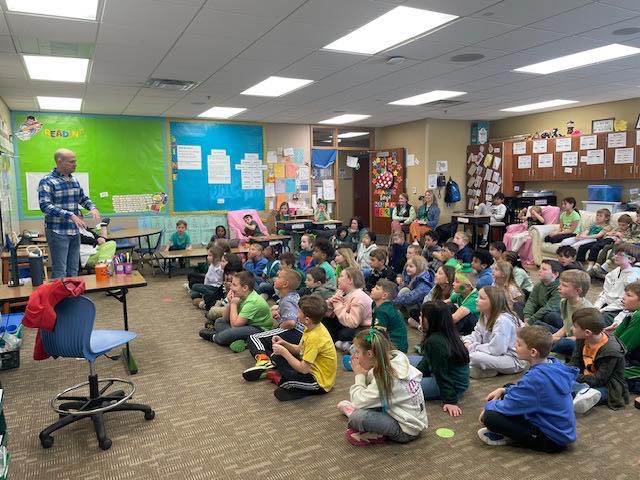
Second-grade students at Pine Creek Elementary recently got an up-close lesson in weather from a familiar face on local TV: Rusty Lord, Senior Chief Meteorologist at WOWT.
The visit came as the region prepares for another severe weather season, with inspiration to discuss preparedness following the impactful tornado outbreak that struck parts of Nebraska and Iowa in April 2024. Teacher Kim Hanusek decided to bring Lord into the classroom after the Bennington community was affected by those storms.
“We used to have a meteorologist come to talk to our students when we had a whole unit on weather in our science curriculum,” Hanusek said. “After our community was affected by the April 2024 tornadoes, I felt it was important for kids to have knowledge about the weather and how to stay safe. I felt this was a good way for students to not be scared. The more they know that they can take action to be safe, the less scared they may be.”
While the class covers basics like the water cycle and cloud formation, Hanusek said the main goal of Lord’s springtime visit was to prepare students for the severe weather common in the area. “This type of weather can be so scary for young kids,” she explained.
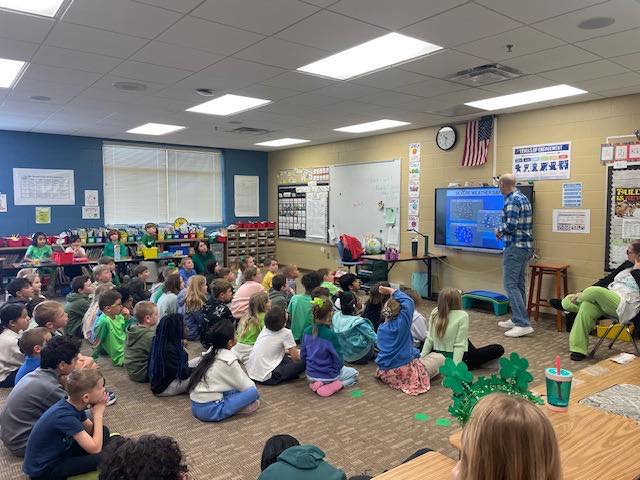
Lord kept his explanations straightforward and age-appropriate, avoiding overly technical language. “I try not to get too technical and just explain about the concepts they are interested in the easiest way possible,” he said. “Communicating the difficult topics is what we have to do a lot.”
He focused on how severe weather develops, the forecasting process, and most importantly, how to stay safe. The kids were especially engaged by topics like hail and tornadoes. Lord shared footage from the April 2024 tornadoes, which captured their attention.
“They loved having Rusty Lord visit the classroom! He is a very engaging speaker and draws them in,” Hanusek said. “They would be happy to learn about hail and tornadoes all day long.”
Predictably, the students had plenty of questions. Many wanted to know about the biggest or strongest tornadoes. Others asked Lord how old he is or how much money he makes, drawing laughs from the meteorologist. Lord also emphasized practical safety lessons that he hopes stuck with the children. “Know where you live on a map so you know where the storm is in relation to you. Know where your tornado safe room is at home,” he said, listing the key takeaways.
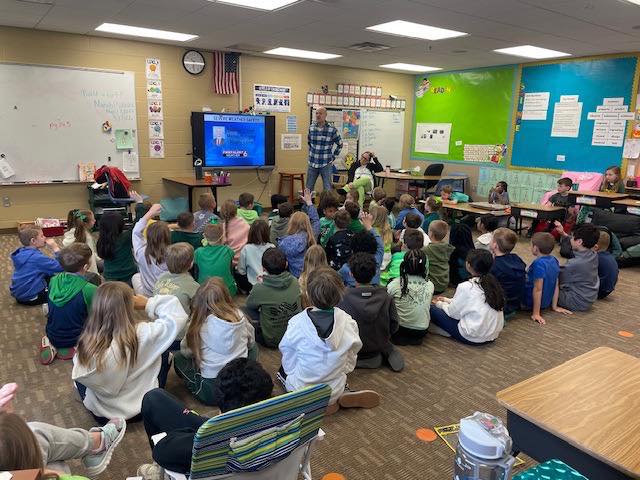
He also highlighted the difference between a watch and a warning, and helped the kids understand radar by asking them to locate the tornado on screen, an interactive moment that resonated well.
In a region prone to severe weather, Hanusek believes early education makes a real difference. “It is so important for students to learn about severe weather, especially in our area,” she said. “If students understand why something is happening and what they themselves can do, they feel safer and not so scared. It helps for them to hear from a professional as well.”
Lord also commented on the value of starting young. “It’s very important because we have a lot of severe weather and they need to know how to react properly,” he said. “Learning where they live on a map, the difference between a watch and a warning, etc. are important.”
Beyond safety, the visit gave students a glimpse into a possible career path. Hanusek noted that it helped connect classroom science to real-world jobs. “We talked about what a meteorologist does and why someone might want to become one,” she said. “This gives them an opportunity to see that they can make it a career… There are so many other areas that they don’t know about.”
For any students inspired to pursue meteorology, Lord offered simple but solid advice: “You have to love math and science! Many classes in college involve both. And don’t worry about the TV part of it. There are many meteorology jobs outside of TV.”
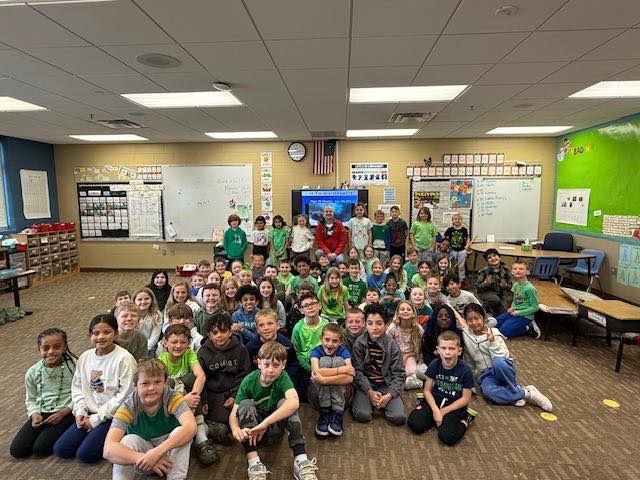
He also took time to clear up a common misconception. “Forecasting is very difficult and forecasting snow is the hardest,” Lord said. “Also the weather one day will tell you very little about the next day. It’s always changing!”
Lord believes classroom visits like this help strengthen trust between meteorologists and the communities they serve. “Hopefully it helps the students know who to trust for weather info and what to do when it happens,” he said.
With severe weather season approaching, the second graders left the presentation better informed, and perhaps a little less anxious, about the storms that can roll across Nebraska.