By Marisa Dawson
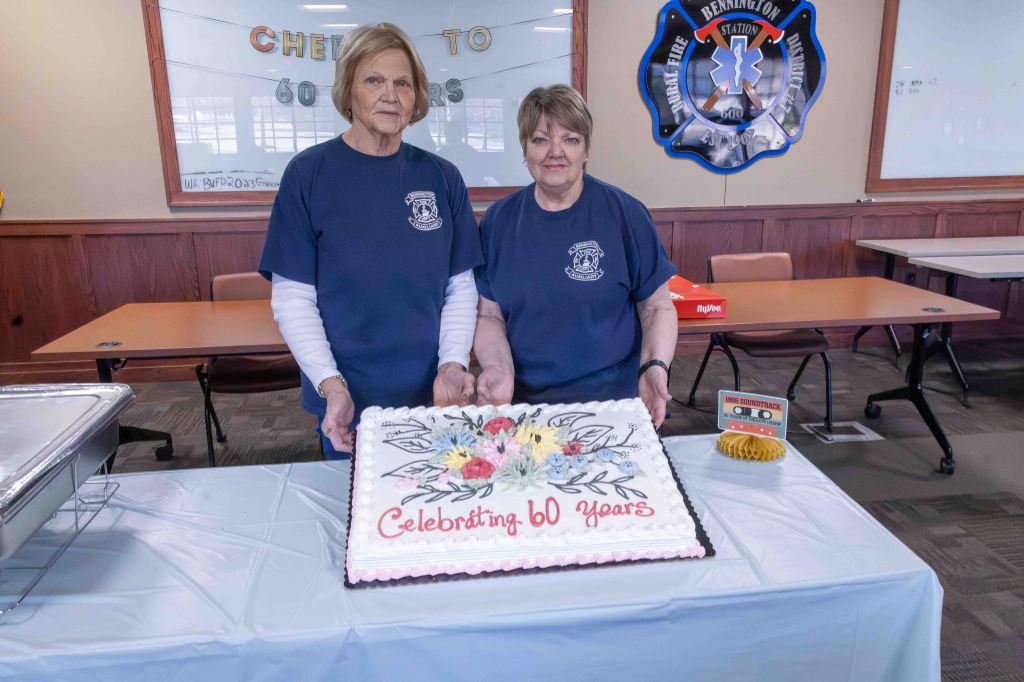
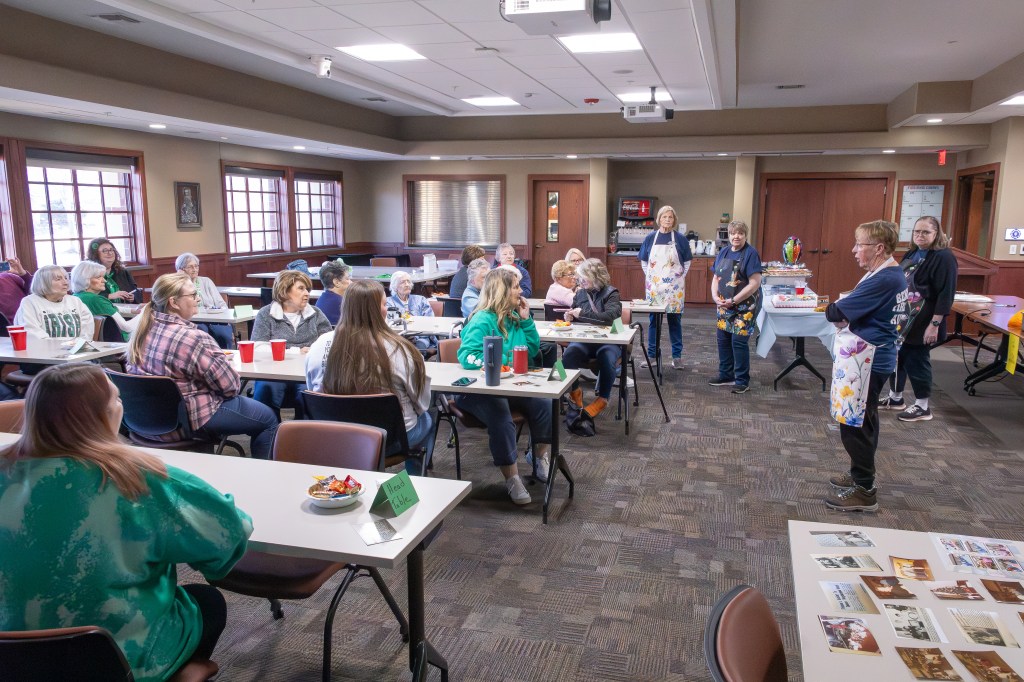
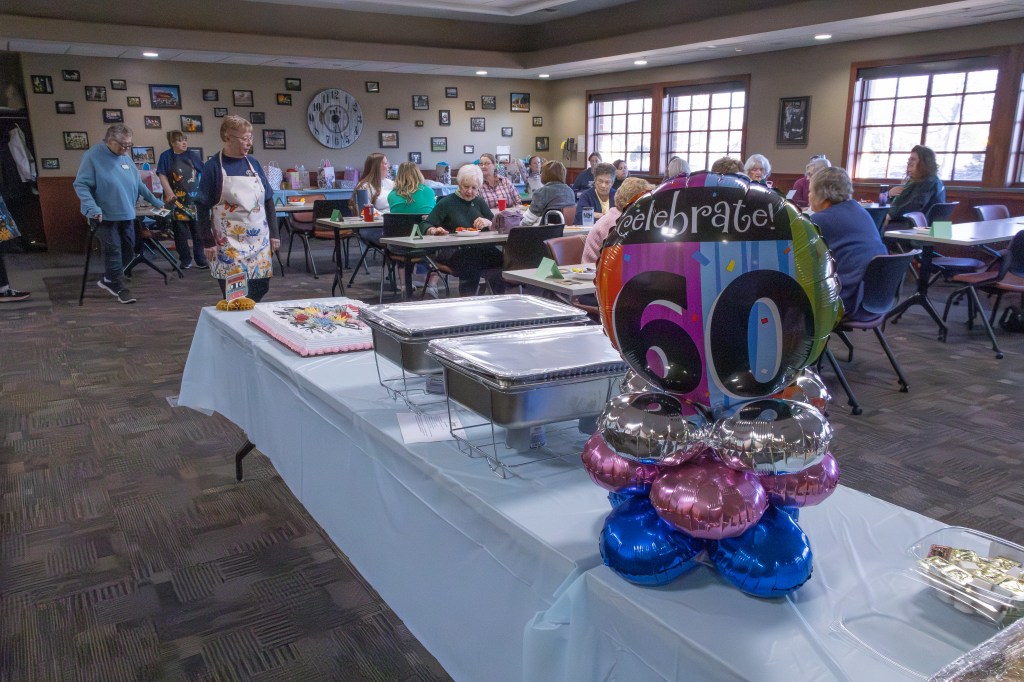
The Bennington Fire Auxiliary marked both a milestone and a farewell last Monday evening, celebrating 60 years of service to the fire department before officially disbanding the organization they formed in 1966.
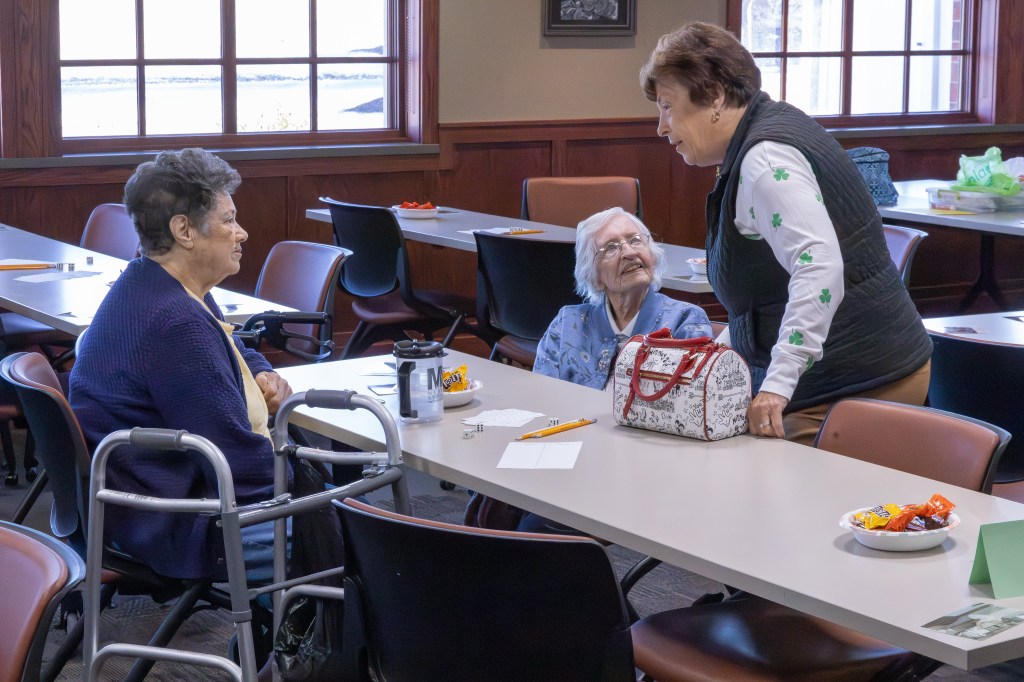
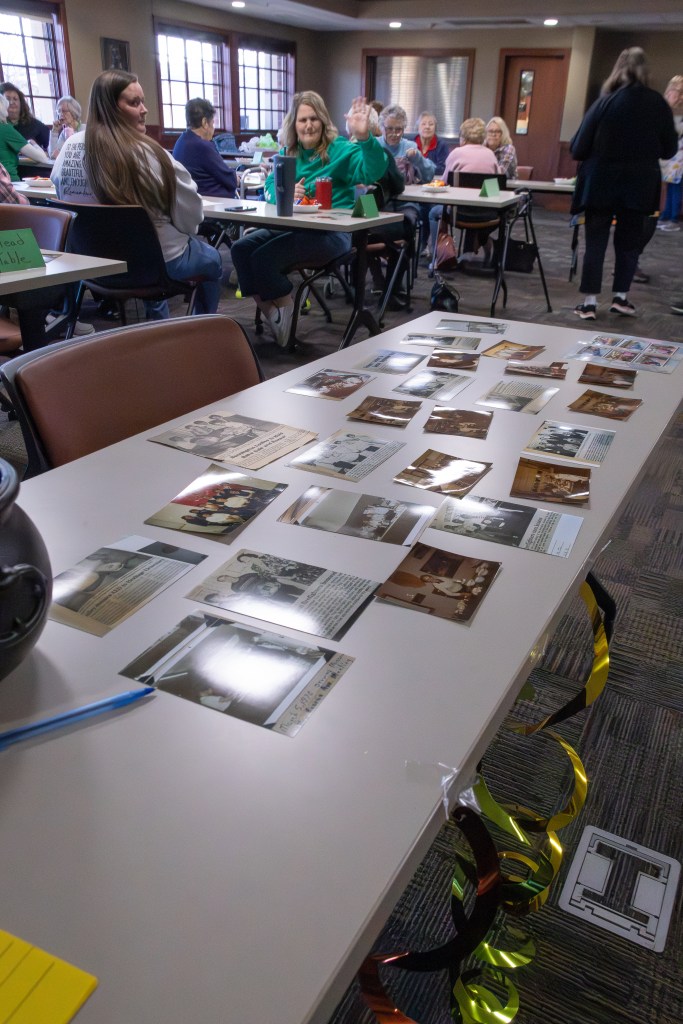
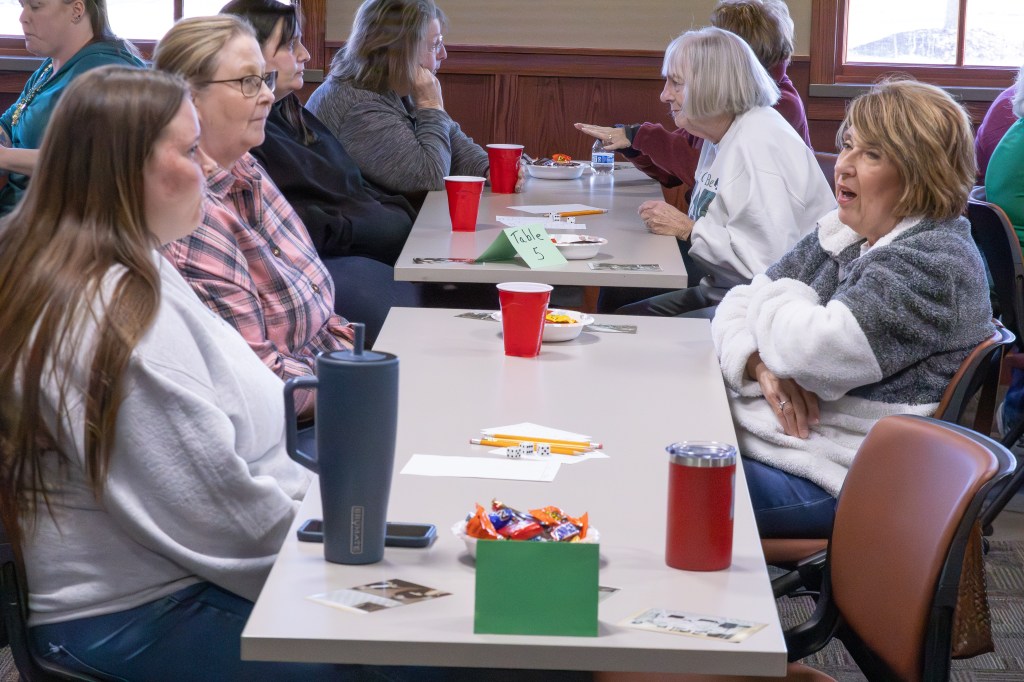
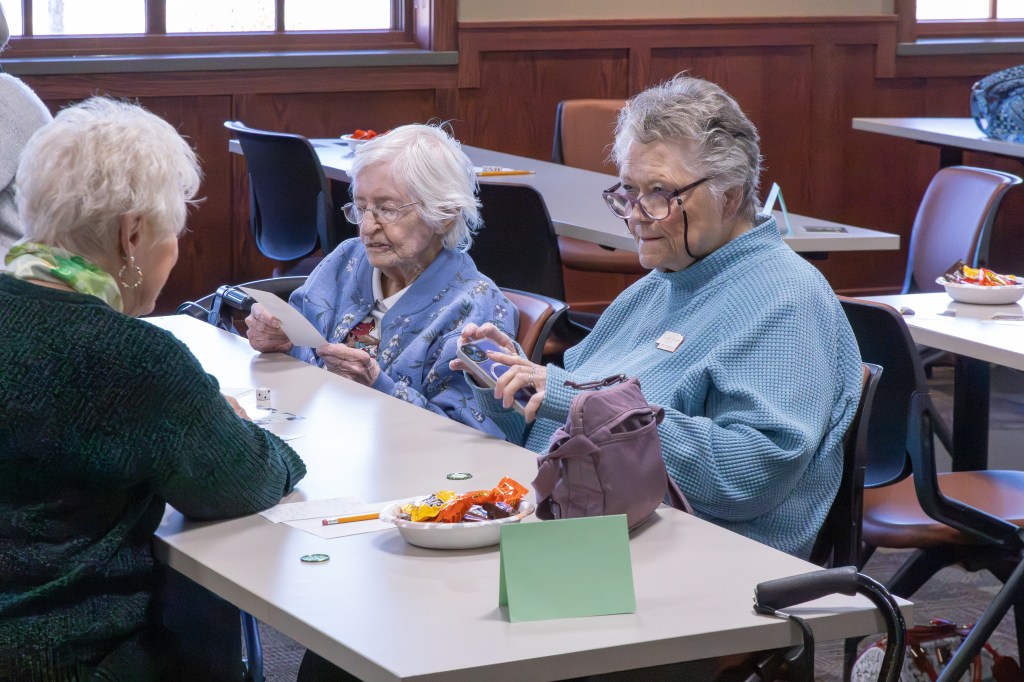
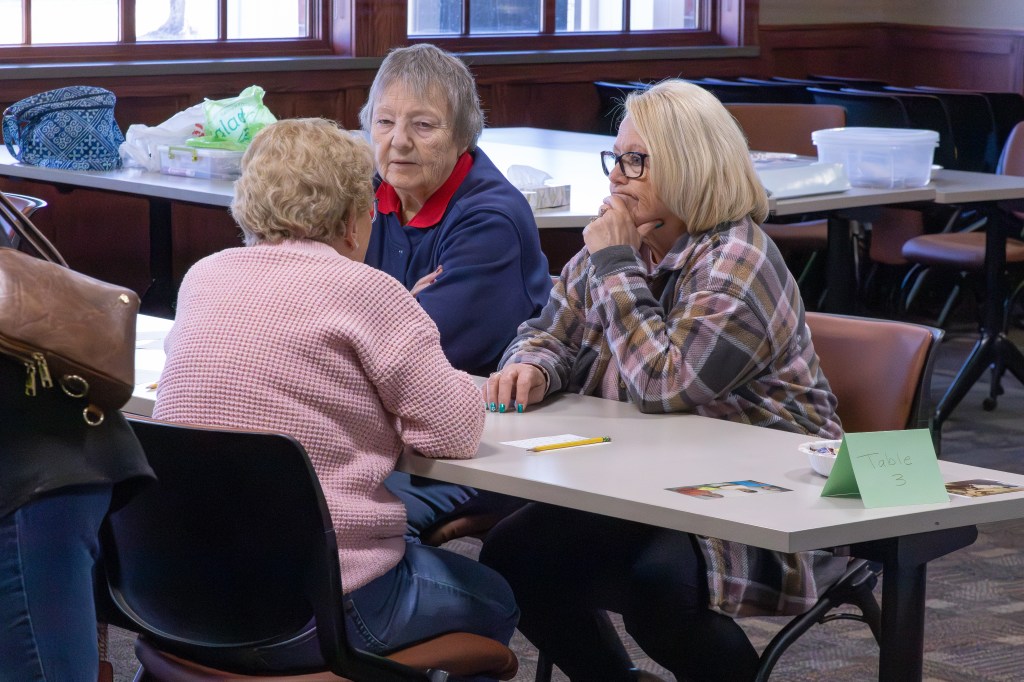
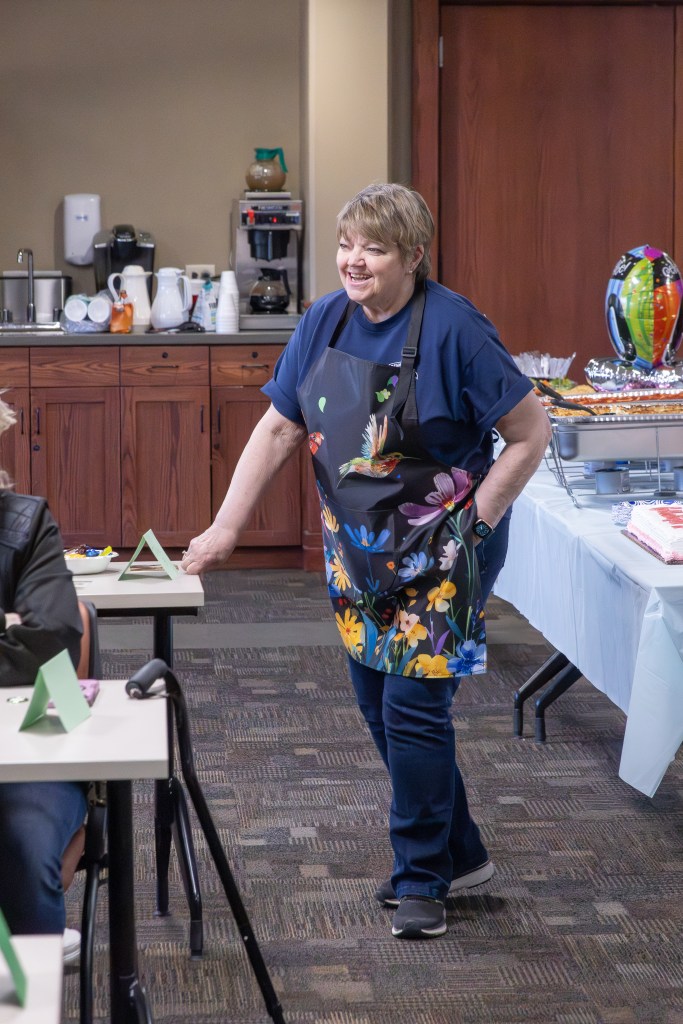
Members gathered at the Bennington Fire Station to reminisce over decades of photos compiled in scrapbooks, sharing memories of fundraisers, fire calls, and friendships built through years of volunteer work. A dinner and celebratory cake were served before the group carried on with one of their longest-standing traditions: a spirited game of Bunco that stretched late into the evening, complete with the familiar shouts of “Bunco!” and the claiming of prizes.
For president Karen Arp, one of only two original members remaining alongside Carole Cox, the evening was both joyful and bittersweet.
“It’s been a fun 60 years,” Arp said. “But I don’t know, I guess there just comes a time that everything has to end.”
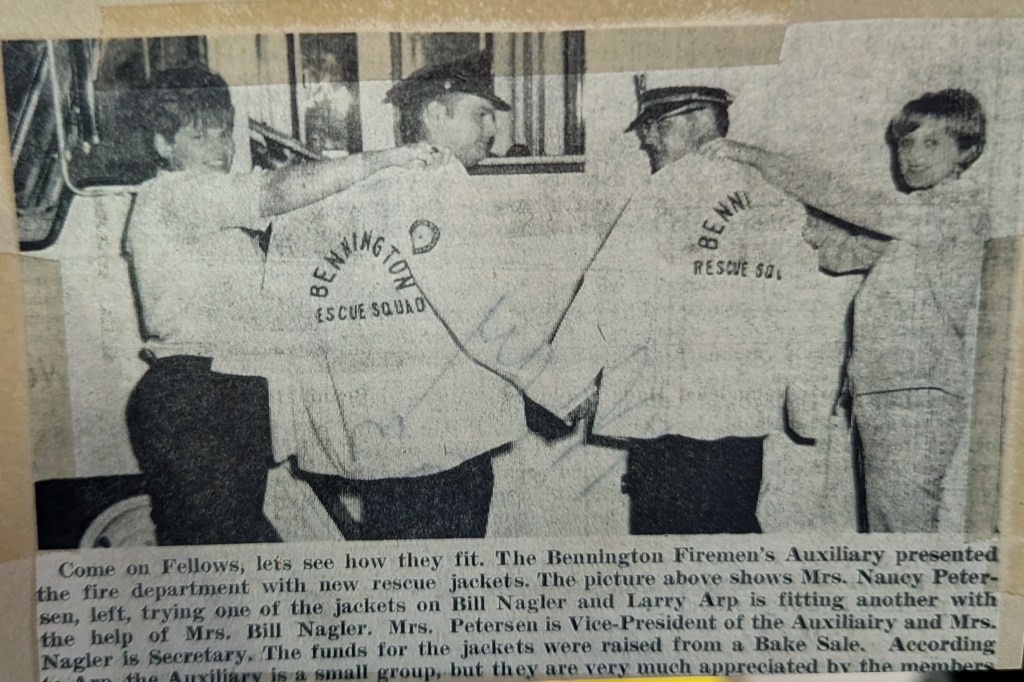
The auxiliary was formed in 1966, the same year the fire department placed its first rescue squad into service- a used panel truck purchased from the Ralston Fire Department with funds raised by the auxiliary. At the time, the department relied heavily on community fundraising and volunteer support.
“When we started, it was to help the guys raise money,” Arp said. “We started in 1966 when they put the first squad in service.”
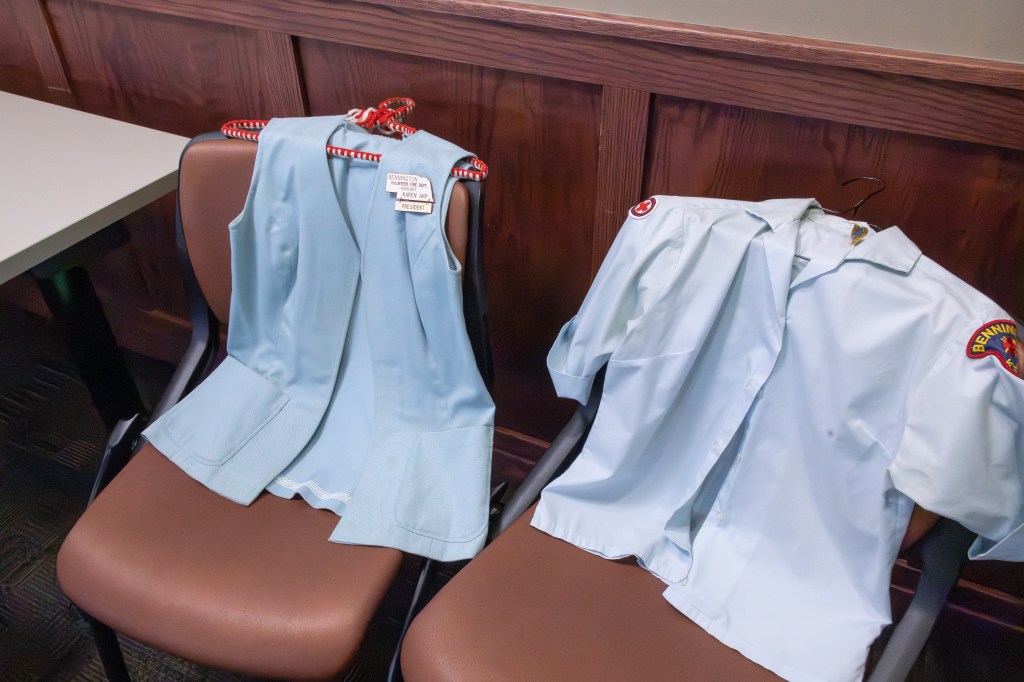
Members took on a wide range of responsibilities, from sewing sheets for stretchers to washing and pressing firefighters’ white coats after every call. “My husband was an officer, so every time they had a call, he’d bring those white coats home, and I had to wash them, starch them, and iron them and get them back down there again,” Arp said.
Perhaps most memorably, the auxiliary responded to fires alongside firefighters, providing food and support through long nights. “When they went out on big fires, we would make sandwiches and goodies,” Arp said. “We always had stuff in our deep freezers, cookies and stuff… we’d take them out to the fire scene and we’d feed the firemen so they could keep working.”
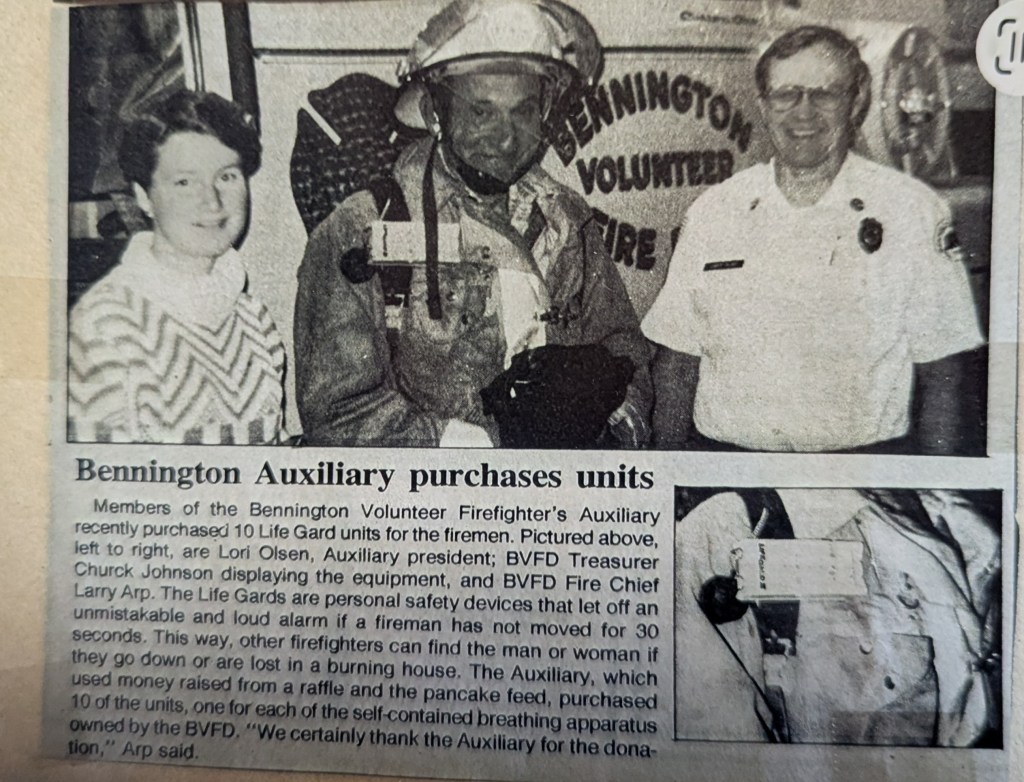
Over the decades, the auxiliary organized countless fundraisers to help purchase equipment for the department, including personal alert safety system (PASS) devices designed to help locate firefighters in emergencies.
Members hosted bake sales, bazaars, dances, and concession stands, but one event stood above the rest: the annual pancake feed. “The first year we did it, we served 3,000 people,” Arp said. “After that it was around 1,000.”
The event became a staple community gathering for years before the auxiliary eventually handed it over to the Firefighters Memorial Foundation as members grew older and the physical demands became more difficult to manage. “That was work. I mean, that was work,” Arp said with a laugh. “But it was well worth it in the end.”
The group also participated in parades, created elaborate floats, and even helped beautify the community by painting local infrastructure, all while forming close bonds with other auxiliaries through regional mutual aid associations.
As Bennington grew and the fire department transitioned to a combination of career and volunteer staffing supported by tax funding, the auxiliary’s role gradually diminished. Emergency response support once handled by auxiliary members is now largely provided by organizations like the American Red Cross and the Salvation Army.
“For the last probably five years or so, they’ve used the Salvation Army, and we haven’t had to take any food out anywhere,” Arp said. “Our role has kind of diminished.”
Ultimately, members concluded the department no longer required the same level of auxiliary support. “They’re all tax supported,” Arp said. “So they don’t need our help in buying stuff and everything like we did before.”
The group set a goal to reach its 60th anniversary before stepping away. “Our goal after so long was to make it to 60 years,” Arp said. “So we decided that’s a good cutoff point.”
While the auxiliary’s official work has ended, members emphasized that the friendships and sense of community it fostered will endure. For Carole Cox, the importance of those connections became especially clear during a personal tragedy when a local member’s home was struck by lightning, catching on fire. Auxiliary members showed up in the middle of the night to support her family despite the response from the Red Cross already. “When the auxiliary walked in, that was the best feeling there was,” Cox said.
For many women, joining the auxiliary was simply a way to support their spouses and families who served on the department. “Back then, everybody that belonged to the auxiliary, their husband was on the fire department,” Arp said. “You joined to help… just supporting our family and the rest of the community was the main thing.”
Even as they acknowledged the necessity of growth and change, members said they will miss the small-town camaraderie that defined both the auxiliary and the fire service in earlier decades. “I know growth has to happen, but you miss the old way,” Arp said. “You miss jumping and running in the middle of the night… but you know, things have to change.”
Though the Bennington Fire Auxiliary has formally disbanded, its impact remains visible throughout the department and the community, from equipment purchased through decades of fundraisers to traditions that continue under new leadership. After sharing one last meal, one last round of Bunco, and countless memories, members left the station knowing their work had left a lasting mark. “We figured serving the community for 60 years, not too bad,” Arp said.