
By Marisa Dawson
Behind the Bennington Police Department lies a parcel of land that tells a story of America’s westward expansion and agricultural heritage. This unassuming plot, now a quiet backdrop to modern life, was once at the heart of a transformative era in Nebraska’s history, shaped by landmark legislation and the ingenuity of early settlers.
In 1854, the Kansas-Nebraska Act opened vast swaths of the Great Plains to private ownership, including the area that would become Bennington. This act, signed into law by President Franklin Pierce on May 30, 1854, created the territories of Kansas and Nebraska, allowing settlers to claim land and decide the issue of slavery through popular sovereignty. The legislation repealed the Missouri Compromise of 1820, which had prohibited slavery north of the 36°30′ parallel, sparking national controversy and setting the stage for settlement in what is now Douglas County.
The land that Bennington occupies has a unique origin story. According to local records, it was granted to a veteran of the War of 1812 by Presidential Proclamation, likely as compensation in lieu of wages, a common practice for rewarding military service in the early 19th century. These types of land grants were instrumental in encouraging settlement in the newly organized Nebraska Territory.
The passage of the Homestead Act in 1862 further accelerated settlement in the region. Signed by President Abraham Lincoln on May 20, 1862, the act offered 160 acres of public land to any adult citizen, or intended citizen, who had not taken up arms against the U.S. government, provided they lived on and improved the land for five years. In Nebraska, this legislation spurred a wave of migration, with settlers like Daniel Freeman, who filed the first homestead claim near Beatrice on January 1, 1863, leading the charge. The Homestead Act transformed the surrounding prairies into a patchwork of family farms, laying the foundation for Bennington’s agricultural legacy.
The tools of these early farmers, some of which are displayed near the Bennington Police Department, offer a tangible connection to this history. A century-old John Deere planter, a hay rake, and a 3 by 10 wagon stand as relics of a bygone era. The John Deere planter, a horse-drawn marvel of its time, revolutionized farming by automating seed placement- a significant leap from labor-intensive hand planting. Yet, as the display notes, modern machinery can now plant in 15 minutes what took an entire season with these tools, highlighting the rapid evolution of agricultural technology.
Bennington’s early settlers faced immense challenges: harsh winters, prairie fires and unpredictable weather tested their resilience. Despite these hardships, they established a thriving agricultural community that continues to shape the town’s identity. The Homestead Act’s inclusive provisions allowed a diverse group of settlers (men, women, immigrants and even former slaves) to claim land, fostering a spirit of opportunity and self-reliance.
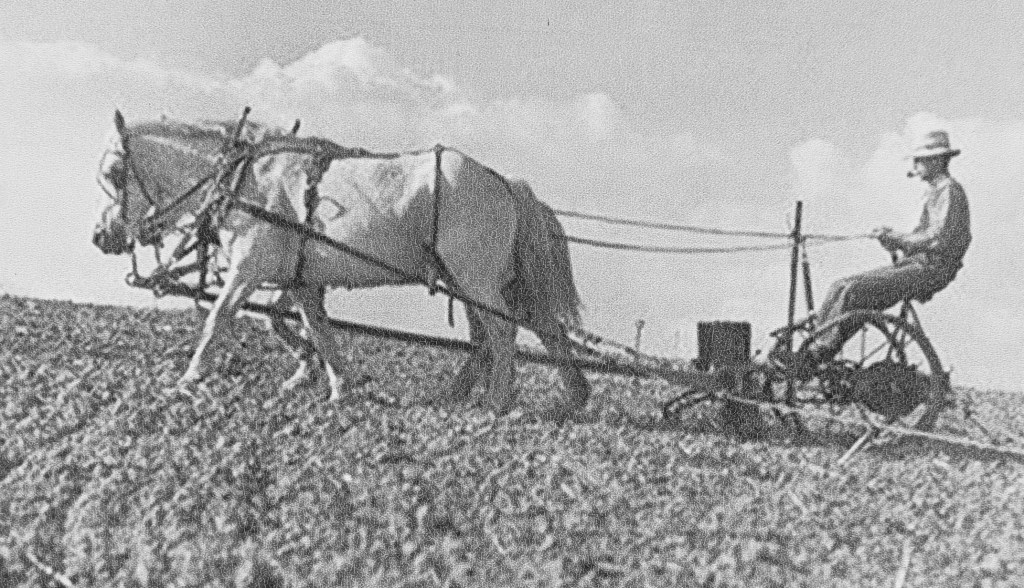
Photo courtesy of Bennington Historical Society
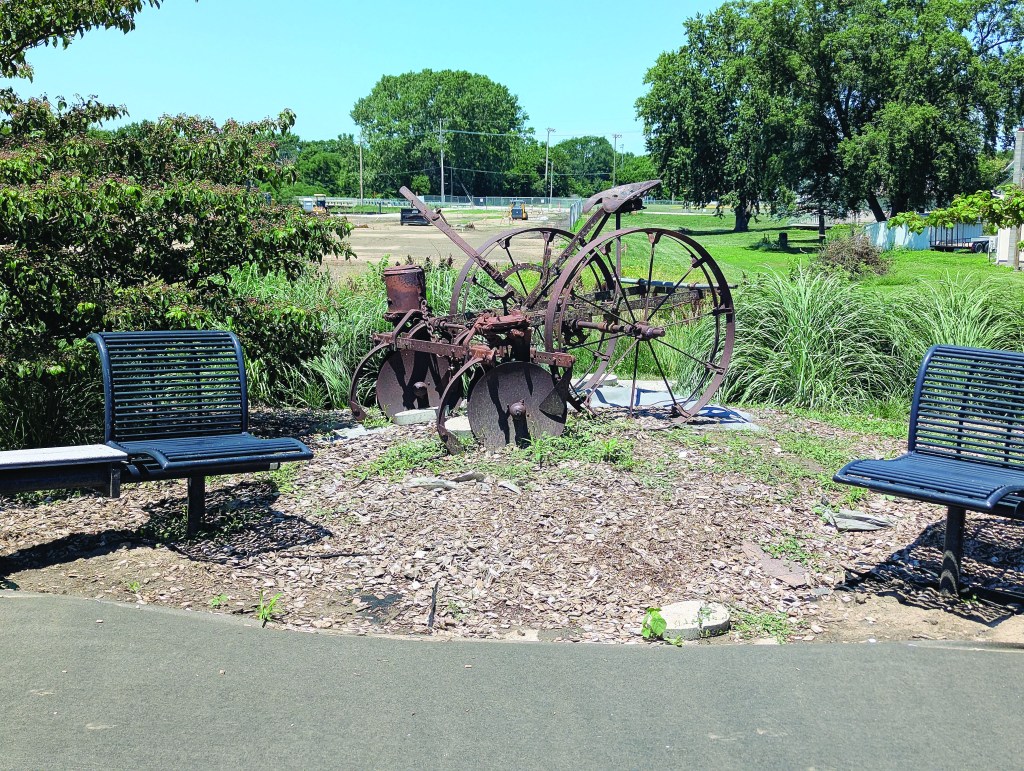
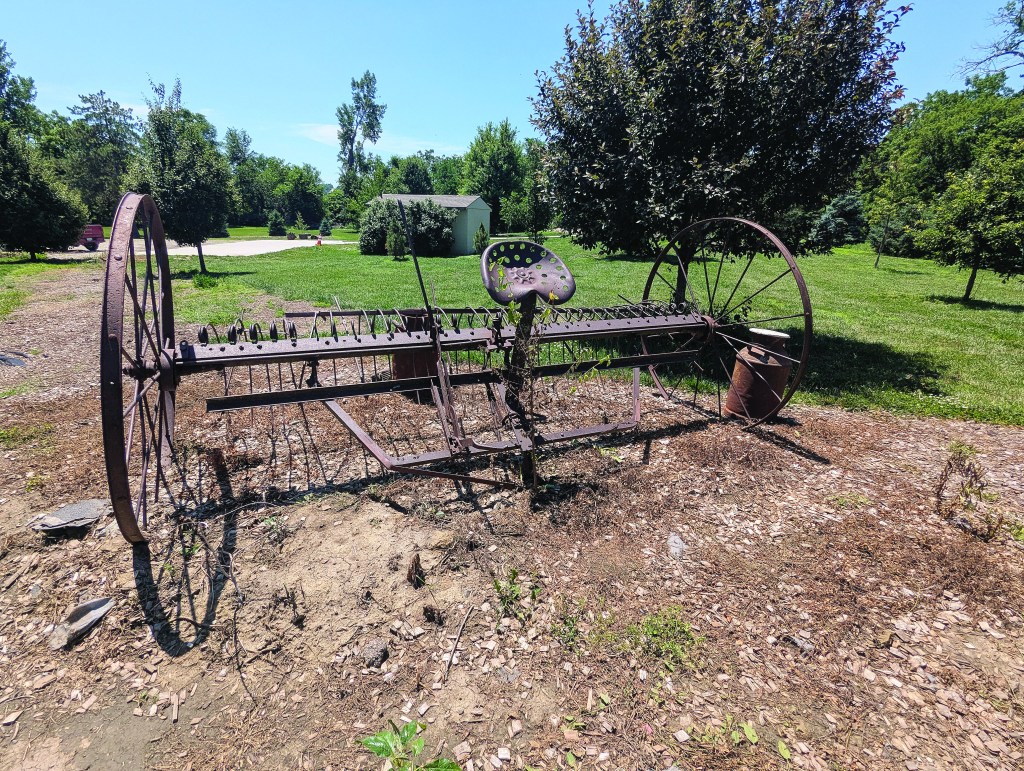
The equipment above sits in the iris garden behind the Bennington Police Department and was used on local farms nearly a century ago. This equipment was donated by Gordon & Linda Mueller. (Photos by Marisa Dawson)